
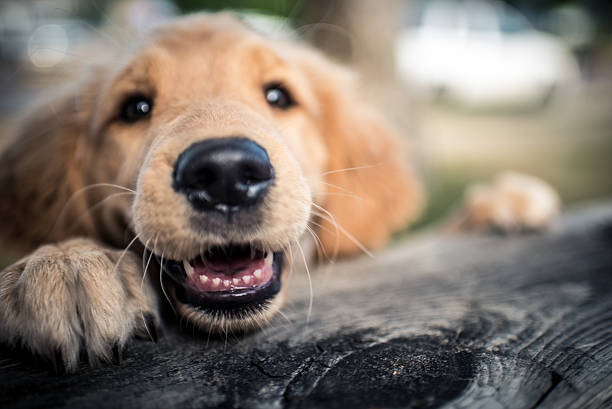
I. Introduction: Understanding the Golden Psyche
The Golden Retriever is consistently ranked among the most popular dog breeds globally, and for good reason. Bred initially as working gun dogs to retrieve fowl undamaged, their inherent traits—intelligence, gentle mouth, loyalty, and an overwhelming desire to please (DTBP)—make them highly trainable. However, their sensitivity and high energy levels require a specific, positive, and consistent approach to training.
This elaborate guide serves as a detailed roadmap, spanning from the critical early weeks of puppyhood through adolescence and into the advanced stages of adulthood, ensuring your Golden Retriever develops into a well-mannered, confident, and joyful companion.
The Golden Temperament: Training Assets and Liabilities
| Asset (Why they’re easy to train) | Liability (The challenges) |
|---|---|
| High DTBP: Highly motivated by owner approval. | Emotional Sensitivity: Harsh correction can shut them down. |
| Food & Toy Driven: Excellent motivation for positive reinforcement. | Hyperactivity/Impulsivity: Slow to mature; adolescence is intense. |
| Intelligence: Learn new commands quickly (often in 5-10 repetitions). | Mouthiness/Bite Inhibition: Natural retrieving instincts lead to chewing/mouthing. |
| Adaptability: Thrive in structured environments. | “Velcro Dog” Tendency: Prone to separation anxiety if not trained for independence. |
II. The Essential Foundation: Pre-Training and Preparation
Training begins the moment the puppy (or rescued adult) enters your home. The first few weeks are crucial for establishing trust, routine, and safety.
1. The Critical Socialization Window (8–16 Weeks)
For a Golden puppy, the period between eight and sixteen weeks is the most critical time for shaping its view of the world. Failure to adequately socialize during this window can lead to lifelong fear and reactivity.
- Positive Exposure: Introduce the puppy to 100 different things (people of various ages/appearances, sounds, surfaces, smells, environments). Crucially, these experiences must be positive—pair the new thing with high-value treats.
- Handling Drills: Practice touching ears, paws, and tail frequently. This is vital for cooperation with vets and groomers later.
- Safe Encounters: Organize brief, controlled interactions with vaccinated, gentle adult dogs. Avoid dog parks until fully vaccinated.
2. Required Equipment and Tools
The Golden Retriever thrives on positive reinforcement (R+). Tools should facilitate communication, not correction.
- Training Treats: Small, soft, high-value treats (e.g., boiled chicken, cheese, freeze-dried liver).
- Clicker: An invaluable tool for R+ training. The click accurately marks the exact moment the dog performs the desired behavior.
- Crate: Essential for house training, safety, and teaching independent relaxation. Must be appropriately sized (large enough to stand and turn, but not so large they can toilet in one corner).
- Leash and Collar/Harness:
- Puppy: Flat collar and a 6-foot standard leash.
- Adolescent/Adult: A front-clip harness (like the Freedom or Balance harness) is highly recommended for managing the energetic Golden puller without causing neck strain. Avoid retractable leashes.
3. Establishing Routine and Boundary Setting
Goldens thrive on predictability. Implement a consistent schedule for feeding, potty breaks, play, and rest immediately.
- Structure: Predictability reduces anxiety and speeds up house training.
- House Rules: Decide what the dog is allowed (and not allowed) to do before they try it. (e.g., Is the couch allowed? If not, maintain consistency and redirect to a designated dog bed.)
III. Puppyhood Training (8 Weeks to 4 Months)
The focus during this stage is management, foundational skills, and channeling natural instincts.
1. Potty Training Mastery
Goldens are generally clean dogs, but consistency is key.
- Schedule: Take the puppy out immediately upon waking up, after eating or drinking, after playing, and before bedtime. A puppy can generally hold its bladder for its age in months plus one hour (e.g., a 3-month-old can hold it for 4 hours maximum).
- Successful Association: Go to the designated potty spot, wait patiently, and immediately reward the moment they finish with high-value treats and enthusiastic praise.
- Accidents: If an accident occurs indoors, clean it thoroughly with an enzymatic cleaner (not ammonia-based cleaners) to eliminate the smell, which encourages repeat accidents. Never scold or punish the puppy, as this only teaches them to fear toileting in front of you.
2. Crate Training: The Den Concept
The crate should be viewed as a safe, comfortable den, not a punishment tool.
- Introduction: Feed meals inside the crate with the door open. Toss treats inside periodically.
- Duration: Start with short durations (2 minutes) and slowly increase the time. Crucially, never let the puppy out while they are whining or barking, or they learn noise grants release. Wait for a moment of silence.
- Overnight: Place the crate near the owner’s bed initially to ease separation anxiety and allow the owner to hear necessary nighttime potty signals.
3. Name Recognition and Attention
Your dog’s name should always be associated with positive things.
- The Positive Association Game: Say the name, click, and treat. Repeat 20 times over several short sessions. The dog learns that hearing its name means “look at me, something good is coming.” Avoid using the name when scolding.
4. Bite Inhibition and Mouthiness
This is a critical Golden Retriever challenge. They naturally use their mouths to explore and play. Teaching bite inhibition means teaching them how hard they can bite, and eventually, teaching them not to bite human skin at all.
- The “Ouch” Method: If the puppy bites too hard during play, let out a loud, high-pitched “Ouch!” and immediately stop playing and withdraw attention (stand up/turn away) for 30–60 seconds. This mimics how littermates communicate pain.
- Redirection: Always have appropriate chew toys available. When the puppy mouths you, redirect that energy immediately to a toy (e.g., a Kong or appropriate chew).
- Teething Management: Provide frozen chews (carrots, frozen Kongs) to soothe sore gums during the peak teething period (4–6 months).
IV. Foundational Obedience and Adolescence (4 Months to 1 Year)
Adolescence is the “teenage phase,” typically lasting from 6 to 18 months, where the Golden’s high energy meets selective hearing. Consistency and patience are paramount.
1. The Core Seven Commands (The Golden Standard)
These commands form the backbone of a well-behaved dog. Use the technique of Lure, Mark (Click), Reward.
A. Sit
- Hold a treat above the dog’s nose and slowly move it back toward their tail. As the nose tracks the treat, the rear end naturally lowers. Mark the moment the rump hits the floor.
B. Down
- Start in a sit. Hold a treat at the dog’s nose and move it straight down to the floor, then slowly pull it along the floor away from the dog. The dog should follow into a lying position.
C. Stay
- Crucial for safety. Start with the dog in a Sit or Down. Give the “Stay” cue, hold up an open hand (visual cue), and step away for one second. Quickly return and reward.
- Do not reward the dog for getting up. If they break the stay, gently guide them back to the original position and restart. Gradually increase Duration (time), Distance (steps away), and Distraction (environmental noise).
D. Come (Recall)
- The single most important safety command. Never use “Come” when you are angry or when the dog is about to leave a fun activity (e.g., the dog park).
- The Recall Game: Have two people sit 10 feet apart. One person calls the puppy enthusiastically (“Fido, Come!”), rewarding lavishly. The next person immediately calls the dog. This makes recall a high-energy, highly rewarded game.
- Positive Interruption: If you must interrupt play, call the dog, reward them immediately, and then let them go back to playing. This reinforces that “Come” does not mean “fun time is over.”
E. Loose Leash Walking (Heel)
Goldens, especially adolescents, are powerful pullers. Teaching them to walk nicely requires structure.
- The Magnet Technique: Hold a high-value treat at your hip (where you want the dog’s head to be) and walk a few steps. Reward the dog for being in that “sweet spot.”
- The Stop-Start Method: The moment the dog pulls forward, immediately stop walking. Only resume walking when the tension leaves the leash and the dog takes one step back toward you. Consistency here is exhausting but essential. Use a non-corrective front-clip harness if necessary.
F. Leave It
- Place a low-value treat on the floor and cover it with your hand. Say “Leave It.” When the dog stops trying to reach the treat, remove your hand, click, and immediately give them a different, better treat (the reward jackpot).
- Progress to placing the treat on the floor uncovered. If they go for it, cover it quickly. Once mastered, practice this command with high-value items (e.g., food, dangerous debris) in real-world scenarios.
G. Drop It
- This command teaches the dog to release an item from its mouth.
- Offer the dog a low-value toy. Immediately approach with a high-value treat. Say “Drop It,” and as soon as the dog opens its mouth to take the treat, mark and reward. (The Golden learns that dropping the item leads immediately to a better reward.)
2. Proofing Behaviors (Generalization)
A dog trained in a quiet kitchen is not trained in a busy park. Proofing means practicing known commands across the three D’s:
- Distance: Dog performs the command farther away from the handler.
- Duration: Dog holds the command longer (e.g., a longer “Stay”).
- Distraction: Practice in increasingly difficult environments (park, sidewalk, near other dogs).
Crucial Rule: When increasing one D, decrease the other two. Start low and reward high.
V. Advanced and Specialty Training (1 Year and Beyond)
As Goldens mature (which can take up to 3 years), their focus refines, making them excellent candidates for advanced work.
1. Advanced Obedience and Utility Commands
- Go to Place/Mat Training: Teaching the dog to settle on a specific bed or mat, regardless of environmental chaos. This is invaluable for managing excitement when guests arrive or during mealtimes.
- Technique: Reward the dog heavily and consistently for lying quietly on the mat. Gradually move the mat to different rooms and then outside.
- Reliable Off-Leash Skills: Only attempt off-leash work in safe, fenced areas after the “Come” command is 99% reliable, even with major distractions. Use a long line (20-50 feet) as an intermediate step.
2. Leveraging the Golden’s Working Instincts
The Golden Retriever thrives when given a job that utilizes its specific genetic skills.
A. Retrieval Games
- Move beyond standard fetch. Hide objects (scent work) and ask the dog to find and retrieve them. This satisfies their natural hunting/retrieving sequence and provides intense mental exercise.
B. Agility and Dog Sports
- Goldens excel in agility, flyball, and obedience trials due to their athletic ability and willingness to work closely with their handler. Agility provides a phenomenal outlet for adolescent energy.
C. Therapy or Service Work
- Due to their gentle temperament, size, and high DTBP, Goldens are among the world’s most successful therapy and assistance dogs. Training for these roles requires rock-solid obedience, extreme environmental stability, and careful screening for fear or aggression.
VI. Troubleshooting Common Golden Retriever Challenges
Even the most compliant Golden can exhibit behaviors rooted in their breed history or developmental stage.
1. Excessive Energy and Hyperactivity
Goldens are high-energy dogs. A 10-minute walk is not enough.
- The 30/30/30 Rule: Aim for 30 minutes of vigorous physical exercise (fetch, running), 30 minutes of structured training (obedience, tricks), and 30 minutes of intense mental enrichment (puzzle toys, sniff games) daily.
- Mental Stimulation: Mental work is often more tiring than physical work. Use puzzle feeders, snuffle mats, and teaching complex tricks (e.g., opening a door, putting toys away).
2. Counter Surfing and Stealing
Goldens are masters of opportunistic theft, driven by curiosity and their retrieving mouths.
- Management: Never leave tempting items accessible. If they succeed once, the behavior is reinforced.
- Training: Practice the “Leave It” command right next to the counter while you are preparing food. Reward heavily for success.
- Aversion (Use with Caution): For persistent issues, a deterrent may be used only when the owner is not present. For example, placing empty, noisy soda cans on the counter edge, rigged to fall when touched, creates an immediate, startling consequence directly associated with the action (not the owner).
3. Jumping on People
Jumping is often a greeting behavior that escalates due to excitement.
- The “No Paws On Floor = No Attention” Rule: When the dog jumps, immediately turn your back, cross your arms, and completely ignore them (no eye contact, no speaking). Only give attention, praise, or affection when all four paws are on the ground.
- Alternative Behavior: Teach an alternative, incompatible behavior, such as “Sit to Greet.” When guests arrive, give the “Sit” cue, and the guest only rewards the dog when it maintains the sit.
4. Separation Anxiety (SA)
Goldens are intensely bonded dogs, making them prone to distress when left alone. True SA requires careful, systematic desensitization.
- Independence Training: Start small. Give the dog a high-value, long-lasting chew (a frozen Kong) inside its crate and leave the room for 1 minute. Slowly increase the time. The dog must learn that being alone is a quiet, rewarding time.
- Departure Cues: Avoid elaborate goodbyes and hellos. This heightens the emotional significance of your absence/return. Depart quietly and ignore the dog for 5 minutes upon return until they settle.
VII. Lifetime Management and Maintenance
Training is not a phase; it is a lifelong commitment to communication and enrichment.
1. Consistency Across All Handlers
All family members must use the same cues, the same hand signals, and the same expectations. Inconsistency confuses the Golden and slows training progress. If the dog is allowed to jump on one person but not another, they learn to gamble.
2. The Power of Routine Enrichment
As Goldens age, their physical needs decrease, but their mental needs remain high. Continue to engage them with novel scent games, learning new tricks, and practicing established commands in new locations.
3. Training the Senior Golden
Senior Golden Retrievers (typically 8 years+) may develop reduced mobility or cognitive changes.
- Adaptation: Switch to low-impact physical exercise (swimming is excellent).
- Maintaining Skill: Continue short, fun training sessions to keep their minds sharp. If hearing or sight deteriorates, transition to hand signals or tactile cues.
Conclusion: The Reward of Dedication
Training a Golden Retriever is an immersive experience that yields an unparalleled relationship. Their inherent eagerness to please, when channeled through consistent, positive reinforcement, transforms them from boisterous puppies into reliable, gentle, and capable companions. By committing to structure, patience during adolescence, and lifelong mental engagement, you are not just training a pet; you are developing a magnificent, versatile member of your family—the true Golden Standard of companionship.
#GoldenRetrieverTraining #GoldenPuppy #DogTrainingTips #PositiveReinforcement #GoldenLife #ObedienceTraining #CrateTraining #LeashTraining #PuppyLove #DogBehavior #GoldenStandard #ForceFreeTraining #HappyDog #RetrieverLife #TherapyDog







Add comment