
I. Introduction: The Majesty and The Mandate
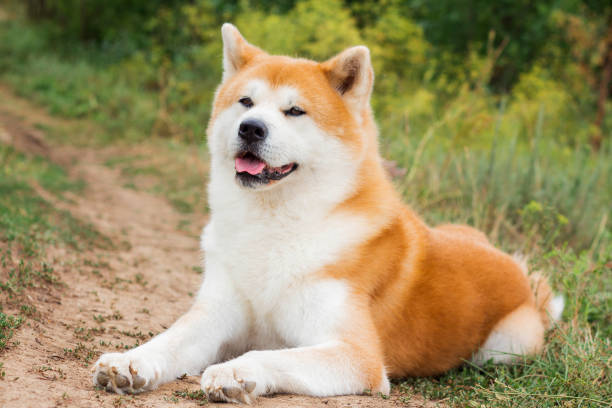
The Akita Inu, a magnificent dog of solemn devotion and imposing presence, is one of the world’s most recognizable breeds, tracing its lineage back to the mountainous regions of Japan. Historically utilized for guarding royalty and hunting large game (like bear), the Akita today retains those potent instincts: unwavering loyalty, fierce protectiveness, and profound independence.
Owning and training an Akita is not merely a hobby; it is a serious commitment that requires consistency, understanding, and unyielding patience. This is emphatically not a breed for the novice owner. Due to their size, strength, and tendency toward same-sex dog aggression and resource guarding, effective training is not just about obedience—it is about public safety and the dog’s lifelong psychological well-being.
This elaborate guide delves into the specific psychological needs and behavioral quirks of the Akita, providing a comprehensive framework for transforming this independent sentinel into a trustworthy and balanced family member.
II. Understanding the Akita Psyche: The Independent Thinker
Before any leash is snapped onto a collar, the owner must grasp the fundamental mental architecture of the Akita.
A. Independence vs. Compliance
Unlike breeds such as the Golden Retriever or the Border Collie, which possess an inherent desire to please and work cooperatively with humans, the Akita operates on a principle of utility: “Why should I comply?” They are highly intelligent, capable of learning commands quickly, but they often choose whether or not to follow them based on the perceived value of the request versus their current priorities.
The implication for training: Excessive repetition and drill work will bore an Akita and cause them to shut down or become obstinate. Training must be engaging, novel, and highly motivating, usually through high-value food rewards—not just enthusiastic praise.
B. The Concept of Leadership and Partnership
Traditional dog training, often based on outdated dominance theory, is particularly ineffective and dangerous when applied to an Akita. Attempts to physically dominate or bully an Akita will rarely result in submission; instead, it often provokes a challenge or, worse, destroys trust, leading to fear-based aggression.
The Akita respects consistent, fair, and calm leadership. They respond best to a relationship based on mutual respect and clear boundaries. The owner must become the reliable provider of resources, structure, and safety, meaning they control access to food, toys, freedom, and affection. This establishes the owner as the benevolent, decisive head of the household, which satisfies the Akita’s need for security and hierarchy.
C. Temperament Pillars: Aloofness, Protection, and Silence
- Aloofness: Akitas are typically reserved with strangers. They rarely seek excessive affection outside of their immediate family unit. Training must respect this boundary; forcing interactions can cause discomfort and mistrust.
- Protection: Their guarding instincts are innate. Training should focus on channeling this protectiveness into appropriate responses (e.g., alerting the owner) rather than unnecessary aggressive intervention.
- Silence: Akitas are known for being quiet dogs, often communicating through subtle body language or the occasional “woo-woo” sound. Owners must become fluent in reading these non-verbal cues, as they offer the only warning signs before a behavioral reaction occurs.
III. The Critical Foundation: Early Socialization and Habituation
For a breed with powerful protective instincts and a high potential for dog aggression, the window between 8 and 16 weeks is the single most important period in an Akita’s life. Fail to socialize robustly, and you risk a lifetime of severe behavioral management issues.
A. The Socialization Imperative (The Critical Window)
Socialization for an Akita puppy must be high-volume, continuous, and structured. It is not about letting the puppy run wild in dog parks, but about controlled, positive exposure.
1. People and Environments: The 100-Person Rule
The puppy should meet a minimum of 100 people of all demographics during this window: tall men, women in hats, children, people with mobility aids, people wearing uniforms, and people of different ethnicities. Each interaction must be positive, paired with a treat, and brief. The goal is neutrality—teaching the Akita that strangers are benign, not necessarily friends.
2. Sound and Surface Habituation
A low-threshold Akita can be reactive to sudden noises later in life. Introduce the puppy to loud noises (vacuum cleaners, traffic, construction sounds, thunder recordings) while they are engaged in a positive activity, like eating. Expose them to varied surfaces: grating, wet grass, wood floors, gravel, and asphalt.
B. Dog-to-Dog Socialization (Structured Observation)
This is perhaps the most delicate aspect. An Akita rarely needs (or even enjoys) rough-and-tumble play with strange dogs.
- Selecting Playmates: Only allow high-quality play with carefully vetted, known, and balanced dogs (usually calm, adult, neutral breeds).
- Observation over Interaction: A huge portion of Akita socialization should involve structured observation. Take the puppy to busy areas (outside a crowded park, near a pet store entrance) where they can see dogs without having to interact. Reward them heavily for remaining calm and focused on the owner while the other dogs pass. This builds crucial emotional control.
- Same-Sex Avoidance: Be acutely aware that same-sex aggression, especially male-to-male, is a breed trait in adolescence (6-24 months). Socialization efforts must respect the potential for this aggression, often necessitating the strict avoidance of same-sex greetings later in life.
C. Resource Guarding Prevention (Mouth and Food Handling)
Akitas are hard-wired to guard resources. Prevention must start immediately:
- Trade-Up Game: Approach the puppy while it is eating something valuable. Never simply snatch the item away. Instead, present a higher-value reward (e.g., a piece of cooked chicken) and trade for the bowl/toy. Immediately return the original item. This teaches the Akita that human proximity to resources leads to a better outcome.
- Handling Drills: Regularly handle the puppy’s paws, ears, tail, and mouth. Pair handling with praise and treats. This prepares them for necessary veterinary exams and grooming and reduces the likelihood of defensive bites if they are handled unexpectedly.
IV. Methodology and Equipment: The Akita Approach
Training an Akita demands finesse, not force. The methodology must cater to their intelligence and independence.
A. The Principle of Positive Reinforcement (Lure, Reward, Release)
Akitas thrive when they control the acquisition of the reward. Positive reinforcement, paired with precise timing (the use of a marker word or clicker), is paramount.
- High-Value Rewards: Standard kibble or dry biscuits are often insufficient. Akitas need truly exceptional motivation: soft sausage, cheese, cooked organ meat, or freeze-dried liver. Save these rewards exclusively for training sessions.
- Short and Strategic Sessions: Keep training sessions brief (3–5 minutes) and frequent (3–5 times per day). End the session on a positive note before the Akita gets bored or frustrated.
- Proofing and Generalization: Once an Akita masters a command in a quiet living room, they may deem it irrelevant in a park. Commands must be “proofed” by practicing them in various locations, around different distractions, and with varying distances, ensuring the command is generalized as non-negotiable.
B. Essential Equipment for Akita Management
Given the Akita’s power, standard collars can be insufficient for control in high-distraction environments.
- Crate: Essential for house training, safety, and managing separation anxiety. The crate must be introduced positively and viewed as a safe, private den.
- Heavy-Duty Leash and Collar: Always use quality, non-breakaway equipment. A six-foot, reinforced nylon or leather leash is standard.
- Management Tools (Head Halters or Front-Clip Harnesses): For strong pullers, a front-clip harness (which redirects the dog’s forward momentum laterally) or a head halter (which offers maximum control over directional movement) is highly recommended. These tools provide control and safety without resorting to painful or suppressive methods. Note: Never use electronic collars or harsh physical corrections, as these often exacerbate the Akita’s tendency toward aggression.
C. The Weight of Consistency
An Akita will relentlessly test boundaries, particularly during the adolescent phase (6 months to 2 years). If an owner allows a lapse in rules even once—for instance, allowing counter-surfing—the Akita registers that rule as malleable and will continue to attempt the behavior. Every family member must enforce every rule (e.g., no jumping, sit before doorway exit) 100% of the time.
V. Essential Training Commands and Protocols
Certain skills are indispensable for managing the strength and temperament of the Akita.
A. Non-Negotiable Recall (“Come”)
A solid recall is life-saving, especially given the Akita’s prey drive and propensity for dog-dog conflict.
- Building Value: Never use the recall command in anger or punishment. The recall must always lead to a party (treats, praise, play).
- The Long Line: Practice the recall extensively on a 30-foot or 50-foot lightweight line in a safe area. If the Akita hesitates, gently guide them in, ensuring they never fully ignore the command.
- Emergency Recall: Establish a unique, high-value cue (like a whistle or a deeply unusual word) that is only used for emergencies and is always rewarded with the absolute highest-value food item possible (e.g., steak).
B. Leash Manners (Structured Walking)
The structured walk is paramount to establishing leadership and achieving mental fulfillment. The Akita should walk politely beside or slightly behind the owner, not forging ahead.
- Lure and Reward: Start by rewarding the dog profusely for just being in the desired ‘heel’ position.
- The Stop-Start Method: If the dog pulls, immediately stop all forward motion. Wait for the tension in the leash to slacken or for the dog to look back at the owner. Reward the slack and then proceed. This teaches the Akita that pulling stops the walk, while being loose-leash starts the reward (forward movement).
C. Safety Commands: Leave It and Drop It
These commands are crucial for preventing ingestion of inappropriate items (prey, garbage) and resolving resource disputes.
- “Leave It” Progression:
- Start with low-value items (kibble) covered by the hand.
- Move to items placed on the floor that the dog must ignore for a high-value treat from the owner’s hand.
- Practice with high-value items (toys, food waste) in increasingly distracting environments.
- “Drop It” Protocol: Directly relates to the resource guarding prevention detailed earlier. Practice trading up: teach the dog to release a toy in anticipation of a better treat or the opportunity to retrieve the original toy immediately afterward. Never use this command to permanently confiscate an item, or the Akita will learn to guard it more fiercely.
VI. Managing Specific Akita Challenges
The Akita’s unique genetic programming creates several predictable challenges that require specific management strategies.
A. Mitigation of Dog-Aggression
If the Akita shows signs of reactivity or aggression toward other dogs, the primary goal shifts from socialization to management and counter-conditioning.
- Threshold Training: Identify the distance at which the Akita notices another dog but has not yet reacted (the threshold). Work at or below this distance.
- Look-At-That (LAT) Game: Every time the Akita looks at another dog, mark the behavior (click/yes) and reward them with a high-value treat before they can react. The goal is to change the Akita’s emotional response, so that the sight of another dog predicts an immediate reward from the owner, rather than anxiety or confrontation.
- Avoidance is Key: Accept that your Akita may never be a dog park enthusiast. Their exercise should be primarily focused on hiking, structured walks, secured yards, or solitary play. Do not set your dog up for failure by forcing interactions.
B. Handling Resource Guarding (Advanced)
If guarding behavior is established, do not attempt to resolve it yourself.
- Environmental Management: Put away all highly prized items (e.g., bones, chews) when guests or children are present. Feed the dog in a separate, quiet room while supervising children.
- Professional Help: Seek a certified veterinary behaviorist or a force-free trainer specializing in aggression. Guarding is serious and requires tailored, professional intervention.
C. The Akita’s “Mouthiness” (Nipping and Play Biting)
Akita puppies tend to be very mouthy. Given their jaw power, this must be addressed carefully and immediately:
- Bite Inhibition: When the puppy successfully mouths or nips too hard, immediately yelp loudly and dramatically. Withdraw all attention and leave the room for 30 seconds. The puppy learns that painful biting immediately ends all play and fun.
- Redirection: Always keep appropriate chew toys accessible. If the puppy tries to mouth hands, immediately redirect them to the toy.
D. Separation Anxiety and Isolation Intolerance
While independent, Akitas are deeply bonded and can suffer from distress when left alone, manifesting as destructive chewing or vocalization.
- Crate Training for Independence: Use the crate not just for containment, but to teach the dog how to be calmly alone. Practice short separations (5 minutes) while the owner is still visible, gradually increasing duration and distance.
- Enrichment: Always provide engaging, long-lasting puzzle toys (Kong, snuffle mats) stuffed with high-value food when leaving. This associates the owner’s departure with a positive, distracting activity.
VII. The Adolescent Akita: The Challenge of Maturity
The period between 6 months and 2 years (Akita adolescence) is physically challenging and mentally volatile, marked by increased territorialism, selective deafness to commands, and the onset of adult dog aggression.
A. The Test of Fire
During adolescence, Akitas will deliberately test boundaries they previously respected (e.g., getting off the couch, recall). This is not defiance, but neurological maturation. The owner must respond with calm, non-emotional enforcement.
- No Free Lunch: Re-implement the “Nothing in Life is Free” protocol. The Akita must perform a small task (sit, stay) for every resource—food, playtime, going outside. This subtly, continuously reinforces the owner’s role as the leader and prevents the dog from becoming self-entitled.
- Continued Vigilance: This is the phase where small socialization cracks become large behavioral problems. Do not let up on training or structured exposure, even if the dog seems well-behaved.
B. Exercise and Mental Stimulation
An under-exercised Akita will become destructive, hyper-vigilant, and easily frustrated.
- Physical Outlet: Akitas need vigorous exercise, but they are not endurance runners. Short bursts of intense activity (e.g., controlled sprinting in a secure area, structured hiking) are ideal. Be mindful of their large joints, especially during the first year of growth.
- Mental Work: Because they are intelligent, mental stimulation is crucial. Utilize advanced puzzle toys, scent work (finding hidden treats), or advanced obedience chains to tire the Akita’s mind. Ten minutes of intensive mental work can be as tiring as an hour of walking.
VIII. Lifetime Commitment: The Bond and Trust
Training an Akita is a journey measured in years, not months. The relationship matures into a silent partnership defined by absolute trust.
A. Maintenance Training
Even a perfectly trained adult Akita requires maintenance. Dedicate a few minutes daily to practicing basic commands and proofing safety cues (Recall, Stay, Leave It) in different scenarios. This keeps the commands sharp and reinforces the communication channel.
B. Understanding the “Akita Smile”
A common behavioral pattern in the Akita is the “Akita Smile”—a submissive grimace that appears aggressive to the untrained eye as they show their teeth. This is often accompanied by low-body wags and soft vocalizations. It is essential for owners to differentiate this greeting behavior from actual aggressive displays to prevent unnecessary confrontation or correction.
C. The Enduring Loyalty
When an Akita’s training is handled correctly—with respect, consistency, and fairness—the reward is profound. The Akita becomes a fiercely loyal, reliable, and deeply bonded companion whose protection is absolute. They are masters of quiet companionship, asking only for clear expectations and an undeniable commitment to their well-being.
IX. Conclusion: The Responsibility of the Akita Owner
The Akita Inu is a primitive, powerful, and majestic breed requiring advanced knowledge and ownership responsibility. Their training is less about teaching tricks and more about structuring a complex personality. By prioritizing early, intense socialization, establishing fair yet firm boundaries, and utilizing motivating, force-free training methods, the owner cultivates a balanced dog capable of navigating the modern world safely.
The successful Akita owner understands that they are training not just a pet, but a historical sentinel—a process that demands patience, vigilance, and, ultimately, earns a lifetime of unparalleled devotion.






Add comment