
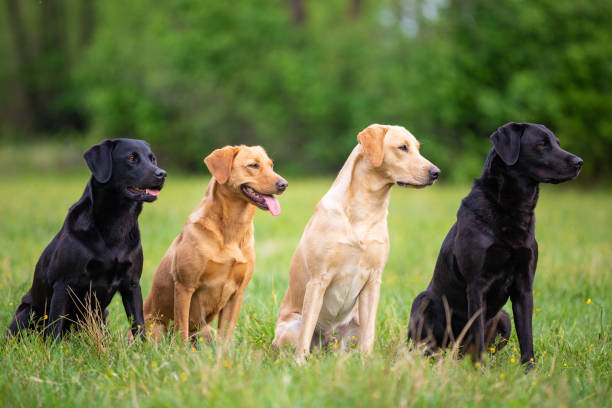
Introduction: Why the Labrador Retriever Demands a Dedicated Strategy
The Labrador Retriever consistently ranks as one of the world’s most popular dog breeds—and for good reason. They are intelligent, eager-to-please, affectionate, and resilient. However, their reputation for being “easy to train” often masks the reality: they are high-energy, high-drive, and slow to mature.
A Labrador puppy needs structure, consistency, and an early start to channel their abundant enthusiasm. Without proper guidance, their powerful physique, intense retrieving drive, and insatiable appetite can quickly turn charming puppy antics into challenging adolescent behaviors.
This comprehensive guide is designed to navigate every stage of a Labrador’s development, providing the techniques necessary to nurture them into a well-behaved, balanced, and joyful companion.
Part I: The Labrador Mindset and Pre-Training Essentials
1. Understanding the Labrador Temperament
Before training begins, understanding the Lab’s core traits is vital:
- Motivation: Labs are overwhelmingly motivated by food, praise, and retrieving. They respond best to positive reinforcement—using high-value rewards (cheese, hotdogs, specific toys) to mark desired behaviors. Punishment is counterproductive and can damage their eager-to-please nature.
- Energy and Maturity: Labs are often puppies mentally until 2 to 3 years old. They require extensive daily exercise (physical and mental) long after they look like adults. Failure to meet these energy needs results in destructive chewing, digging, and hyperactivity.
- High Drive: Their historical role as working gundogs means they possess an intense drive to hold things in their mouth (the “soft mouth”), retrieve, and follow scent. This necessitates immediate training on appropriate chewing and retrieving boundaries.
2. Preparing the Environment (The First Week)
The first week a Lab puppy or rescue enters your home is not about formal lessons, but about establishing routine and safety.
- Establish the “Safe Zone”: The crate should be introduced immediately as a den, not punishment. It should be comfortable, covered, and placed in a high-traffic area initially to prevent isolation anxiety.
- Puppy-Proofing: Labs are oral explorers. Everything reachable must be secured: electrical cords, toxic plants, small objects, and expensive shoes. Assume anything they can reach, they will chew.
- Routines are King: Labs thrive on predictability. Set fixed times for waking, feeding, play, training sessions (short, 5 minutes max), and bedtime. This accelerates housetraining and reduces anxiety.
Part II: Foundation Training (0–6 Months)
The puppy stage is focused on socialization, impulse control, and critical environmental exposure.
3. Critical Socialization (8 to 16 Weeks)
This is arguably the most important training window. A lack of positive exposure during this phase can lead to lifelong fear or aggression.
- Exposure vs. Interaction: Socialization means safe, positive exposure to new sights, sounds, surfaces, and people, without forcing interaction.
- Sounds: Thunderstorm recordings, vacuums, loud traffic.
- Surfaces: Grass, pavement, gravel, metal grates, stairs.
- People: Different ages, heights, uniforms (hats, sunglasses, medical masks).
- The “Rule of 100”: Aim to positively introduce the puppy to 100 different things, places, or people by 4 months old (always ensuring safety and full vaccination status for dog parks).
- Positive Association: Every new exposure must be paired with high-value treats and praise to ensure the puppy views the world as safe and rewarding.
4. Housetraining and Crate Training Mastery
A. Housetraining (The Three-Tiered Approach):
- Strict Schedule: A Labrador puppy needs to eliminate every 30–45 minutes while awake, immediately after waking, after playing, and after eating/drinking.
- Location and Reward: Take the puppy to the designated spot (ideally the same patch of grass). Wait silently. The INSTANT they finish, throw a party: verbal praise (“Good potty!”), excitement, and a treat reserved only for this achievement.
- Accident Protocol: If an accident happens indoors, clean it thoroughly with enzymatic cleaner (to destroy odors that encourage repeat soiling) and ignore the puppy. Never yell or punish; this only teaches them to fear eliminating in front of you.
B. Crate Training for Independence:
The crate is essential for impulse control, housebreaking, and preventing destructive behavior during supervision gaps.
- Gradual Introduction: Feed all meals in the crate. Toss toys inside. Start with 5-minute intervals when you are home, gradually increasing duration.
- The “Mandatory Quiet Time”: Labs need to learn to be bored. Assign 1–2 hours daily where the puppy must be quietly resting in the crate, even if you are home. This prevents the development of separation anxiety.
5. Managing Biting, Nipping, and Mouthiness
The Labrador mouth is a major challenge during the first six months. They use their mouths to explore, play, and chew.
- Bite Inhibition: Puppies learn the strength of their bite from littermates. When the puppy bites too hard on human skin, use the “yelp and withdrawal” method: withdraw all attention (leave the room or stand up) immediately. This mimics the reaction of a littermate.
- Redirection: Always keep appropriate chew toys (Kongs, Nylabones, durable rubber toys) accessible. When the puppy mouths you or inappropriate objects, redirect them to the toy, praising them when they accept the redirection.
- Frozen Distractions: For teething pain (4–6 months), use frozen carrots, frozen Kongs filled with peanut butter, or ice cubes to soothe their gums.
Part III: Basic Obedience and Control (6–12 Months)
As the Lab transitions into adolescence, trainers must focus on proofing commands against distractions and building reliability. Short, high-repetition sessions are key.
6. The Core Five Commands
Positive reinforcement and the use of high-value food lures are the fastest way to teach these commands.
A. Sit
- Method: Hold a treat to the dog’s nose and move it in an arc over the top of their head towards their tail. Their nose follows the treat, naturally lowering their hindquarters.
- Cue: As their rear touches the ground, say “Sit” and immediately reward.
B. Down (The Importance of Calm)
- Method: Start from a Sit position. Hold a treat at the dog’s nose and move it straight down to the floor, then slowly pull it along the floor away from the dog.
- Note: Down is a command that teaches deference and calm. Practice “Down” on a mat or bed (known as “Place” or “Mat Training”) frequently to build a relaxation cue.
C. Come (The Reliable Recall/Emergency Stop)
A reliable recall is non-negotiable for a large, impulsive breed like the Lab.
- The Foundation: Start in a low-distraction environment. Say the recall word (“Come!” or their name) and immediately run backward while sounding excited. When they reach you, give them the highest-value reward possible (chicken, liver). Never use the recall command for something negative (like medication or leaving a fun park).
- The “Check-In”: Reward the Lab any time they look at you or approach you voluntarily during play. This teaches them that checking in with the owner is more rewarding than anything else.
D. Stay/Wait
- Method: This is primarily taught after the dog understands Sit or Down. Give the command (“Stay”) and take one step back. Immediately step forward and reward the dog if they haven’t moved.
- Proofing: Gradually increase duration (time) and distance (steps), always returning to the dog to deliver the reward, never calling them out of the stay initially.
E. Loose-Leash Walking (The Battle Against the Lab Pull)
Labradors, especially adolescents, are renowned for pulling intensely. Traditional leash corrections are rarely effective; focusing on position and reinforcement is better.
- The Zero-Tolerance Method: The moment the leash tightens (the dog pulls), stop moving entirely. Stand still, like a tree. Only when the dog slackens the leash (even slightly) or looks back at you, start walking again.
- Reinforce Position: Reward the dog frequently (every 5-10 feet) when they are walking with a slack leash near your side, making your side the most rewarding place on the planet.
- Equipment: A front-clip harness or a head halter (Halti) can be invaluable temporary tools to manage their physical strength while training the behavior. Avoid retractable leashes, which teach the dog that pulling earns distance.
Part IV: Intermediate Training and Impulse Control (12+ Months)
The focus shifts from learning commands to refining them under real-world conditions.
7. Proofing Commands: The 3 Ds
To achieve reliability, every command must be generalized across the 3 Ds:
- Duration: How long the dog can hold the position (e.g., 5 minutes in a Down).
- Distance: How far away the handler can be (e.g., leaving the dog in a Stay while you walk across a room).
- Distraction: The difficulty of the environment (e.g., a Sit command while a squirrel runs by or other dogs are playing).
Start proofing one variable at a time using high-value treats and gradually increasing the difficulty.
8. Crucial Impulse Control Training
Labs are known for acting before they think, especially regarding food. Impulse control is life-saving and critical for a polite family dog.
A. Leave It
- Foundation (Low Value): Place a low-value treat on the floor. Cover it with your hand. Say “Leave It.” When the dog stops sniffing/trying to get the treat and looks up at you, reward them with a different, higher-value treat from your other hand. This teaches them that ignoring the lure earns a better reward.
- Advanced (Real-World): Practice “Leave It” on dropped food, discarded trash, or other dogs’ toys.
B. Wait/Tether Training
- Doorway Manners: Teach the Lab they must sit and wait for a release cue (like “Okay!”) before walking through a door, getting out of the car, or approaching their food bowl. This prevents bolting and teaches respect for boundaries.
- The Premack Principle: Use the opportunity to go outside (a high-value activity) as a reward for a good “Sit” or “Wait” (a low-value activity).
9. Management of Common Labrador Challenges
A. Counter Surfing and Food Theft
Labs are skilled thieves due to their size and determination. Management is the first line of defense.
- Management: Never leave food unattended on countertops. Keep kitchen counters clutter-free.
- Training: Practice “Leave It” near the counters. If you catch your Lab with their paws up, use a sharp, neutral interrupt command (“Ah-ah!”) but do not yell. If they jump up and you are not ready to intervene, ignore the behavior (the reward for jumping is the food they steal, not your attention).
B. Excessive Jumping (The Greeting Enthusiast)
A 75lb adolescent Lab jumping on guests is unacceptable.
- The “Four Paws on the Floor” Rule: The dog only receives attention (praise, petting, acknowledging) when all four paws are touching the ground. The moment they jump, turn your back, cross your arms, and ignore them completely.
- Alternative Behavior: Train an incompatible behavior, such as “Sit to Greet.” Ask your dog to sit when a guest arrives. Guests should only calmly greet the Lab when they are sitting. If the dog breaks the sit, the greeting stops immediately.
Part V: Specialized Labrador Training (The Working Dog’s Niche)
Labs often thrive when given a job that utilizes their innate intelligence and drive. These activities fulfill their high energy needs and strengthen the human-canine bond.
10. Introduction to Field and Retrieving Work
Labs are natural retrievers, but their skills must be refined into dedicated tasks.
- The “Hold” Command: This is essential for field work. Teach the dog to gently hold an object (a dowel, bumper, or toy) in its mouth until released. This prevents aggressive chewing of retrieved items.
- Advanced Fetch (Directed Retrieve): Move beyond simple fetch to teaching the dog to retrieve specific objects or retrieve from specific locations (using hand signals).
- Water Work: Most Labs naturally love water. Introduce them gently to shallow water (no forcing) and make the experience highly positive, rewarding them for entering and retrieving a floating object.
11. Scent Work and Nose Games
Scent work is a fantastic way to tire out a Lab mentally, which is often more exhausting than physical exercise.
- Find It Game: Hide treats or your dog’s favorite toy in increasing levels of difficulty (under cups, behind doors, buried in blankets). Use the command “Find It!” to start the search.
- Search and Rescue (SAR) Basics: Labs excel at following odor. Consider classes that introduce basic tracking or competitive nose work, where the dog learns to alert the owner to the presence of a specific target odor (e.g., birch, anise).
Part VI: Long-Term Management and Lifespan Considerations
Training is not a one-time event; it is a commitment for the life of the dog.
12. Adolescence and Training Regressions (6–18 Months)
Just when you think you have a trained adult dog, the Lab hits adolescence. This phase is marked by selective hearing, testing boundaries, and a sudden “forgetting” of commands.
- Do Not Punish: Regression is normal. It means the dog is ready to move to the next level of proofing.
- Back to Basics: If the dog ignores “Come!” in the park, go back to practicing “Come!” on a long line in the backyard. Lower your expectations temporarily and increase the reward value.
- Consistency is Key: The rules must be applied by every single person in the household, every single time.
13. Training Tools and Equipment
While training is based on relationship and motivation, certain tools aid management:
- Long Lines (30 ft.): Essential for teaching and proofing recall in safe, open areas before attempting off-leash freedom.
- High-Value Treats: Small, soft, smelly, human-grade food (e.g., boiled chicken, cheese cubes) used solely for training difficult behaviors.
- Durable Chew Toys: Prevent destructive chewing by providing appropriate outlets. Labs should always have access to appropriate chew items.
14. Exercising the Lab: Mind and Body
A trained Labrador is often a tired Labrador. Training success is unsustainable without adequate physical and mental exercise.
- Physical: 60–90 minutes of vigorous activity daily (fetching, swimming, jogging, structured play). Short walks are not enough for this breed.
- Mental: Incorporate puzzle toys, training sessions, scent work, and kongs. Even 15 minutes of structured mental work can tire a Lab as much as a 30-minute run.
15. The Senior Lab (7+ Years)
As Labs age, their needs shift:
- Continued Mental Engagement: Maintain short, fun training sessions to keep their minds sharp, even if physical activity is reduced due to arthritis.
- Health Awareness: Be sensitive to signs of discomfort. A dog that suddenly refuses a “Down” command might be in pain, not being defiant. Adjust routines for comfort.
- Diet and Weight Management: Labs are prone to obesity, which exacerbates joint issues. Strict portion control is vital, especially as their metabolism slows.
Conclusion
Training a Labrador Retriever is a rewarding, multi-year journey defined by high motivation, enthusiasm, and relentless loyalty. By embracing positive reinforcement, maintaining iron-clad consistency, and respecting the breed’s powerful drive and energy needs, owners can successfully navigate the challenges of the puppy and adolescent phases. The result is not just a well-behaved dog, but a brilliant, highly responsive, and devoted companion that truly embodies the “Golden Standard” of dog ownership.
#LabradorTrainingGuide #PuppyTrainingTips #LabradorLife #DogBehavior #PositiveReinforcement #FamilyDogTraining Instagram: #LabradorsofInstagram #TrainingGoals #HappyLab #PuppyLove #DogTrainingHacks #BlackLab #YellowLab #ChocolateLab YouTube: #LabradorTrainingTutorial #HowToTrainADog #DogTrainingVideo #BestDogBreed #LabradorTips #ObedienceTraining







Add comment