
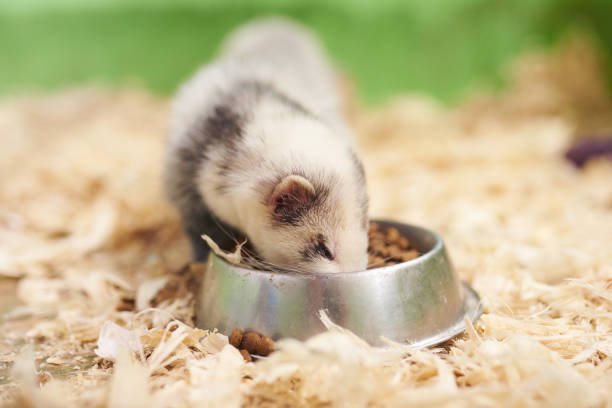
Introduction: The Enigma of Ferret Elimination
Ferrets (Mustela putorius furo) are mischievous, intelligent, and highly driven creatures. While they are not inherently difficult to litter box train, unlike cats or dogs, their compliance is often dictated by convenience, context, and, crucially, their health. Ferrets are creatures of habit; they prefer to eliminate shortly after waking, eating, or engaging in intense play—and they almost always choose a corner.
A sudden lapse in litter box fidelity—where a previously reliable ferret begins consistently missing the box, eliminating right next to it, or using entirely new locations—is rarely malicious. In the world of ferret ownership, inappropriate elimination is one of the most stressful behavioral issues, but it must always be treated, first and foremost, as a critical indicator of underlying distress or illness.
This comprehensive guide delves into every potential cause, from critical medical emergencies to subtle environmental stressors, providing an exhaustive diagnostic framework for resolving sudden litter box accidents in ferrets.
I. The Critical First Step: Veterinary Triage and Ruling Out Health
When a ferret suddenly starts missing the litter box, the problem is statistically more likely to be medical than behavioral. Ferrets hide pain and discomfort masterfully. By the time a symptom (like accidents) becomes obvious, the underlying issue may be advanced. Immediate veterinary consultation is mandatory. Do not attempt behavioral correction until a clean bill of health has been obtained, or until the diagnosed medical issue is being effectively managed.
A. Urinary System Pathology
Issues within the urinary tract are the most common causes of house-soiling, as they directly impact the ferret’s ability to control and manage elimination frequency and discomfort.
1. Urinary Tract Infections (UTIs)
While less common in ferrets than in cats or dogs, UTIs are a possibility, particularly in females or ferrets with underlying systemic diseases (like adrenal disease).
- Mechanism of Accidents: A UTI causes inflammation and frequent, urgent needs to urinate. The ferret associates the pain or discomfort with the location (the litter box) rather than the act itself, leading them to attempt elimination elsewhere, often just outside the box, hoping the new location will not cause pain.
- Clinical Signs: Frequent squatting, straining (stranguria), cloudy or strong-smelling urine, vocalization during urination, and licking of the area.
- Veterinary Diagnosis: Urinalysis (checking for bacteria, blood, protein, and white blood cells) and potentially a culture and sensitivity test.
2. Urolithiasis (Bladder Stones and Crystals)
Bladder stones (calculi) are a significant concern, especially in male ferrets due to the narrowness of the urethra.
- Mechanism of Accidents: Stones cause severe inflammation, obstruction, and intense pain upon urination. Frustration and pain lead the ferret to scramble for relief, often stopping mid-squat and voiding wherever they happen to be. Total obstruction is a life-threatening emergency.
- Dietary Link: Often linked to diets high in plant-based proteins, high magnesium, or improper mineral balance.
- Veterinary Diagnosis: Physical examination (palpation), blood work, and mandatory diagnostic imaging (X-rays and/or ultrasound) to confirm the presence, size, and location of the stones.
B. Gastrointestinal System Pathology
While GI issues typically result in diarrhea (which is often difficult to contain in a box), constipation and inflammatory conditions can also disrupt normal elimination patterns.
1. Inflammatory Bowel Disease (IBD)
Chronic inflammation of the intestinal lining (IBD) is common in ferrets.
- Mechanism of Accidents: IBD leads to malabsorption, chronic diarrhea, and urgency. The ferret may not be able to “hold it” long enough to reach the designated area, or the associated discomfort leads to restless behavior and elimination outside the normal zone.
- Clinical Signs: Chronic soft stools, weight loss, vomiting, and often large volume, liquid feces.
2. Megacolon and Constipation
Severe chronic constipation, sometimes seen in older ferrets or those with blockages (such as hairballs), can cause accidents.
- Mechanism of Accidents: When the lower bowel is severely impacted, the ferret strains intensely. This straining can lead to discomfort, associated pain avoidance, and sometimes small amounts of watery stool leaking around the impaction (paradoxical diarrhea), which the ferret deposits outside the routine spot.
C. Systemic and Endocrine Pathology
Diseases affecting the entire body, especially those common in older ferrets (above 3 years), frequently manifest as sudden house-soiling.
1. Adrenal Gland Disease (Hyperadrenocorticism)
This glandular tumor is incredibly common in ferrets and affects hormone production, critically impacting skin, coat, and, indirectly, urination frequency.
- Mechanism of Accidents: Adrenal disease often causes significant swelling of the vulva in females and prostatic enlargement in males. The enlarged prostate can put pressure on the bladder, leading to increased urinary frequency, difficulty emptying the bladder completely, and pain during elimination. The urgency leads to accidents.
- Clinical Signs: Progressive hair loss (starting at the tail/hindquarters), vulvar swelling (females), increased thirst and urination (PU/PD).
2. Insulinoma (Pancreatic Tumors)
Insulinoma causes dangerously low blood sugar (hypoglycemia).
- Mechanism of Accidents: A ferret experiencing a hypoglycemic episode becomes disoriented, weak, trembly, and may even collapse. If the ferret collapses outside the box, they will eliminate where they fall because they lack the physical strength or neurological awareness to find the appropriate spot.
- Clinical Signs: Excessive drooling, pawing at the mouth, listlessness, staring into space, and seizures.
3. Mobility Issues and Pain
One of the most overlooked medical causes is simple musculoskeletal pain, often due to arthritis (especially common in ferrets over 5 years old).
- Mechanism of Accidents: It is painful for a ferret with arthritis in the hips or spine to navigate complex ramps, climb into a high-sided litter box, or hold the squatting position long enough to eliminate. They often seek a flatter, easier surface—which might be the carpet right next to the box.
- Action: If they are suddenly refusing a specific box, check the entrance height. Lower the sides or provide a ramp.
4. Foreign Body Obstruction (FBO)
If the ferret has eaten a piece of rubber, plastic, or foam, a partial obstruction may cause severe abdominal pain and distress, leading to unpredictable elimination.
II. Environmental and Management Factors
Once health has been rigorously ruled out by a veterinarian, attention must turn to the environment. Ferrets are notoriously particular about their bathroom setup. If something has changed in their routine or environment, their elimination habits may follow suit.
A. The Litter Box Itself: Size, Shape, and Access
Ferrets display strong corner preference. If a box isn’t accommodating their biological needs, they will simply use a better corner.
1. Box Placement and Quantity
- The Power of the Corner: Ferrets universally prefer corners. If a box is moved away from their preferred corner, they will likely use the corner the box used to occupy.
- Quantity Control: Ferret experts recommend having one litter box per ferret, plus one extra, strategically placed throughout the home, especially in areas where the ferret spends significant free-roam time. If the accident is happening in a specific non-box location, immediately place a box there.
- Accessibility: Is the box difficult to reach? Is it placed behind a heavy object or on a high shelf? As ferrets age, complex access becomes a barrier.
2. Box Dimensions and Type
Ferrets back up to eliminate. This means the box must be tall enough to catch their waste and large enough for them to fully turn around without stepping in their own mess.
- Triangular vs. Rectangular: While corner boxes (triangular) are popular, many ferrets find them too small, forcing them to turn sideways or eliminate over the edge. Rectangular boxes placed deep into the corner, secured with clips or Velcro, often provide better coverage.
- The Height Barrier: If the sides are too low, the ferret will back over them, resulting in a pile right outside the box. If the sides are too high, see the section on mobility issues (I.C.3.).
B. Litter Medium: Texture, Scent, and Aversion
Ferrets have sensitive noses and paws. The wrong substrate is a major cause of aversion.
1. The Perils of Clay and Clumping Litters (NEVER USE)
Clay and clumping litters are strictly forbidden for ferrets.
- Respiratory Danger: The dust can cause fatal respiratory issues.
- GI Impaction: If ingested during grooming or play, clumping litter expands in the GI tract, causing life-threatening blockages.
- Inappropriate Texture: The gritty sensation is unpleasant for their paws.
2. Recommended Substrates
The ideal substrate is scent-free, highly absorbent, and digestible if accidentally ingested.
- Paper Pellets (Recycled Paper): This is the gold standard (e.g., Yesterday’s News or generic equivalent). It absorbs odor well, is low-dust, and has a texture that ferrets accept.
- Wood Pellets (Hardwood ONLY): Heat-treated wood pellets (like those used for wood stoves or horse bedding, provided they are not pine or cedar shavings) are highly absorbent and low-dust.
- Caution on Softwoods: Never use pine or cedar shavings, as they contain volatile oils (phenols) that are toxic to the ferret respiratory system and liver.
3. Scent and Cleanliness Aversion
Ferrets are exceptionally clean and will not use a heavily soiled box.
- Ammonia Build-up: Ferret urine is potent. If the box smells strongly of ammonia, the ferret will seek a cleaner, fresher spot, which is often the floor or carpet.
- Scented Litters: Avoid any litter with added perfumes or scents. Ferrets rely heavily on scent for navigation and comfort; chemical scents are often repulsive to them.
C. Improper Cleaning and Scent Management
Ferret elimination is also a strong marking behavior. If the area where the accident occurred is not cleaned properly, the ferret is biologically compelled to continue using that spot.
1. The Importance of Enzymatic Cleaners
Standard household cleaners (bleach, ammonia-based cleaners) do not destroy the biological markers (pheromones and proteins) in ferret urine and feces; they only mask them temporarily for humans.
- Actionable Strategy: Any accident spot must be treated with a high-quality enzymatic cleaner designed to break down pet waste. If the area is carpeted, the cleaner must soak deep enough to reach the padding beneath. Failure to use an enzyme cleaner guarantees repeat offenses.
2. Misguided Punishment
Yelling, confrontation, or physically placing the ferret “in the corner” after an accident is counterproductive.
- Negative Association: This teaches the ferret to fear you or to fear eliminating while you are present, but it does not teach them to use the box. They will simply find a hidden spot (behind furniture, under blankets) to eliminate, making cleanup and observation significantly harder.
- The Rule of the Moment: Training is effective only if the correction/reinforcement happens in the exact moment of the act. If you find an accident 5 minutes later, the moment for training has passed.
III. Behavioral and Psychological Triggers
If health and environment are optimized, the behavior is likely rooted in stress, territoriality, or changes in the social structure.
A. Stress and Anxiety
Ferrets are sensitive to major shifts in their environment. Stress can override learned behaviors.
1. New Additions or Losses
- Human Changes: A new baby, a new roommate, or the loss of a family member can cause sufficient anxiety to disrupt established routines.
- Pet Changes: The introduction of a new pet (another ferret, dog, or cat) often triggers a territorial response, leading the established ferret to mark territory aggressively outside the box. Conversely, the death of a cagemate can lead to depression and careless elimination.
2. Relocation and Change in Free-Roam Area
Moving to a new home or even just restructuring the layout of the cage or room can cause temporary confusion and stress. Ferrets rely on familiarity. If their “safe zone” changes, their instinct is to re-establish boundaries, often through scent marking (i.e., missing the box).
3. Noise and Stimulation
A drastic, sudden increase in noise (e.g., construction starting outside, new noisy appliances) can make the ferret feel vulnerable when sequestered in the litter box, leading them to eliminate quickly in a more sheltered spot.
B. Territorial and Dominance Marking
While ferrets are generally social, conflicts within a business (ferret group) can lead to marking outside the box, especially if the box is perceived as a shared, high-value resource.
- Mechanism: If a dominant ferret is blocking access or harassing a subordinate ferret near the box, the subordinate ferret may avoid the box entirely and select a “safer”, less contested spot.
- Observation: Monitor interactions around the box. Is one ferret guarding it? Are there signs of squabbling just before elimination?
C. Aging and Cognitive Decline
Ferrets live an average of 6-8 years, but significant age-related changes often begin around age 5.
1. Hind Leg Weakness
If the ferret is struggling with hind-end weakness (often associated with Adrenal disease or chronic pain), they may lack the coordination to navigate or maintain the squat. This physical difficulty leads to selection of easier, flatter surfaces.
2. Cognitive Dysfunction Syndrome (CDS)
Similar to dementia in dogs and cats, older ferrets can experience confusion, disorientation, and memory loss. They may forget where the litter box is entirely or forget the association between the box and the act of elimination.
- Management: Increase the number of boxes, place them directly next to resting spots, and use high-contrast bedding or materials to help them orient themselves.
IV. Advanced Intervention and Retraining Strategies
Once medical causes are addressed and environmental adjustments are made, a strict retraining protocol must be implemented. This process requires patience, high vigilance, and consistency.
A. The Litter Box “Boot Camp” (Confinement)
The most effective method for recalibrating a ferret’s elimination habits is temporary, supervised confinement.
1. Strict Cage Confinement (The First 72 Hours)
- Goal: Re-establish the association between the cage, the box, and elimination.
- Execution: For 2-3 days, the ferret should be confined to the smallest level of the cage or a small playpen, large enough only for a sleeping area, feeding station, and the litter box. Every corner of the confinement area must contain a litter box, eliminating all other corner options.
- Observation: Watch the ferret closely. When they wake up or finish eating, immediately place them in the litter box.
- Immediate Reward: The moment they successfully eliminate in the box, offer a high-value treat (ferretone, salmon oil, meat paste) and verbal praise.
2. Supervised Free-Roam Time
After the initial confinement period, allow short, supervised free-roam sessions (15-20 minutes).
- Pre-Elimination Protocol: Before letting the ferret out, ensure they eliminate in the box. If they do not, do not reward them with free-roam time yet.
- During Free-Roam: Maintain constant “eagle eye” supervision. Watch for behavioral cues: backing up, darting quickly into a corner, or sudden sniffing. If signs appear, immediately scoop the ferret and place them gently in the nearest litter box.
- Accident Protocol: If the ferret has an accident, do not scold. Simply scoop the ferret into the box, clean the spot immediately with an enzymatic cleaner, and return the ferret to the cage for a brief “time out” (5-10 minutes) before trying again.
B. Scent Management and Decoy Tactics
Ferrets are motivated by the smell of their own waste. This can be used strategically for training.
1. Utilizing Poo Piles as Incentives
Paradoxically, ferrets are sometimes more inclined to use a box that already smells like elimination.
- The Decoy Pile: When cleaning, do not clean the box perfectly. Leave a fresh, small amount of feces (one or two pieces, cleaned up after 12-24 hours) in the designated box to incentivize the ferret to use that spot.
- Cleaning Frequency: While a completely clean box is a deterrent, a box that is too clean (i.e., deep scrubbed daily) may also confuse the ferret if they rely on scent cues. Scoop waste daily, but only perform a deep clean (full replacement of litter) every 3-5 days.
2. Deterrent Strategies for Accident Zones
Once the accident spot has been enzyme-cleaned, steps must be taken to make that area permanently undesirable for elimination.
- Cover the Spot: Place a sleeping hammock, a heavy water bowl, or their food bowl directly on the accident site. Ferrets will not eliminate where they sleep or eat.
- Texture Aversion: Place a rough bath mat, aluminum foil, or cardboard over the area. Ferrets dislike eliminating on unfamiliar or crinkly textures.
- Corner Removal: If a sofa or cabinet corner is the target, physically block access with rigid barriers (Plexiglas, heavy furniture, or baby gates).
C. Addressing the “Right Next to the Box” Phenomenon
If the ferret is eliminating consistently right next to the litter box (but not in it), this is the clearest sign of aversion—either to the box itself, the litter, or mobility/pain issues. This behavioral pattern demands a specific diagnostic sequence:
- Check Box Size and Height: Is the box too small, causing them to miss the margin? Replace with a larger, shallower box.
- Check Litter Type: Does the litter have a scent or texture they dislike? Switch to plain paper pellets.
- Check Cleanliness: Is the box consistently soiled? Increase scooping frequency.
- The Box Swap: If all else fails, physically remove the original box and place a decoy box (e.g., a shallow pan, or a puppy pad) over the exact spot where they have been having the accident. If they use the new box, the aversion was specifically to the old box design or litter.
V. Special Considerations for Complex Cases
A. The Older Ferret with Chronic Conditions
Managing accidents in a ferret with Adrenal disease or Insulinoma is often about harm reduction, not complete cure of the behavioral symptom.
- Multiple, Low-Sided Boxes: Maximize the number of boxes and ensure they require no ramp or step-up. Even a simple disposable Chux pad (puppy pad) placed in a corner may be necessary, as it requires zero physical effort.
- Bedding Material: Switch from fabric bedding to washable puppy pads or towels in the event of an accident. Fabric absorbs urine completely, making cleanup difficult and retaining scent; washable pads are easier to sanitize entirely.
B. The Scared or Bullied Ferret
If the accidents are a result of territorial stress or bullying, managing the social dynamics is key.
- Separate Facilities: Ensure the bullied ferret has a box in a completely private, safe, and easily accessible location that the dominant ferret cannot guard or block (e.g., a separate level of the cage or a different room during play time).
- Neutral Territory Play: Introduce all new or stressful experiences (like meeting a new ferret) in a neutral room that none of the ferrets associate with sleeping or elimination.
C. Documentation is Key
Keep a detailed log of all accidents for 14 days. This log should include:
- Time of Accident: (Right after waking? Mid-play? Middle of the night?)
- Location: (Which corner? Under what piece of furniture?)
- Type of Elimination: (Soft stool, hard stool, small amount of urine, large puddle?)
- Preceding Activity: (Eating, playing, woke up, scared by noise?)
This documentation allows for pattern recognition. For instance, if large urine puddles occur only 15 minutes after waking, it suggests a potential medical issue (PU/PD or urgency). If small smears of feces occur during aggressive play, it suggests territorial marking.
Conclusion: Patience and Persistence
A sudden lapse in litter box habits in a ferret signals a breakdown in trust, comfort, or health. The road to resolving inappropriate elimination is systematic: Rule out health, optimize the environment, then implement focused, positive retraining.
Ferrets are creatures that thrive on routine and consistency. By treating the environment as a teaching tool (making the correct choice easy and the incorrect choice undesirable), and by ensuring their physical needs are met, owners can successfully guide their ferrets back to reliable litter box usage. This demanding process requires immense patience, but the health and happiness of the ferret depend on the owner’s commitment to finding the root cause.
#FerretsOfInstagram, #FerretHealth, #FerretCare, #LitterBoxTraining, #PetHealth, #ExoticPets, #Ferrets101, #VeterinaryMedicine, #TroubleshootingPets, #FerretLife, #MustelaPutoriusFuro, #PetTrainingTips, #FerretsAreFamily, #SmallPetHealth, #FerretAccidents




Add comment