
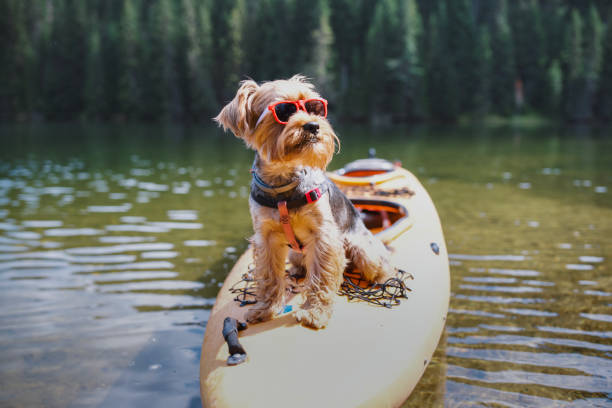
The ultimate goal of puppy training isn’t just to have a well-behaved dog in your living room; it’s to have a confident, well-adjusted, and obedient companion who can navigate the real world with grace and responsiveness. This requires “taking your training on the road” – exposing your puppy to various environments and distractions.
This comprehensive guide will walk you through the principles, strategies, and practical steps to generalize your puppy’s training, ensuring they become a reliable and joyful partner in any setting.
Taking Your Training on the Road: Different Environments & Distractions In Puppies
I. The Foundation: Why & What Before You Go
Before venturing out into the wider world, it’s crucial to establish a strong foundation.
A. The “Why” of Training on the Road:
- Generalization: Puppies (and dogs) don’t automatically transfer what they learn in one place to another. A “sit” in your quiet kitchen isn’t the same as a “sit” on a busy city sidewalk.
- Reliability: You want your puppy to respond to commands even when there are tempting distractions. This is crucial for safety and a harmonious life together.
- Confidence & Socialization: Controlled exposure to new sights, sounds, and smells helps your puppy build resilience, reduces fear, and fosters positive associations with the world around them.
- Enrichment: Exploring new places is mentally stimulating for your puppy and strengthens your bond.
B. Prerequisites: Home Base Mastery:
Your puppy should have a solid understanding of these basic commands in a low-distraction environment (e.g., your home, quiet backyard) before you start “on the road”:
- Focus/Watch Me: The ability to make eye contact and/or pay attention to you.
- Sit & Down: Reliable stationary commands.
- Stay (brief): The ability to hold a position for a few seconds.
- Come/Recall: Coming when called (crucial for safety).
- Loose Leash Walking Basics: Walking without pulling excessively.
- Leave It: Ignoring unwanted items.
- Name Recognition: Responding consistently to their name.
II. Core Principles for Training on the Road
These principles are paramount for successful and positive training experiences outside the home.
A. The Golden Rule: Gradual Progression: Start easy and slowly increase the challenge. Think of it like a ladder – you climb one rung at a time, not leap to the top.
B. The Three D’s: Distance, Duration, Distraction: These are your levers for increasing difficulty. Master one, then slowly introduce another.
- Distance: How far are you from your puppy? How far away is the distraction?
- Example: Initially, practice “Stay” with you right next to your puppy. Then, gradually increase the distance between you and your puppy.
- Duration: How long should your puppy hold a command?
- Example: Start with a 1-second “Sit.” Gradually extend it to 5, 10, then 30 seconds.
- Distraction: The most challenging element. Start with minimal distractions and gradually increase their intensity.
- Example: Practice “Sit” in a quiet room, then in the backyard, then on a quiet street, then near a park, then near a bus stop.
C. High-Value Rewards: Outside, the world is full of amazing smells, sounds, and sights. Your usual kibble might not cut it. Bring an array of high-value treats (cooked chicken, cheese, hot dogs, specific squeaky toys) to ensure your puppy finds training more rewarding than the distractions.
D. Short, Positive Sessions: Puppies have short attention spans. Keep training sessions brief (2-5 minutes) and always end on a positive note. Multiple short sessions are better than one long, frustrating one.
E. Observation & Adjustment: Constantly read your puppy’s body language. Are they stressed? Overwhelmed? Excited? Frustrated? Adjust your environment or task accordingly. If they’re struggling, make it easier. If they’re succeeding, you can take a small step forward.
F. Set for Success: Never put your puppy in a situation where they are likely to fail or be overwhelmed. This means choosing the right time, place, and level of distraction.
III. Navigating Different Environments
Let’s break down how to approach various settings, moving from low to high distraction.
A. Low-Distraction Zones:
- Your Backyard/Garden:
- Purpose: The first step outside the home. Practice with familiar smells and sounds but new surfaces and open space.
- Training Focus: Reinforce all basic commands. Play fetch, practice recall, work on loose-leash walking around the perimeter.
- Distractions: Squirrels, birds, neighborhood sounds.
- A Quiet Street (Early Morning/Late Evening):
- Purpose: Introduces new sights (parked cars, houses), sounds (distant traffic), and smells.
- Training Focus: Loose-leash walking, “Heel,” “Sit” at curbs, “Watch Me” when a car passes slowly.
- Distractions: Parked cars, distant people, other dogs (from afar), garbage bins.
B. Moderate-Distraction Areas:
- Local Park (Off-Peak Hours):
- Purpose: Introduces more movement, people, and potential dog encounters from a distance.
- Training Focus: “Sit/Stay” on a bench, “Come” in a slightly larger area, “Leave It” for dropped food or interesting smells. Practice polite greetings with calm people/dogs (if appropriate and safe).
- Distractions: Joggers, children playing, other dogs (leashed), squirrels, different ground textures. Start on the periphery of the park, gradually moving deeper.
- Pet-Friendly Store (e.g., PetSmart, Home Depot):
- Purpose: Excellent for indoor public exposure. Different flooring, sounds, smells, and people.
- Training Focus: Focus work amidst aisles, polite walking between shelves, “Sit/Down” for short waits, ignoring other dogs from a distance. Positive association with new sounds (shopping carts, intercoms).
- Distractions: Other pets, people, carts, loud noises, many new smells. Keep sessions very short.
- Sidewalks/Busy Neighborhoods:
- Purpose: Prepares for urban environments. Constant movement and noise.
- Training Focus: Advanced loose-leash walking, “Sit” at all crosswalks, “Watch Me” as people/cars pass, “Leave It” for trash or food on the ground.
- Distractions: Passing cars, bicycles, pedestrians, other dogs, construction noises, sirens, food wrappers.
C. High-Distraction Arenas (Approach with Caution for Puppies!):
- Busy Outdoor Market/Mall (Observational Only):
- Purpose: Exposure to a cacophony of sights, sounds, and smells without direct interaction.
- Training Focus: Find a quiet bench slightly away from the main action. Practice “Watch Me,” reward for calm observation. Do NOT aim for direct engagement with everything. This is about desensitization to chaos.
- Distractions: Crowds, music, food smells, children screaming, various languages. Keep sessions extremely short (5-10 minutes max).
- Dog Parks (From a Distance/Observing):
- Purpose: Desensitize to the sight and sound of multiple dogs playing. Avoid direct entry with a young puppy until fully vaccinated, consistently well-socialized, and showing excellent recall and manners.
- Training Focus: Sit outside the fence, reward for calm observation. “Watch Me” if your puppy gets too fixated.
- Distractions: Barking, running dogs, excited people.
- Outdoor Cafes (If dog-friendly):
- Purpose: Practicing calm behavior in a relaxed social setting.
- Training Focus: Practicing “Down/Stay” under the table, ignoring dropped food or passing patrons. Rewarding for quiet, settled behavior.
- Distractions: Food smells, people talking, waiters, other dogs (sometimes).
D. Specific Scenario Training:
- Car Rides:
- Purpose: Positive association with vehicle travel.
- Training Focus: Start with short, positive trips. Reward for calm behavior. Practice going to the car, getting in, settling.
- Distractions: Movement, other cars, car sickness.
- Vet Visits:
- Purpose: Positive association with the clinic and handling.
- Training Focus: Go for “happy visits” where no procedures are done, just treats and praise from staff. Practice stepping on the scale, being handled.
- Distractions: Other animals, strange smells, medical equipment.
- Groomer Visits:
- Purpose: Positive association with grooming and handling.
- Training Focus: Introduce the groomer, brush, clippers (off), water. Reward for tolerance.
- Distractions: Clippers, dryers, water, strange hands.
IV. Conquering Common Distractions
Here’s how to specifically tackle different types of distractions.
A. Visual Distractions (People, Dogs, Cars, Squirrels, Moving Objects):
- Strategy: Start far away from the distraction. As the distraction appears, perform a known command (e.g., “Sit,” “Watch Me”). Reward heavily for success. Gradually decrease distance or increase the intensity of the distraction.
- Exercise: “Look at That!” Point to the distraction, say “Look at that!” As your puppy looks, reward them for looking back at you or for calmly observing. The goal is not to ignore, but to observe and then re-engage with you.
- Exercise: “Pass By”: When a distraction (person, dog) is approaching, have your puppy perform a “Sit” or “Heel” on the opposite side of you. Reward as the distraction passes without reaction.
B. Auditory Distractions (Loud Noises, Sirens, Other Dogs Barking, Construction):
- Strategy: Desensitization and counter-conditioning. Pair the sound with something positive.
- Exercise: “Sound Association”: Play recordings of potentially alarming sounds (fireworks, thunder, sirens) at a very low volume while your puppy is eating or playing. Gradually increase the volume over days/weeks, ensuring they remain calm.
- Exercise: “Sudden Noise”: If a sudden noise occurs, remain calm yourself. Give a treat and praise. Your calm reaction helps your puppy understand it’s not a threat.
C. Olfactory Distractions (Smells of Other Animals, Food on the Ground):
- Strategy: Teach strong “Leave It” and “Come.”
- Exercise: “Leave It”: Practice with increasing value items indoors, then outdoors. Start with low-value items (leaf), then high-value (dropped treat). Reward for disengaging from the smell.
- Exercise: “Find It/Sniff It (on cue)”: Teach your puppy that you control when they get to sniff. Release them with a “Find It!” or “Go sniff!” cue after a period of focus/walking, then call them back.
D. Tactile & Environmental Distractions (Different Surfaces, Weather, Moving Objects):
- Strategy: Positive exposure and desensitization.
- Exercise: “Surface Safari”: Walk on different surfaces – grass, pavement, gravel, grates, carpet, wood. Reward for calm movement on each.
- Exercise: “Weather Warrior”: Short, positive exposures to light rain, wind, or snow (ensure they are comfortable and warm). Pair with high-value treats and praise.
- Exercise: “Object Curiosity”: Let them investigate novel, safe objects (like a garden gnome or a new planter) at their own pace. Reward for calm curiosity, not fear or intense fixation.
V. Key Skills to Practice On-the-Go
Integrate these skills into your environmental training.
A. Focus/Watch Me:
- Practice: In new environments, randomly ask for “Watch Me.” Reward eye contact immediately. Use it when approaching a distraction to regain attention.
B. Loose Leash Walking:
- Practice: Start in low-distraction areas. When your puppy pulls, stop. Only move forward when the leash is loose. Reward frequently for walking calmly by your side. Use changes of direction to keep them engaged.
C. Sit/Down/Stay (Reliable Positions):
- Practice: At every curb, ask for a “Sit.” While waiting for a friend, ask for a “Down/Stay.” In a park, practice “Sit/Stay” as a jogger passes further away.
D. Come (Reliable Recall):
- Practice: In a securely fenced area with minimal distractions. Start close, then gradually increase distance. Make coming back to you the most exciting thing ever (party, jackpot treats!). Introduce mild distractions only when recall is strong.
E. Leave It/Drop It:
- Practice: Crucial for safety. If your puppy targets something undesirable, use “Leave It.” Reward when they disengage. If they pick something up, use “Drop It” (exchange for a high-value treat).
F. Polite Greetings:
- Practice:
- With people: Only allow greetings if your puppy can keep “four on the floor” (not jumping). Have people approach you and your puppy calmly. Reward for calm “Sits” before allowing interaction.
- With other dogs: If both dogs are appropriate, allow a brief, loose-leash sniff. Keep greetings short and positive. If your puppy seems overwhelmed or overly excited, redirect their focus to you.
VI. Troubleshooting & Common Challenges
A. Overwhelm & Shut Down:
- Signs: Hiding behind you, refusal to move, cowering, excessive licking, yawning, panting, tail tucked.
- Solution: You’ve gone too far, too fast. Immediately move to a quieter, less stimulating area. Revert to easier tasks or simply observe calmly. End the session if necessary and try again another day in a less challenging spot.
B. Ignoring Commands:
- Signs: Puppy looks at you but doesn’t respond, or acts like they didn’t hear you.
- Solution: The distraction level is too high, or your reward isn’t high-value enough. Reduce the distraction (increase distance, change environment). Re-establish the command in an easier setting, then try again with a better treat. Your puppy isn’t being stubborn; the environment is just more rewarding than you are right now.
C. Reactivity/Excessive Barking (Puppy Version):
- Signs: Lunging, barking, growling, intense staring at a specific trigger (e.g., another dog, a person).
- Solution: This requires careful management. Move further away from the trigger so your puppy is below their “threshold” (where they can still think). Practice “Look at That!” or simply reward for calm observation. Never punish reactivity, as it can worsen fear. Seek professional help if it escalates.
D. Fear & Avoidance:
- Signs: Refusing to walk on a specific surface, shying away from certain objects, trying to leave an area.
- Solution: Gentle desensitization and counter-conditioning. Don’t force your puppy. Let them approach at their own pace. Place treats near the scary object/area. Reward for even looking at it calmly. Make it a game.
VII. Essential Tips for Success
- Safety First: Always use a well-fitting harness (prevents neck injury) and a sturdy leash. Never use retractable leashes in public training. Ensure your puppy is fully vaccinated before going to public places.
- Be Patient & Positive: Training takes time, especially with puppies. Celebrate small victories. Avoid harsh corrections or punishment; it damages trust and can create fear.
- Read Your Puppy’s Body Language: This is your most important tool. Learn to recognize signs of stress, fear, excitement, and comfort.
- Know When to End a Session: Always end on a high note, even if it means doing one easy “Sit” and generously rewarding it.
- Be Prepared: Always carry high-value treats, poop bags, water, and perhaps a favorite toy.
- Vaccinations & Health: Ensure your puppy is up-to-date on all vaccinations and parasite prevention before exposing them to environments with other animals.
- Balance Socialization with Training: While exposure is key, not every outing needs to be an intense training session. Sometimes, just sitting quietly and observing, or having a fun sniff walk, is valuable for confidence building.
- Consult a Professional: If you encounter significant challenges or feel overwhelmed, don’t hesitate to seek guidance from a certified professional dog trainer (CPDT-KA) or a veterinary behaviorist.
Taking your puppy’s training on the road is an incredibly rewarding journey that builds confidence, strengthens your bond, and sets them up to be a well-mannered and happy companion in any situation. Remember to be patient, keep it positive, and enjoy exploring the world together!





Add comment