
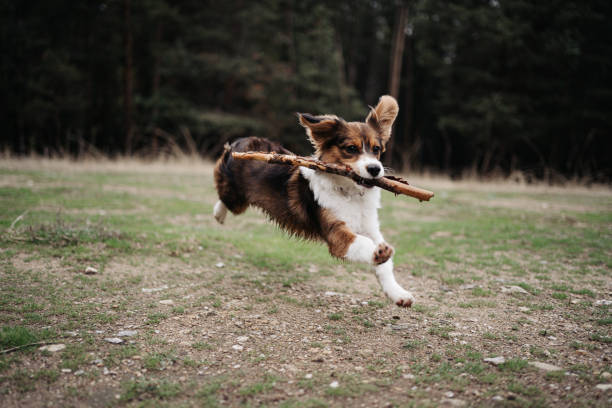
Resource guarding is a common, instinctual behavior in dogs, and it often begins to manifest in puppyhood. While it can be disconcerting for new puppy owners, understanding its roots, recognizing the signs, and implementing positive, proactive strategies can prevent it from escalating into a serious problem.
1. What is Resource Guarding?
Resource guarding is when a dog displays behaviors intended to control or prevent others from accessing a valuable item or location. This “resource” can be anything the dog perceives as important, and the “others” can be other animals or humans.
Common Resources Guarded by Puppies:
- Food: Kibble bowls, high-value treats, chew bones, stolen food items.
- Toys: Specific favorite toys, squeaky toys, or sometimes all toys.
- Sleeping Spots: Crate, dog bed, sofa, or even a specific patch of floor.
- Space: A specific room, an owner’s lap, under a table.
- People: Guarding a favorite human from others (other pets or people).
2. Why Do Puppies Guard Resources?
While concerning, resource guarding is a deeply ingrained, natural canine behavior, rooted in survival.
- Instinctual/Evolutionary: In the wild, access to resources (food, mates, safe dens) is crucial for survival. Dogs evolved to protect what they have to ensure their well-being. This instinct is still very much present in our domesticated pets.
- Litter Dynamics: Puppies in a litter often compete for access to their mother’s milk, the best sleeping spots, and later, for food once they start weaning. This early competition can lay the groundwork for guarding behaviors.
- Learned Behavior:
- Prior Scarcity: Puppies from large litters, those who experienced periods of hunger, or rescues who had to fight for food might develop guarding behaviors out of insecurity.
- Negative Experiences: If a puppy repeatedly has valued items taken away without a positive exchange, they learn that human approach (or another dog’s approach) means losing something good. This reinforces the need to guard.
- Stress and Insecurity: A puppy who feels anxious or insecure in their environment may be more prone to guarding as a way to control their surroundings and protect what little they feel secure about.
- Developmental Stage: As puppies grow, they test boundaries and learn about their environment. Guarding can be part of this exploration of “mine” versus “yours.”
3. Recognizing the Signs: The Guarding Escalation Ladder
It’s crucial to understand that resource guarding exists on a spectrum. Dogs rarely go straight to biting without displaying earlier, more subtle warning signs. Learning to read these early signals allows for intervention before the behavior escalates.
Subtle/Early Signs (Often Overlooked):
- “Freezing” or Stiffening: The puppy stops what they’re doing, their body becomes rigid as you approach.
- Eating Faster: Rapidly consuming food or treats when someone is near.
- Body Blocking: Positioning their body over the resource, turning their back to you, or subtly moving their body to shield the item.
- Hard Stare: Directly looking at the perceived threat with an intense, unblinking gaze.
- Low Growl/Rumble: A soft, almost inaudible growl deep in the throat.
- Lip Licking/Yawning (Out of Context): These can be signs of stress or appeasement.
Moderate Signs (More Evident Warnings):
- More Audible Growling: A clear, continuous growl.
- Lip Curling/Showing Teeth: Pulling back lips to expose canines.
- Air Snapping: Snapping their jaws in the air in the direction of the perceived threat, without making contact.
- Mouth Closed Tightly Around Item: A clear signal they will not relinquish it.
- Ears Pinned Back/Tail Tucked & Stiff: Signs of anxiety combined with defensiveness.
Severe Signs (Aggressive Escalation):
- Nipping/Lunging: Making physical contact without the intent to cause serious injury.
- Biting: Biting with varying levels of pressure, from inhibited (soft) to full-force (hard, potentially breaking skin).
Key Takeaway: The goal is always to address resource guarding at the earliest possible signs to prevent escalation. Never punish a puppy for growling or showing teeth; these are crucial communication signals. Punishing them teaches them to suppress the warning signs and go straight to biting.
4. Preventing Resource Guarding in Puppies (Proactive Strategies)
Prevention is always easier and more effective than treatment, especially with puppies. The goal is to create a positive association with human presence around resources.
- Hand-Feeding: Regularly hand-feed your puppy a portion of their meals. This builds a strong positive association between your hand and food, teaching them that your presence means delicious things.
- The “It’s My Food, But You Can Still Get It” Game:
- While your puppy is eating from their bowl, occasionally walk by and drop an even higher-value treat (e.g., a piece of cooked chicken, cheese) into their bowl.
- Walk away. Repeat periodically.
- This teaches them that human approach adds to their meal, rather than taking it away.
- Trading Games (“Trade Up”):
- If your puppy has a low-value item, offer a high-value item in exchange.
- Say “Trade!” and present the high-value item. When they drop the low-value one, praise and give them the high-value item.
- Once they finish the high-value item, you can often give back the original item.
- Crucial: Never just snatch the item away. This destroys trust and reinforces guarding. Always offer a better alternative. Start with low-stakes items before progressing to more valued ones.
- Teach “Drop It” and “Leave It”: These are essential commands for safety and control. Practice them frequently in low-pressure situations.
- Drop It: Hold a treat to your puppy’s nose. When they open their mouth to sniff, say “Drop It” as the item falls out, then immediately give the treat.
- Leave It: Place a treat on the floor. Cover it with your hand. Say “Leave It.” When your puppy looks away from your hand or makes eye contact, reward with a different treat from your other hand. Gradually increase duration and distance.
- Manage the Environment:
- Multiple Resources: If you have multiple pets, ensure there are more food bowls, water bowls, beds, and chew toys than there are animals. This reduces competition.
- Separate Feeding: Feed puppies and other pets in separate, secure locations to prevent any potential guarding over meals.
- Supervised Chewing: Provide high-value chews (like bully sticks) when you can supervise. If you need to take it away, use the “Trade Up” method.
- Positive Associations with People Approaching: Whenever you approach your puppy while they have something, ensure it results in something good (a treat, a gentle stroke, dropping another toy). Avoid startling them or taking things without a trade.
- Avoid Punishment: Never scold, yell, or physically punish a puppy for growling or guarding. This will only teach them to hide their warnings and make them more likely to bite without warning in the future because they fear your reaction.
- Early Socialization: Positive experiences with various people, places, and other calm, vaccinated dogs can build confidence and reduce overall anxiety, which can contribute to guarding behaviors.
- Teach Children Appropriate Interaction: Supervise all interactions between children and puppies. Teach children to never approach a puppy while it’s eating, sleeping, or chewing. They should also learn how to “be a tree” (stand still, arms to sides, avoid eye contact) if a puppy guards.
5. Addressing Existing Resource Guarding in Puppies (Intervention)
If your puppy is already exhibiting guarding behaviors, it’s crucial to address it calmly and consistently.
- Stop Challenging the Puppy: For now, do not try to take things away from your puppy or physically intervene when they are guarding. This can escalate the behavior and damage trust.
- Management is Key:
- Identify the resources your puppy guards.
- Remove Triggers: If they guard specific toys, put those toys away. If they guard their food bowl, feed them in a secure, quiet area where no one will approach.
- Supervise: Always supervise when the puppy has valued items.
- Separate: If guarding towards other pets, feed and provide chews/toys separately.
- Implement “It’s My Food, But You Can Still Get It” (Counter-Conditioning):
- Start from a distance where your puppy does not show any guarding signs.
- As they eat, walk by at that safe distance and drop a high-value treat near their bowl (not in it, initially, if they are severe), then continue walking.
- Gradually decrease the distance over days or weeks, always observing your puppy’s reaction. If they show any signs of tension, increase the distance again.
- The goal is to change their emotional response: “Human approaching = good treats, not loss.”
- Practice “Trade Up” (Desensitization & Positive Reinforcement):
- Use the trading game described in the prevention section.
- Start with items your puppy guards minimally.
- Always offer something better in return.
- Once they reliably trade, you can try giving the original item back (or another similar item) after the trade, reinforcing that “giving it up” means good things happen, and they might even get their item back.
- Build Confidence and Trust:
- Spend positive, calm time with your puppy.
- Engage in training that builds confidence (e.g., basic obedience, fun tricks).
- Ensure they have a secure, comfortable space they can retreat to without being disturbed.
- Avoid Punishment (Reiterated): Punishing guarding creates a fearful, reactive dog. Focus solely on positive reinforcement-based methods.
6. When to Seek Professional Help
While many puppy guarding behaviors can be managed with consistent positive reinforcement, there are times when professional guidance is essential:
- Escalation to Biting: If your puppy has bitten anyone due to guarding, seek immediate professional help.
- Fear for Safety: If you or your family members feel unsafe around your puppy due to their guarding.
- Lack of Progress: If, after consistent effort, you are not seeing improvement, or the behavior is worsening.
- Uncertainty: If you’re unsure how to proceed or feel overwhelmed.
- Aggression Towards People: Any guarding that results in aggression towards people should be handled by a professional.
Who to Contact:
- Certified Professional Dog Trainer (CPDT): Look for trainers who use positive reinforcement and force-free methods.
- Certified Applied Animal Behaviorist (CAAB): These professionals have advanced degrees in animal behavior.
- Veterinary Behaviorist (DACVB): A veterinarian with specialized training in animal behavior, who can provide both behavioral modification plans and prescribe medication if needed for severe anxiety or fear.
Key Takeaways for Puppy Resource Guarding:
- It’s Normal, But Address It Early: Resource guarding is an instinct, but it needs to be managed and re-directed early in puppyhood.
- Prevention is Paramount: Proactive positive reinforcement in the first few months can prevent serious issues.
- Positive Reinforcement ONLY: Never punish guarding behavior. It only makes it worse and more dangerous.
- Build Trust, Not Fear: Teach your puppy that your presence around their resources means good things happen.
- Consistency is Crucial: Everyone in the household must follow the same protocols.
- Don’t Hesitate to Seek Help: If you’re struggling, a qualified professional can provide tailored guidance.
By understanding the “why” behind resource guarding and consistently applying positive, trust-building techniques, you can help your puppy develop into a confident and secure companion who shares their world (and their toys!) happily with you.






Add comment