
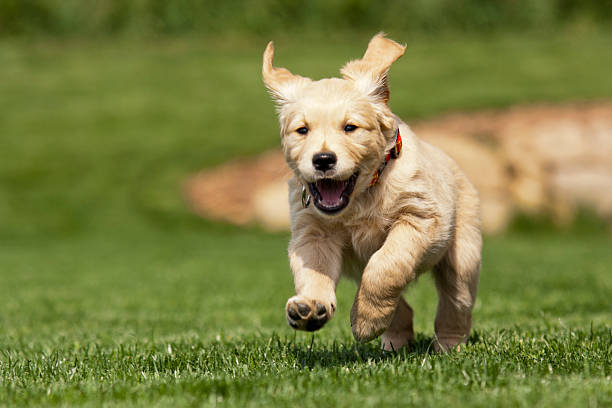
EARS: THE DIRECTIONAL RADAR OF CANINE COMMUNICATION
The ear is far more than an organ of hearing for the dog; it is a sophisticated, versatile communication tool, a directional radar that captures sonic information, processes environmental cues, and broadcasts the dog’s internal emotional state. For the discerning owner, understanding the subtle shifts in canine ear posture unlocks a richer comprehension of their dog’s mental landscape, allowing for preemptive action, safer interactions, and stronger behavioral bonds.
This comprehensive guide delves into the anatomy, mechanics, and nuanced interpretations of canine ear positions, providing a detailed framework—a “visual guide”—for mastering this often-overlooked dimension of dog behavior.
I. THE ANATOMY AND MECHANISM OF OTOLOGICAL COMMUNICATION
To truly appreciate the behavioral significance of ear movements, one must first understand the underlying biological machinery. Dogs possess an extraordinary degree of control over their ears, a trait that sets them apart from humans and many other mammals.
The Power of the Auricular Muscles
The movement and expressive capability of a dog’s ear are governed by a complex network of muscles, collectively known as the auricular muscles. While humans possess only six, primarily vestigial auricular muscles, dogs have approximately 18 to 25 muscles dedicated solely to ear movement.
This abundance of muscular infrastructure allows a dog to perform several remarkable feats:
- Independent Movement: Dogs can rotate, tilt, and swivel each ear independently of the other (asymmetrically).
- Sound Localization: This mobility allows them to pinpoint the source of a sound with high precision, often milliseconds quicker than humans.
- Emotional Expression: The muscles tighten, relax, pull forward, or flatten against the skull to reflect psychological states ranging from intense concentration to severe fear.
The Evolutionary Context: Domestication Syndrome
The shape and mobility of a dog’s ears are intrinsically linked to the process of domestication. Wild canids, such as wolves, possess highly mobile, erect, pricked ears, maximizing their ability to hunt and remain alert in the wild.
As dogs evolved alongside humans (a phenomenon known as Domestication Syndrome), select breeds developed traits associated with juvenility and reduced stress—including the presence of floppy, dropped ears (e.g., Beagles, Golden Retrievers). While dropped ears may slightly reduce the range of visible behavioral signals, the muscles at the base of the ear remain active, meaning all dogs, regardless of ear structure, communicate fundamentally through the set and tension of the ear musculature.
II. THE CORE POSITIONS: A DETAILED VISUAL GUIDE
Canine ear positions can be categorized into five primary behavioral states, each signaling a distinct emotional and cognitive status. The key to accurate interpretation lies in recognizing the tension and direction of the pinna (the external ear flap).
Position 1: Forward and Pricked (The Alert/Investigative Radar)
This is perhaps the most obvious and frequently observed position. The ears are raised, tense, rotated slightly forward, and the inner ear canal is often pointed toward the source of interest (sound, person, scent).
Behavioral Interpretation:
- Focus and Attention: The dog is actively processing high-priority information. This is the canine equivalent of leaning in and saying, “Tell me more.”
- High Confidence: When paired with a relaxed body posture (not stiff or rigid), the forward ear position signals confidence and curiosity.
- Investigative Interest: Common when hearing a doorbell, spotting a squirrel, or anticipating a command.
Nuance: The Difference Between Curiosity and Threat
It is crucial to distinguish between confident curiosity and aggressive intent, as both can involve forward ears:
| Signal | Curiosity (Benign) | Aggression (Threat) |
|---|---|---|
| Ears | Tense, forward, perhaps twitching slightly. | Extremely rigid, hard-set, often angled slightly outward (laterally). |
| Eyes | Soft, blinking, perhaps widening slightly. | Hard stare, fixed pupils, lack of blinking. |
| Body | Loose, weight slightly forward, tail may be high and loose. | Stiff, rigid, hackles may be raised, weight planted firmly. |
The owner’s response: If the dog is curious, allow them to investigate (safely), or offer a redirection cue. If the dog is exhibiting forward ears with aggressive rigidity, immediately increase distance and avoid confrontation, as the dog is signaling high arousal and potential defensiveness.
Position 2: Neutral and Relaxed (The Baseline State)
The neutral position is the dog’s default state when they are neither stressed nor highly stimulated. The ears rest naturally, generally facing the sides (laterally) or slightly back.
Behavioral Interpretation:
- Relaxation and Comfort: The dog feels safe and unthreatened in its current environment.
- Off Duty: This position signals that the dog is resting, dozing, or engaging in low-stakes activities (like casual sniffing).
- Engagement Offset: If a dog shifts from a highly alert position back to neutral, it indicates the stimulus is no longer relevant or threatening.
The owner’s response: This is the ideal state. Reinforce this by ensuring the environment remains calm and predictable.
Position 3: Pinned/Flattened Back (The Fear and Submission Signal)
This is one of the most critical and clear indicators of stress. The ears are pulled tautly back, pressed flat against the head or angled down and back toward the neck. The appearance is often described as “aerodynamic” or “slicked down.”
Behavioral Interpretation:
- Fear and Anxiety: The dog perceives a threat and is trying to appear smaller, protecting the sensitive ear canal and head region. This is a primary defensive posture.
- Active Submission/Appeasement: The dog is signaling to a high-status individual (human or dog) that it poses no threat (e.g., greeting a person it considers dominant).
- Pain/Discomfort: A dog experiencing acute pain or nausea may flatten its ears to self-soothe.
Nuance: The “Guilty” Dog Misinterpretation
Many owners mistakenly label a dog with pinned ears and a hunched posture as “guilty.” In reality, the dog is not exhibiting moral guilt; it is exhibiting fear of the owner’s anticipated reaction or punishment stemming from previous experience. The pinned ears are a clear indicator of emotional distress, not remorse.
The owner’s response: Never approach a dog with fully pinned ears aggressively. If the dog is fearful, move slowly, use a soft voice, or retreat entirely to give the dog space. If a dog pins its ears during interactions, the interaction must stop immediately, as it is a clear boundary violation signal.
Position 4: Asymmetrical or Scanning (The Confusion/Processing Signal)
In this highly communicative state, the ears act independently. One ear might be forward and pricked, while the other is relaxed, slightly back, or tilted to the side.
Behavioral Interpretation:
- Conflicting Information: The dog is receiving mixed signals or is trying to process a sound that is difficult to localize (e.g., a faint high-pitched noise).
- Active Listening: The dog is trying to “zero in” on two different stimuli simultaneously (e.g., listening to the owner and the sound of a distant truck).
- Confusion or Questioning: Often accompanied by a head tilt, this is the classic “I’m trying to figure out what you want” posture.
The owner’s response: This is usually a benign signal of deep cognitive processing. When confusion is the cause, speak clearly and give the dog time to process the command. Avoid rushing them, as they are actively engaged in thought.
Position 5: Side-Set or “Airplane” Ears (The Conflict and Withdrawal Signal)
In this posture, the ears are not fully pinned back but are pulled down and outward, sticking out laterally (horizontally) from the sides of the head, resembling the wings of an airplane.
Behavioral Interpretation:
- Uncertainty/Mild Anxiety: The dog is nervous but not terrified. It is trying to make a decision about how to respond to a stimulus.
- Conflict: The dog wants to approach something but feels hesitant or slightly nervous. This is a common posture when a dog is greeting a new, high-energy person.
- Slight Deference: It is a milder form of the submission signal, often used in greetings with known, non-threatening individuals.
The owner’s response: This dog is on the fence. It needs clear signals and perhaps a moment of distance to decide if the situation is safe. Do not push the dog into an interaction when its ears are in this position.
III. BREED CONSIDERATIONS: THE FLOOPY EAR DILEMMA
While the positions described above are universal in terms of muscle tension and intent, their visibility varies dramatically based on breed anatomy. Owners of breeds with dropped or floppy ears must adjust their focus from the flap itself to the base of the ear and the surrounding musculature.
1. Pricked/Erect Ears (GSD, Husky, Corgi, Terriers)
In these breeds, communication is highly visible and precise. Subtle twitches, pinna rotation, and shifts in forward angle are easily read. The slightest flattening of the ear tip signals tension.
2. Semi-Pricked/Rose Ears (Collies, Whippets, Bulldogs)
The base of the ear (where the muscles attach to the skull) is the primary signal point. Owners must watch for:
- Tension in the fold: When stressed or alert, the fold often tightens and pulls upward or backward.
- Direction of the tip: A dog showing submission will often pull the whole ear back, causing the tip to drop lower than normal.
3. Floppy/Dropped Ears (Basset Hounds, Retrievers, Spaniels, Poodles)
This presents the greatest challenge. The large, heavy pinna obscures the muscle tension, but the signals are still present:
| Behavioral State | Visual Cue for Floppy Ears |
|---|---|
| Alert/Interest | The base of the ear pulls upward and slightly forward. You will see a distinct crease or tension at the top of the skull, and the head may be cocked to allow the canal to focus. |
| Fear/Submission | The entire ear flap is pulled firmly and tightly against the neck or cheeks. The skin around the eyes often looks pulled back, and the dog may shake its head slightly to relieve the muscular tension. |
| Airplane/Uncertainty | The base of the ear tilts outwards, causing the ear flap to hang more horizontally rather than vertically. |
Key Takeaway for Floppy Ears: Focus on the skin—if the skin around the ear and jaw is tight and taut, the dog is tense or stressed, regardless of the flap’s position.
IV. TRIANGULATION: READING EARS IN CONTEXT
Reading ear position in isolation is dangerous and often leads to misinterpretation. Canine communication is a holistic system, requiring the “triangulation” of signals across three main areas: the ears (intent/focus), the eyes/mouth (arousal/stress), and the tail/body (confidence/posture).
1. Pairing Ears with the Eyes and Mouth (Arousal Indicators)
| Ear Position | Eye/Mouth Signal | Interpretation |
|---|---|---|
| Forward/Pricked | Soft eyes, mouth slightly open, maybe a gentle pant. | Confident curiosity. “This is interesting.” |
| Forward/Rigid | Whale eye (sclera visible), lip tightens, slow lip lick, closed mouth. | High-level arousal, potential threat or intense focus that may lead to aggression. |
| Pinned Back | Pupils dilated, rapid blinking, profuse and rapid lip licking, mouth closed and tight. | High stress, fear, and desire for retreat. |
| Asymmetrical | Quick sideways glance, frequent sniffing. | Cognitive processing, mild confusion. |
2. Pairing Ears with the Tail and Body (Confidence Indicators)
| Ear Position | Body Posture/Tail Signal | Interpretation |
|---|---|---|
| Forward/Pricked | Tail high and moving in slow, wide sweeps; weight centrally balanced or slightly forward. | Assertive confidence, readiness to engage. |
| Pinned Back | Tail tucked tightly between legs; body hunched low or curled; weight shifted back. | Severe fear, active withdrawal, or defensive panic. |
| Neutral/Relaxed | Tail low, maybe a slight, casual wag; body loose and shifting naturally. | Calm, safe, and comfortable. |
| Side-Set/Airplane | Body stiffening slightly; tail held low but not tucked; dog leans away from the stimulus. | Conflict, uncertainty, or readiness to retreat if necessary. |
Example of Triangulation Failure: An owner sees their Labrador’s tail wagging (a sign of arousal, often misread as happiness) and moves closer, ignoring the fact that the dog’s floppy ears are suddenly pulled tight against the skull, and it is showing “whale eye.” The dog is highly stressed and may snap, even while superficially “wagging.”
V. COMMON MISINTERPRETATIONS AND THE IMPORTANCE OF HISTORY
Even when reading posture correctly, owners frequently make errors in translating the signals into accurate meaning.
Misinterpretation 1: The Myth of the Happy Tail
The biggest mistake is ignoring negative ear and body signals because the tail is wagging. A wagging tail simply signifies high arousal (excitement, stress, fear, or happiness). If the ears are pinned, the dog is afraid, even if that fear is causing a high state of nervous arousal that results in a tail wag. The stress signal (pinned ears) always overrides the generalized arousal signal (wagging tail).
Misinterpretation 2: Confusing Alertness with Defiance
When learning a new command, a dog may hold its ears forward and high. Owners sometimes interpret this rigid focus as defiance or stubbornness. In reality, the dog is intensely analyzing the sound and context (“What does this sound mean? What is the environment telling me?”). Punishing this intense focus can lead to generalized anxiety.
Misinterpretation 3: Assuming Symmetry
Owners often look for mirroring signals. If one ear is twitching, the dog is generally anxious or processing conflicting information. Anxiety is rarely expressed in a perfectly symmetrical way. If a dog in a confined space has one ear forward (listening to the gate) and one ear back (listening to the handler), it is overwhelmed and needs space.
The Role of Context and History
The behavioral history of the individual dog is the ultimate context.
- A dog with a history of resource guarding may show high, forward, rigid ears when approached during feeding (signaling imminent defense).
- A rescue dog with a history of abuse may immediately resort to full ear-pinning (fear) upon hearing a loud noise, whereas a confident, well-socialized dog might only show asymmetrical (investigative) ears.
VI. MEDICAL AND ENVIRONMENTAL INFLUENCES ON EAR POSTURE
It is essential to rule out non-behavioral factors that might affect a dog’s ear carriage, as physical discomfort can mimic behavioral stress.
1. Otitis and Ear Infections
Infections (Otitis) are painful and often cause a dog to hold one or both ears lower, side-set, or pulled slightly back, even when otherwise relaxed. The posture is an attempt to reduce the strain and pain associated with inflammation. A persistent, asymmetrical, or low-held ear, especially when paired with head shaking or scratching, warrants a veterinary visit.
2. Chronic Pain and Neurological Issues
Dogs suffering from chronic orthopedic pain (arthritis, hip dysplasia) may use a defensive ear posture (pulled back or low) as a baseline, reflecting a generalized state of discomfort, nervousness, or guardedness. Similarly, certain neurological issues can affect the muscle control, leading to a permanent asymmetrical ear set.
3. Acoustic Sensitivity and Environment
In environments with high levels of background noise (busy city streets, continuous construction), dogs may constantly keep their ears slightly pulled back or side-set. This is not necessarily intense fear, but rather a coping mechanism to mitigate the overwhelming auditory input. If ear posture is constantly stressed in a specific environment, the environment itself is the stressor.
VII. PRACTICAL APPLICATION: HOW TO USE THIS KNOWLEDGE
Integrating a deep understanding of ear posture into daily life revolutionizes owner-dog interactions and safety.
1. Preventing Stress and Conflict
- The Retreat Rule: If a dog’s ears shift from neutral to pinned (Position 3) or side-set (Position 4), stop what you are doing immediately. This is a clear communication that the dog is stressed by the interaction (petting, training, playing). Retreat or use a calming signal (e.g., yawning, turning sideways) to de-escalate.
- Avoid Surprises: When approaching a dog that is sleeping or busy, always announce your presence verbally. This allows the dog to use its auditory radar to shift its ears to Position 1 (Alert) rather than being startled, which could trigger an immediate defensive reaction (Position 3).
2. Enhancing Training and Focus
- Reading Interest: Use forward/pricked ears (Position 1) to gauge if your dog is truly engaged in a training session. If their ears are asymmetrical or scanning, they are distracted. Wait for Position 1 before giving the cue to maximize attention.
- Proofing Behavior: If you are “proofing” (testing) a behavior in a challenging environment, watch the ears. If the dog’s ears remain largely neutral, they are comfortable and confident in their training. If the ears are pulled back, the environment is too stressful, and you must reduce the difficulty.
3. Improving Social Interactions
- Greeting Assessments: When introducing your dog to a new dog, use ear posture as the initial assessment. If both dogs approach with loose, neutral, or slightly forward ears, the greeting is likely to be positive. If one dog enters the scene with ears fully pinned and a low posture, immediately call both dogs away to avoid a fear-based conflict.
- Children and Guests: Teach children and guests the “Pinned Ear Rule”—if the dog’s ears are flat, leave the dog alone. This simple visual cue is the fastest way to teach respect for a dog’s emotional boundary.
VIII. CONCLUSION: THE VOICE WITHOUT SOUND
The dog’s remarkable control over its auricular muscles grants it a complex, nuanced form of non-verbal communication. The ear, when observed in concert with the eyes, mouth, and body, functions as a reliable barometer of the dog’s emotional weather.
Mastering this visual language requires patience, keen observation, and the commitment to always read the dog’s signals holistically. By prioritizing the message delivered by the ears—be it curiosity, confidence, conflict, or crippling fear—we move beyond mere ownership and step into the truer role of a sensitive, responsive partner, ensuring the safety, comfort, and well-being of our canine companions.
#DogBehavior #CanineCommunication #DogBodyLanguage #DogEars #DogTrainingTips #DogAnxiety #DogStressSignals #AskADogTrainer #DogWhisperer #PetEducation #DogGroomingTips #DogHealth #DogLife #DogsofInstagram #InstaDogs #PuppyTraining #DogTips #UnderstandingDogs #CanineScience #DogLover #HappyDog #FloppyEars #DogSafety #Ethology







Add comment