
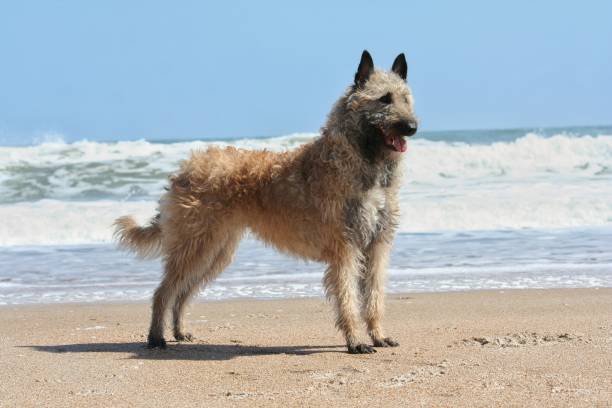
The foundational principles of dog obedience—consistency, positive reinforcement, and clear communication—remain universal. However, the application and proof of these principles are profoundly influenced by the environment. Training a dog to heel flawlessly on a quiet country lane is vastly different from demanding the same precision amidst the cacophony of a bustling city center.
Obedience is not merely a set of behaviors; it is a tool for safe navigation. To achieve true mastery, a trainer must move beyond rote memorization of commands and embrace environmental generalization and contextual proofing. For the urban dog, life demands instantaneous, precise control; for the rural dog, success hinges on reliable performance over great distances and durations, often against formidable natural instincts.
This comprehensive guide dissects the fundamental differences between urban and rural dog training, offering practical methodologies for adjusting commands to ensure safety, reliability, and harmony, no matter the backdrop.
I. Introduction: The Context Dependency of Obedience
The primary error many trainers make is assuming that a command mastered in a low-distraction environment (like a living room or a fenced garden) will transfer seamlessly to a high-distraction, context-rich environment. This assumption often leads to failure and frustration.
Defining the Environmental Variables
| Variable | Urban Environment | Rural Environment |
|---|---|---|
| Primary Distractions | Auditory (sirens, traffic, construction), Visual (dense crowds, bicycles, reflections), Olfactory (food waste, concrete smells). | Visual (wildlife, livestock, moving foliage), Olfactory (prey trails, strong scents), Behavioral (other working animals/farm dogs). |
| Required Response Speed | Immediate and high-precision (seconds matter for safety). | Reliable and high-duration (distance and time matter). |
| Space Constraints | Highly constrained (narrow sidewalks, crowded parks, elevators). | Unconstrained (open fields, woods, trails). |
| Primary Risks | Traffic accidents, aggressive encounters with strange dogs/people, accidental ingestion of toxins (litter). | Prey drive activation (chasing wildlife), livestock hazards, ticks/snakes, getting lost over large distances. |
| Tolerance Requirement | High tolerance for close proximity to strangers/noise. | High tolerance for solitude and independent exploration (but strict boundaries). |
The goal is to move the dog from stimulus control (only performing the command when the handler is present and the environment is controlled) to context control (performing the command reliably regardless of the environment or temptations).
II. Urban Obedience: The Precision and Proofing Imperative
Urban life is characterized by ceaseless stimuli, confined spaces, and non-negotiable safety requirements. A lapse in control can result in immediate danger (e.g., a traffic collision) or serious legal liability. Therefore, urban training focuses heavily on proofing under high distraction, tight leash skills, and instantaneous emergency commands.
1. Mastering the Noise Environment
The urban backdrop is a constant auditory barrage that easily overwhelms a dog’s sensitive hearing. Before demanding command precision, the dog must achieve resilience to sound.
Methodology: Habituation and Desensitization
Exposure training must be systematic:
- Passive Exposure: Simply sitting with the dog in increasingly noisy locations (e.g., outside a busy café, near a bus stop) without demanding obedience. Reward calmness, not a specific action.
- Active Engagement: Once the dog is calm, introduce simple commands (“Sit,” “Look”). The handler must ensure the tone of voice is firm and clear, not raised, forcing the dog to focus on the cue, not the environment.
- Variable Reinforcement: Use high-value rewards (e.g., chicken, cheese) to counteract the overwhelming distraction of sounds like horns or sirens. The dog learns that listening to the handler provides a higher reward than reacting to the noise.
Crucially, the obedience command response in an urban setting must be stimulus-independent; the dog must obey the handler’s voice even if the visual landscape is chaotic.
2. Tight Space Control: The Urban Loose-Leash Mastery
In the country, a dog might be allowed lateral deviations of several feet while walking. In the city, this is impossible. Narrow sidewalks, doorways, and crowds necessitate a tight, focused “Heel.”
Adjusting the “Heel” Command
- The Proximity Requirement: The urban heel is characterized by the dog’s shoulder remaining perpetually adjacent to the handler’s knee, preventing deviation into traffic or tripping pedestrians.
- The Obstacle Protocol: The heel command must incorporate automatic position changes. If the handler stops suddenly to avoid a street vendor, the dog must automatically fall into a “Sit” or “Down” without a secondary cue. This is essential for safety, preventing tangles or surges.
- Leash Focus: Use short, specialized leads (4-foot leads, traffic handles) and proof against tension. The goal is a dog that maintains position with a slack lead, responding purely to handler position and voice, not leash pressure.
3. The Urban Emergency Commands: Life Insurance
Two commands are non-negotiable in the urban context, requiring near-100% reliability, proofed against the highest level of distraction:
A. The Instantaneous “Down” (Drop)
This command is used for immediate, total cessation of movement—to avoid a quickly approaching bicycle, a territorial dog, or to prevent the dog from entering traffic.
- Training Focus: Speed and proximity. The dog must hit the ground instantly, regardless of the surface (hot asphalt, grating, etc.).
- Proofing: Practice the command while the dog is running full speed, while standing at an intersection, and when high-arousal distractions (e.g., a ball bouncing past) are presented.
B. The “Wait” or “Stay” at Thresholds
While a rural “Stay” emphasizes duration, the urban “Wait” emphasizes threshold control. The dog must wait for permission before exiting the front door, crossing a street, or exiting a vehicle.
- Training Focus: Immediacy of halt at an invisible line.
- Urban Proofing Strategy: Practice at highly tempting thresholds—the exit of a dog park, the door to a street with heavy traffic, or the elevator door when a rewarding person/dog is visible outside.
4. Preventing Accidental Ingestion: Advanced “Leave It”
The urban environment is littered with hazards: chicken bones, discarded trash, toxic human food, and even occasionally bait left with malicious intent. The urban “Leave It” must be absolute.
- Expanding the Cue: Move beyond simple food items. The urban dog must “Leave It” for non-food items (plastic bags, dropped wallets, potentially dangerous tools).
- Proofing Technique: Distance and Denial: Practice from a distance (the handler standing 10 feet away while the dog passes a tempting item) and proof against handler inattention (e.g., the handler talking on a phone, simulating distraction). The dog must choose to deny the hazard autonomously.
III. Rural Obedience: The Freedom and Duration Imperative
Rural training prioritizes reliability over vast distances, duration in stillness, and the management of instinctive drives (prey drive, territoriality towards livestock). The dog is often given significantly more freedom, making the stakes of a failed command much higher—a lapse in recall can result in a lost dog, injury from wildlife, or engagement with farm animals.
1. Reliable Recall at Distance: The Lifeblood of Rural Freedom
The rural recall (“Come”) is arguably the most critical command. It must overcome the intense biological reward of chasing a squirrel, deer, or rabbit.
Methodology: The “Mega-Recall”
- High-Value Payout: The reward for a reliable rural recall must trump the natural high of the chase. This means using only the absolute highest-value reinforcement (e.g., real meat, a favored toy) and pairing it with a joyous, non-punitive delivery.
- Distance Staging: Gradually increase the distance in open fields, starting with 50 feet and moving up to 100, 200, or even 400 feet, factoring in visual distraction (bushes, tall grass).
- The Whistle Cue: Voice commands degrade quickly over distance and wind. The rural dog should be transitioned to a high-pitched whistle cue, which carries farther and cuts through environmental noise effectively.
- Proofing Against Prey Drive: This requires controlled exposure. Use a long line (50-100 feet) near areas where harmless wildlife is known to roam. If the dog spots wildlife and the chase instinct activates, issue the recall before the chase fully engages, rewarding heavily for the decision to disengage. If the pursuit begins, interrupt the behavior (potentially using a remote collar correctly applied, if trained) and immediately redirect to a positive recall. The dog must learn that the reward for the recall is superior to the fleeting reward of the chase.
2. Duration and Distance Holds: The Rural “Stay”
While the urban “Stay” might only need to last 30 seconds at a curb, the rural “Stay” might be necessary for several minutes while the handler tends to a fence, performs equipment maintenance, or steps far away to survey a landscape.
- Training Focus: Duration and handler absence.
- Proofing: Practice the “Stay” with the handler walking completely out of sight (behind a barn, over a hill). This forces the dog to rely entirely on the initial verbal cue and the expectation of the reward, decoupling the command from the handler’s immediate presence.
- The “Place” Command in Open Space: Teach a strong “Place” or Boundary Command in an open setting. This defines a specific area (a mat, blanket, or even a designated spot in the grass) where the dog must remain until released, even if the environment is active (e.g., farm machinery operating nearby).
3. Off-Leash Safety and Boundary Training
Rural settings demand a nuanced understanding of geography and property lines.
- The Geo-Fence (Invisible Boundary): Dogs in rural settings may need to respect invisible boundaries (e.g., not crossing the driveway, staying within the perimeter of a clearing). Boundary training requires strong negative markers or specialized equipment (e-fence or remote collar with boundary flags) to teach the dog where their permitted freedom ends. The command relies on the dog’s understanding of the space rather than a concrete object.
- Livestock Protocol (“Respect”): If livestock (cattle, sheep, poultry) are present, a dedicated command (e.g., “Respect” or “Easy”) must be proofed. This command signals that the dog must immediately lower its arousal, stop moving, and maintain distance from the animals. This often requires professional intervention focusing on instinct management.
4. Navigating Variable Terrain
Rural walks involve rapidly changing surfaces (mud, rocks, dense undergrowth, streams). The rural “Heel” adjusts by prioritizing safety and movement efficiency over strict positioning.
- The Flexible Heel: The dog is allowed to walk ahead or slightly to the side, maintaining tension-free movement, but must adhere to an environmental switch. For example, when entering dense brush, the command might tighten to a close heel; when moving through an open field, it might loosen to a “Walk Free,” allowing exploration, provided the recall is instantly reliable.
IV. Command-by-Command Adjustments: The Specifics
The table below summarizes how the definition and expectation of core commands shift between environments:
| Command | Urban Expectation | Rural Expectation | Adjustment Focus |
|---|---|---|---|
| Recall (“Come”) | Immediate closure (within 1 second) from short distance (20 ft), usually requiring abrupt change of direction. | Reliable return from extreme distances (300+ ft), often overriding strong prey drive temptations. | Speed vs. Reliability under distraction/distance. |
| Stay/Wait | Short duration (30-60 sec), high precision at thresholds (traffic, doors, crowds). | Long duration (5+ min), often with handler entirely out of sight, ignoring environmental motion (birds, wind). | Immediacy/Location vs. Duration/Absence. |
| Heel | Strict proximity (within 6 inches), automatic sit on stop, avoidance of all sidewalk obstacles. | Flexible position, focus on efficient movement over terrain, only tightening in high-risk areas (roads, livestock). | Precision/Safety vs. Efficiency/Freedom. |
| Leave It | Absolute denial of small, ground-level hazards (food scraps, litter, needles). | Absolute denial of large, moving, high-arousal temptations (wildlife, livestock, machinery). | Toxin avoidance vs. Instinct suppression. |
V. Methodology: Bridging the Gap (Generalization Strategies)
A dog’s training portfolio is incomplete if it only functions in one context. To create a truly well-rounded dog, trainers must actively engage in generalization—the process of taking known behaviors and practicing them across all possible variables.
1. Introduce Variable Reinforcement Schedules (VRS)
In a low-distraction setting, new behaviors are reinforced 100% of the time. To proof for environmental stress, the reward schedule must become unpredictable.
- Urban VRS: Reward 80% with verbal praise/toy, 20% with high-value food. Occasionally, withhold the reward momentarily, forcing the dog to maintain the behavior in anticipation. This builds resistance to the immediate gratification offered by distractions (e.g., the scent of street food).
- Rural VRS: Use distance as an element of the schedule. A recall that overrides a deer sighting gets a massive, immediate jackpot; a casual recall from 20 feet gets moderate praise. This differential reinforcement teaches the dog that high-stakes obedience earns high-stakes rewards.
2. Context Shifting and Micro-Transitions
To bridge the urban-rural divide, systematically introduce elements of one setting into the other:
- “Urbanizing” the Countryside (Adding Precision): Practice sharp, instantaneous “Downs” on a quiet trail. Bring noise makers (portable music, horns) to a quiet field to proof for auditory distractions while practicing distance work.
- “Ruralizing” the City (Adding Duration): Practice long-duration “Stays” in quiet city parks where the visual stimuli are distant but persistent. Allow slightly more lateral movement during a heel in a low-traffic city area to increase freedom, then demand a tight heel when approaching an intersection.
3. The Handler’s Emotional State
The environment dramatically affects the handler’s stress levels, which the dog immediately absorbs.
- Urban Handler: Must project calmness and authority despite feeling rushed or anxious due to traffic. Commands must be short and sharp.
- Rural Handler: Must project confidence and distance awareness. Commands must be loud enough to carry, but the overall training pace can be slower and more relaxed, emphasizing patience for duration.
4. Utilizing Specialized Equipment
The environment dictates the best tools for safety and communication:
- Urban: Traffic handles, short biothane leads, harnesses that prevent escape (e.g., martingale style). Focus is on immediate mechanical control.
- Rural: Whistle, long lines (50-100 ft), or a remote training collar (used strictly to proof known behaviors at distance, never for teaching new commands). Focus is on extending the communication range.
VI. Advanced Challenges and Troubleshooting
1. Urban Challenge: Reactive Behavior in Crowds
The proximity of other dogs and people in the city is a major trigger.
- Solution: Systematic desensitization using the “Look at That” (LAT) Game. The dog learns to look at the trigger (e.g., another dog) and then immediately look back at the handler for reinforcement, preempting the reactive surge. This must be practiced exclusively below the dog’s threshold of reaction, often starting from across a busy street and slowly moving closer.
2. Rural Challenge: Livestock Chasing (Predatory Drift)
A dog chasing farm animals is a serious legal and ethical problem.
- Solution: Aversion Training and Controlled Exposure. Once the dog has a reliable recall, controlled exposure near a fence line (with professional supervision) is necessary. If the dog shows excessive interest or attempts to breach boundaries, a sharp, immediate interruption (often using a remote training collar set to a working level) paired with a negative marker (“No!”) must be delivered, followed by a command to retreat or “Down.” The dog must associate the high arousal of chasing livestock with immediate discomfort or consequence, thereby protecting the wildlife and the dog itself.
VII. Conclusion: The Philosophy of Flexible Obedience
True obedience mastery is achieved not when a dog knows the commands, but when a dog understands the rules of the terrain. The successful urban dog is a model of precision, safety, and constraint; the successful rural dog is a model of reliable independence, duration, and respect for nature.
By meticulously adjusting command expectations—prioritizing immediacy in the city and distance reliability in the country—trainers can ensure their dog is not only well-behaved but also deeply integrated into their specific environment, leading a safer, more fulfilling life, regardless of whether their playground is asphalt or open fields.
#UrbanDogTraining #RuralDogLife #DogObedience #DogTrainingTips #K9Training #ProofingObedience #ReliableRecall #DistanceWork #DogSafety #CanineBehavior #EnvironmentalTraining #PuppyTraining #CityDogLife #CountryDog #DogTrainerLife #HeelTraining #EmergencyCommands #DogBehaviorist #OffLeashAdventures






Add comment