
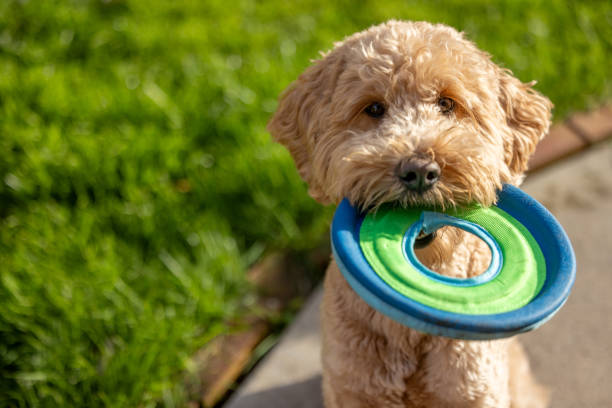
Goldendoodle dog playing fetch and catch with a flying soft disc on a lawn.
It’s great that you’re looking for a comprehensive guide on puppy housetraining and potty training using potty bells or other signals! This method can be incredibly effective when done consistently and with positive reinforcement. Let’s break it down step-by-step.
Puppy Housetraining & Potty Training: A Comprehensive Guide Using Potty Bells or Other Signals
Housetraining a puppy is a journey that requires patience, consistency, and understanding. Potty bells are a fantastic tool to facilitate clear communication between you and your puppy, helping them signal when they need to go outside. This guide will cover everything you need to know to set you and your furry friend up for success.
I. Understanding the Basics of Puppy Housetraining
Before diving into the bell training, it’s crucial to have a strong foundation in general housetraining principles.
- Patience is Key: Puppies have small bl Adders and limited bladder control. Accidents will happen. Don’t get discouraged; view them as learning opportunities.
- Consistency is Paramount: Stick to a schedule, use the same cues, and react consistently to successes and accidents.
- Positive Reinforcement: Reward desired behavior (pottying outside) with high-value treats, praise, and affection. This creates a positive association with eliminating in the correct spot.
- Supervision is Crucial: When you can’t directly supervise your puppy, they should be in a safe, confined area like a crate or puppy-proofed room. This prevents accidents from happening unsupervised.
- Understanding Your Puppy’s Signals: Before bells, learn your puppy’s pre-potty cues. These might include:
- Circling
- Whining
- Sniffing the ground intently
- Pacing
- Sudden stopping of play
- Going towards the door
II. Why Use Potty Bells?
Potty bells offer a direct and easy way for your puppy to communicate their need to go outside. Instead of having to guess their subtle cues, they can learn to associate ringing the bell with a trip to their designated potty spot. This benefits both of you:
- Clear Communication: Eliminates guesswork and reduces the chance of accidents inside.
- Empowerment for the Puppy: Gives them agency in their potty routine.
- Reduced Frustration: Lessens the stress for both the puppy and the owner.
- Can Be Used with Other Signals: While bells are common, you can adapt this method to a specific door handle, a mat, or even a verbal cue you teach them to perform.
III. Getting Started with Potty Bells: The Setup
- Choose Your Bells:
- Hanging Bells: These are the most common. They consist of several small bells attached to a string or rope that hangs from the door handle.
- Step-On Bells: These are pressure-sensitive buttons that make a sound when the puppy steps on them. They can be placed near the door.
- Considerations:
- Sound: Ensure the bells are loud enough to hear, but not so jarring that they scare your puppy.
- Durability: Choose well-made bells that can withstand a puppy’s enthusiasm.
- Placement: The bells need to be easily accessible to your puppy.
- Placement of the Bells:
- Door: The most logical place is the door your puppy will use to go outside to potty.
- Height: Hang the bells at a height your puppy can comfortably reach with their nose or paw. Initially, you might need to hang them lower and then gradually raise them as they grow.
- Proximity: Ensure they are positioned so that when your puppy interacts with them, they are also near the door.
IV. Training Your Puppy to Use the Bells: The Step-by-Step Process
This is where consistency and positive reinforcement shine.
Phase 1: Introduction and Association
- Initial Introduction:
- Show and Tell: Hold your puppy gently and guide their paw or nose to gently tap the bells. As they make contact and the bells ring, immediately say your chosen cue word (e.g., “Potty,” “Outside,” “Go Potty”).
- Reward Immediately: As soon as the bells ring and you say the cue word, give them a high-value treat and enthusiastic praise. The goal is to create an immediate positive association: Bell Ringing + Cue Word = Amazing Reward!
- Repetition, Repetition, Repetition:
- Do this many times throughout the day, especially when you are about to take them outside anyway. It’s not about them needing to go at this precise moment, but building the association.
- Don’t force their paw; encourage interaction. You can even gently jingle the bells yourself and then have them touch them.
Phase 2: Integrating Bells into Potty Breaks
- The Routine:
- Take Them Out Frequently: Establish a regular potty schedule (see below for more on scheduling).
- Bell Interaction BEFORE Going Out: Every single time you take your puppy outside to potty, guide them to the bells first. Make them ring the bells (you might need to help them initially).
- Say Your Cue Word: Clearly say your cue word as they ring the bells.
- Immediately Go Outside: As soon as the bells ring and you say the cue word, open the door and take them to their designated potty spot.
- Rewarding Success:
- Praise and Treat: When your puppy eliminates in the correct spot outside, praise them lavishly and give them a high-value treat immediately after they finish. This reinforces that pottying outside is the ultimate reward.
- Short, Focused Potty Breaks: Keep these initial trips outside focused on pottying. Don’t get sidetracked by play until they’ve done their business.
Phase 3: Encouraging Independent Signaling
- Gradual Fading of Assistance:
- As your puppy starts to understand the routine, begin to offer less and less physical guidance to ring the bells.
- Tap the bells yourself and wait to see if they respond by touching them. If they do, immediately let them out.
- Hold the treat near the bells and lure them to touch the bells to get the treat.
- Recognizing Their Efforts:
- Watch for Any Interaction: Even a slight nudge or paw touch towards the bells should be met with a positive reaction.
- Reward Attempts: If you see them looking at the bells or sniffing them, even if they don’t ring them, acknowledge it and encourage them to touch them. Reward any proactive interaction.
- When They Ring the Bells:
- STOP EVERYTHING: When you hear the bells ring, it’s an urgent signal. Drop what you’re doing, calmly grab your leash (if needed), and immediately take your puppy outside to their potty spot.
- Reward, Reward, Reward: If they potty successfully after ringing the bells, give them the BIGGEST reward and most enthusiastic praise. This reinforces that ringing the bells leads to exactly what they want – going outside!
Phase 4: Troubleshooting and Refinement
- Accidents Happen:
- Don’t Punish: If you catch them in the act, interrupt them with a clap or a sharp “Ah-ah!” and immediately whisk them outside to their potty spot. If they finish outside, praise them.
- Clean Thoroughly: Clean up accidents with an enzymatic cleaner to eliminate odors that might attract them back to the same spot.
- Re-evaluate: If accidents are frequent, you’re likely not taking them out often enough, or you’re not supervising closely enough.
- Puppy Rings Bells but Doesn’t Potty:
- Still Reward Potty Opportunity: Take them outside and give them a chance to go. Even if they don’t, praise them for signaling and coming outside.
- They Might Just Want to Play: This can happen. Initially, prioritize the potty opportunity. If it becomes a pattern, you might need to slightly delay the play session after they’ve actually pottied. Keep outside trips brief and focused on pottying, then you can engage in play.
- Puppy Ignores the Bells:
- Association Weakened: Go back to Phase 1 – reinforcing the bell-cue-treat connection. Make the rewards extra special.
- Bells Too High/Low: Adjust the bell placement.
- Too Distracting Outside: Make sure their potty spot is relatively calm initially.
- They’ve Learned Other Signals: Are they barking at the door? Scratching? Then you might need to combine bell training with these other signals or focus on the one they are using.
- Puppy Rings Bells Constantly:
- Attention Seeking: If they ring the bells and immediately want to play or explore, they might be using it for attention. Make sure you are still giving them plenty of playtime and interaction outside these potty trips.
- Too Much Freedom: Ensure they aren’t being given free rein of the house if they haven’t fully grasped the concept. They should be in a crate or confined area when unsupervised.
V. The Importance of a Consistent Potty Schedule
A predictable schedule is the backbone of successful housetraining, bell training or not.
- First Thing in the Morning: As soon as they wake up.
- Last Thing at Night: Before bed.
- After Waking from Naps: Even short naps.
- After Eating or Drinking: Within 5-15 minutes.
- After Play Sessions: Especially energetic ones.
- Before Being Left Alone: Even for short periods.
- Every 1-2 Hours: For very young puppies (8-12 weeks). Gradually increase the time between outings as they get older. A good rule of thumb is their age in months + 1. So, a 3-month-old might be able to hold it for about 4 hours.
VI. Tips for Success
- High-Value Treats: Use small, soft, and particularly delicious treats that your puppy only gets during training. This makes the reward more impactful.
- Enthusiastic Praise: Your voice is a powerful tool! Be excited and happy when they get it right.
- Leash Training: For initial potty trips, keep your puppy on a leash attached to you. This prevents them from wandering off and encourages them to focus on the task at hand.
- Designated Potty Spot: Choose a specific area outside for them to eliminate. This helps them associate that spot with pottying.
- Avoid Over-Correction: Scolding or punishing your puppy after an accident can make them fearful of eliminating in front of you (even outside), which hinders training.
- Don’t Let Them Out Just to Play: If they ring the bells, take them to their potty spot first. If they potty, then you can play. If they don’t, calmly bring them back inside and try again in 15-30 minutes.
- Crate Training Integration: Crate training is an invaluable tool for housetraining. Puppies are naturally reluctant to soil their den. Use the crate for confinement when you can’t supervise.
- Consider the Weather: On bad weather days, use extra encouragement and a shorter leash to keep them focused.
- Celebrate Small Victories: Every successful potty break outside is a step in the right direction.
VII. Adapting the Bell Training Method
- Door Handle: If your puppy learns to nudge or paw the door handle, you can use this as their signal. Make sure to associate the nudging of the handle with going outside.
- A Specific Mat: Place a small, distinct mat by the door. Train your puppy to step on the mat (perhaps with a bell or clicker sound) before going outside.
- Verbal Cue: You can teach your puppy to bark once or twice on command. This bark then becomes their signal.
Conclusion
Housetraining with potty bells is a rewarding process that strengthens your bond with your puppy and establishes clear communication. Remember that every puppy learns at their own pace. Stay patient, be consistent with your schedule and rewards, and celebrate every success. With dedication, you’ll have a well-housetrained puppy who can effectively communicate their needs!







Add comment