
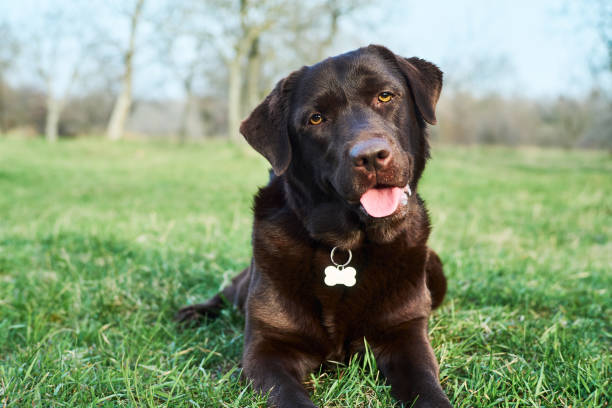
The white of a dog’s eye—known scientifically as the sclera—is typically hidden from view, tucked neatly beneath the eyelid margin when the dog is relaxed and facing forward. However, when a crescent-shaped or half-moon flash of this white reveals itself, particularly toward the outer corner of the eye, trainers and behaviorists call this phenomenon “Whale Eye.”
Whale Eye (or Scleral Show when discussed technically) is one of the most critical, yet frequently missed, signals in the canine body language repertoire. It is not an arbitrary flicker; it is a profound and urgent visual indicator that a dog is experiencing significant emotional conflict, stress, fear, or anxiety. Ignoring this sign can lead to escalating behavior, culminating in a snap or bite.
This comprehensive guide delves into the anatomy, psychology, context, management, and critical importance of recognizing Whale Eye as a vital warning sign that demands immediate attention and thoughtful intervention.
I. Defining and Anatomizing Whale Eye
To fully appreciate the significance of Whale Eye, one must first understand its anatomical basis and how it differs from a dog’s standard gaze.
The Anatomy of the Warning
The canine eye structure is analogous to the human eye, featuring the iris (the colored part), the pupil (the black center), and the sclera (the protective, white outer layer).
In a relaxed dog looking straight ahead, the sclera is mostly obscured by the eyelids. The visible portion is primarily the iris and pupil.
Whale Eye occurs when the dog’s gaze swivels laterally, often keeping the head fixed, allowing a visible ring or crescent of white to appear around the periphery of the iris. It often looks as though the dog is trying to view something in its periphery without giving away its attention by fully turning its head.
This movement is a physiological response driven by the dog’s emotional state. When a dog feels trapped, threatened, or anxious, it often attempts to monitor its environment—specifically the perceived threat—without making an overt movement that might provoke confrontation. The resulting tension pulls the eyes to the side, exposing the stressed sclera.
The Psychological Mechanism
Whale Eye is deeply rooted in conflict behavior. Conflict arises when a dog is simultaneously motivated to approach a situation (e.g., get a treat held by a human) and motivated to retreat from that situation (e.g., the pressure/proximity of the human is too much).
- Fear/Threat Response: The dog is often trying to track the threat (a person looming over them, a strange dog approaching, a child attempting to hug them) while remaining physically still to avoid detection or escalation. The eyes dart desperately to the side, signaling internal panic.
- Avoidance: In the moment a dog displays Whale Eye, they are clearly communicating an intense desire for the trigger to stop or move away. They are often holding their breath, freezing, or otherwise inhibiting movement, making the eye movement stand out dramatically.
II. The Critical Context: Differentiating Stress from Normal Eye Movement
Not every flash of white is a crisis. Context is the ultimate dictator of whether Whale Eye is a benign physiological movement or a severe behavioral warning.
A. Benign Scleral Show (Non-Stressful)
There are three primary situations where visible sclera is not necessarily a stress indicator:
- Sleep or Drowsiness: As dogs drift into sleep (particularly during REM cycles), their eyes may roll back or move erratically, exposing the sclera. This is normal and is accompanied by relaxed body muscles, slow breathing, and floppy ears.
- Breed Anatomy (Brachycephalic and Loose Skin): Breeds with flatter faces (Brachycephalic breeds) such as Pugs, French Bulldogs, Shih Tzus, and Boxers often have shallow eye sockets and naturally prominent eyes. Due to their anatomical structure, a visible ring of white may be present even when relaxed. In these cases, one must observe the change in the eye’s appearance—does it become wider, harder, or more rigid when a trigger is present?
- Active Observation: If a dog is tracking a toy or treat that is slightly behind them, they may turn their eyes to follow it. This movement, however, is generally smooth, and the rest of the dog’s body language (tail, mouth, posture) will be loose and curious, rather than stiff and fearful.
B. Stress-Induced Whale Eye (The Warning Sign)
Stress-induced Whale Eye is characterized by two defining factors: stiffness and simultaneous stress signals.
When a dog is stressed, the Whale Eye will:
- Appear Rigid and Hard: The eye muscles may seem strained, and the dog’s gaze will often be fixed, rather than soft and blinking.
- Be Accompanied by Other Stress Markers: Whale Eye is rarely an isolated signal. It appears as part of a crucial cluster of body language indicating a high level of discomfort.
III. The Canine Stress Escalation Ladder: Where Whale Eye Sits
Dog behaviorists often visualize defensive or aggressive behavior as a “Ladder of Aggression” (or Stress Escalation). The dog moves up the rungs, starting with subtle, low-level appeals for distance and escalating toward a bite if their signals are consistently ignored or punished.
Whale Eye is positioned squarely in the mid-to-high level of the escalation ladder, indicating that the dog is significantly past the point of minor discomfort and rapidly approaching the threshold for action.
| Ladder Rung | Signal Category | Corresponding Behaviors | Behavior Meaning |
|---|---|---|---|
| Lowest Rungs | Calming/Appeasement | Lip licking, yawning, sniffing the ground, looking away, blinking. | “I am uncomfortable, please stop.” |
| Middle Rungs | Increased Anxiety/Conflict | Whale Eye (Scleral Show), crouching, tail low/tucked, pinned ears, head turning away, freezing. | “I feel trapped and threatened; the situation must change now.” |
| High Rungs | Active Defense/Warning | Growling, snarling, air snapping, showing teeth (the “hard face”). | “I am prepared to defend myself if you do not retreat immediately.” |
| Highest Rung | Contact | Nipping, biting (inhibition or full contact). | “I had no other choice.” |
When Whale Eye is displayed, the dog has already politely requested distance several times (lip licking, turning away). The appearance of the sclera is a sign that the dog is now internally bracing itself and running out of coping mechanisms. The next step is usually a low growl or a defensive freeze, both of which are immediate precursors to a physical defensive act.
IV. The Cluster of Supporting Body Language
To confirm that the visible sclera is indeed a warning sign, one must look at the dog’s entire body posture. Whale Eye is almost always reinforced by a collection of other indicators, forming a critical “cluster” of stress.
1. Facial and Head Signals
- Panting (without heat or exertion): Short, quick, shallow breaths, often accompanied by lip licking or rapid tongue flicks.
- Mouth Pursed or Tense: The corners of the dog’s mouth may be pulled back tightly, creating tension around the muzzle, known as a “hard mouth.”
- Pinched/Pinned Ears: The ears are pulled back flat against the head or swiveled unnaturally to the side, losing their natural, relaxed posture.
- Brow Furrowing: The skin above the eyes or across the forehead wrinkles, giving the dog a tense, worried, or focused expression.
2. Posture and Movement Signals
- Freezing: The dog stops all movement, often holding its breath. This “freeze” state is a survival mechanism—a final attempt to make the threat go away by becoming invisible. This is one of the most dangerous signals when paired with Whale Eye, as it signifies the dog preparing to either flee or fight.
- Stiffness: The entire body becomes rigid, losing the fluid, relaxed curves of a comfortable dog. The neck, back, and tail may be held in an unnatural line.
- Weight Shifting: The dog may lean away from the trigger, shift its weight back, or lower its body toward the ground in an attempt to appear smaller.
- Tail Carriage: The tail is held low, tucked between the legs, or held stiffly—often tight against the dog’s flanks.
Case Study Example: The Looming Child
Imagine a scenario where a strange child approaches a dog that is resting on its bed. The child leans over the dog while reaching out a hand.
- Initial Signals: The dog yawns and looks away (appeasement/calming).
- Escalation: The child continues approaching. The dog stops breathing momentarily, its body stiffens, its ears pin back, and it displays Whale Eye as it tries to track the child’s hand without moving its head.
- Interpretation: The dog is saying, “I do not want this interaction. I am cornered and ready to defend myself if you invade my space.” If the child’s hand touches the dog at this moment, the dog is highly likely to snap defensively.
V. Situations That Most Commonly Elicit Whale Eye
Recognizing the triggers that push a dog to display Whale Eye is paramount for prevention. These situations usually involve perceived restraint, intrusion into personal space, or unpredictable actions.
1. Physical Restraint and Handling
Any situation where a dog feels physically trapped or unable to escape is a prime trigger.
- Hugs and Kisses: Humans often mistake deep affection for comfort. When a person hugs an unfamiliar dog, leans over them, or attempts to pet their head, the dog feels trapped. Whale Eye is extremely common here, especially when the person makes direct eye contact (which dogs interpret as a challenge).
- Grooming and Vet Visits: Procedures like nail trims, ear cleaning, blood draws, and temperature checks involve necessary restraint. If a dog is not conditioned to tolerate these, they will often display Whale Eye just before the procedure begins, signaling fear and distress over being held down.
- Waking a Sleeping Dog: Startling a dog from a deep sleep can cause an immediate defensive reaction, often preceded by a momentary flash of Whale Eye as the dog processes the perceived threat.
2. Resource Guarding
When a dog perceives a high-value item (food bowl, favorite toy, chew, resting spot, or even a person) is about to be taken away or encroached upon, it may display Whale Eye toward the perceived threat (the approaching person or other animal). This signal shows the internal conflict: the dog wants to keep the resource but is nervous about confrontation.
3. Conflict with Other Dogs
In play escalation or intense social pressure, a dog may use Whale Eye while attempting to assess the stability of the other dog. If one dog is attempting to mount another, or if a high-energy dog is relentlessly harassing a calmer dog, the recipient of the unwanted attention will often show Whale Eye, indicating extreme discomfort and a desire for the interaction to cease.
VI. The Danger of Misinterpretation and Punishment
One of the largest obstacles to dog safety is the human tendency to anthropomorphize or, conversely, to punish the warning signals.
The Misinterpretation: “He Just Looks Annoyed”
Many owners fail to recognize Whale Eye because they are looking for the obvious warning signs—the growl or the snap. They mistakenly believe the dog “looks annoyed” or “silly.” This inability to interpret the subtle body language means the dog’s polite, mid-level warnings are ignored.
When a dog’s gentle (appeasement) signals and mid-level (Whale Eye) warnings are consistently disregarded, the animal learns that subtlety is ineffective. This results in the dog jumping immediately to the high-level signals (growling or biting) without preamble, leading to the dangerous claim: “The bite came out of nowhere!” In reality, the dog likely gave 10 quiet warnings, starting with a lip lick and culminating in Whale Eye, all of which were missed.
The Danger of Punishment: Suppressing the Signal
Worse than missing the signal is punishing it. If an owner scolds a dog for growling or showing teeth (high-level warnings), they teach the dog that these warnings make the situation worse, not better.
However, punishing the preceding signals, like freezing or rigidity (often coupled with Whale Eye), is equally dangerous. If a dog learns that showing tension leads to punishment, they may choose to suppress the visual warnings entirely, known as signal suppression.
A dog that has learned to suppress its growl or Whale Eye will proceed from a low level of anxiety directly to a bite, making the animal appear unpredictable and incredibly dangerous because the essential dialogue between dog and owner has been forcibly silenced.
VII. Management and Intervention Strategies: What to Do Next
When you observe Whale Eye in your dog, the immediate, short-term goal is safety and the long-term goal is behavior modification through positive reinforcement.
A. Immediate Intervention (The Moment You See It)
The moment Whale Eye appears, your primary directive is to immediately increase the distance between the dog and the trigger.
- Create Space (The Primary Action): Stop whatever activity is occurring. If you are leaning over the dog, immediately stand up straight. If a child is approaching, gently remove the child. If the dog is tense near a resource, back away slowly.
- Remove the Trigger (If Possible): If the trigger is a person, object, or noise, remove it. Do not attempt to physically handle the dog if it is frozen or showing tension, as this will likely provoke the defensive response.
- Allow the Dog to Decompress: Give the dog space to move away. If the dog retreats to a safe spot (a crate, a dog bed behind a barrier), respect that boundary. Do not follow or engage until the dog’s posture softens, the breathing normalizes, and the eyes return to a relaxed state.
B. Long-Term Behavior Modification
Whale Eye is a symptom of underlying anxiety. Managing it requires detailed behavior modification protocols designed to change the dog’s emotional response to the trigger. This is best done under the guidance of a Certified Professional Dog Trainer (CPDT-KA) or a Veterinary Behaviorist (DACVB).
The gold standard techniques are Desensitization and Counter-Conditioning (DS/CC), always adhering to the Least Intrusive, Minimally Aversive (LIMA) ethical standard.
1. Desensitization (DS)
This involves gradually exposing the dog to the trigger at a safe distance or low intensity—an intensity level that is below the dog’s threshold (i.e., the dog shows no Whale Eye or stress signals).
- Example: If the trigger is a strange man leaning over the dog, start with the man standing 20 feet away, looking neutral. If the dog is relaxed at 20 feet, that is the starting point.
2. Counter-Conditioning (CC)
While the trigger is present at the safe starting intensity, the dog is given something highly valuable (a favorite treat, toy, or experience), thereby changing the dog’s emotional association from negative (“I’m scared”) to positive (“The presence of the trigger predicts something great”).
The training moves forward only by reducing distance or increasing intensity one small step at a time, always stopping immediately if Whale Eye or any tension reappears. The goal is to condition the dog to view the previously threatening situation with calm anticipation, eliminating the need for the warning signal entirely.
C. Teaching Consent and Predictability
Dogs thrive on predictability. Ensure that all interactions with the dog are optional from their perspective.
- The Consent Test: Teach the dog that they have control over interactions. Begin petting the dog, then count to three and stop. Observe the dog’s response:
- Consent: Does the dog lean into you, nudge your hand, or solicit more petting?
- Non-Consent: Does the dog turn its head away, freeze, lick its lips, or display Whale Eye? If the dog shows any non-consent signals, stop the interaction immediately. Respecting the dog’s signals rebuilds trust and reduces the need for intense warnings.
- Safe Spaces: Designate a permanent “safe zone” (e.g., a crate or an elevated bed) where the dog is guaranteed never to be disturbed, followed, or handled, especially by children or guests.
VIII. Advanced Considerations and When to Seek Professional Help
While recognizing Whale Eye is a powerful first step, some situations require specialized knowledge.
Recognizing Medical Factors
In rare cases, the appearance of the sclera can be tied to medical issues. Inflammation, pain, eye diseases (like glaucoma), or neurological problems that affect muscle control can cause abnormal eye movement. If Whale Eye appears suddenly and frequently without any discernible behavioral trigger, a thorough veterinary examination is essential to rule out physiological causes.
The Role of Breed and Genetics
While Brachycephalic breeds have anatomical reasons for visible sclera, some breeds or lines are genetically predisposed to high arousal, nervousness, or low frustration tolerance. In these cases, management strategies will be lifelong, focusing on mitigating risk and maintaining a low-stress environment.
Consulting a Veterinary Behaviorist (DACVB)
If Whale Eye is frequent, if it appears rapidly escalating into growling or snapping, or if the triggers are numerous and difficult to manage, immediate consultation with a board-certified Veterinary Behaviorist (DACVB) or a Certified Applied Animal Behaviorist (CAAB) is crucial. These professionals can assess the overall emotional health of the dog, prescribe appropriate environmental management plans, and, if necessary, utilize behavior modification medications to help the dog lower its overall anxiety threshold, making training more effective and safer for everyone involved.
IX. Conclusion: The Language of the Eyes
Whale Eye is arguably the clearest, most urgent piece of communication a dog can offer before resorting to aggressive defense mechanisms. It transcends mere annoyance; it is a profound declaration of internal distress, conflict, or fear.
By learning to identify the rigid stare, the crescent of white sclera, and the accompanying cluster of stiffness and tension, dog owners move beyond guesswork and enter into a genuine dialogue with their companions. Recognizing Whale Eye is not just vital for behavior modification; it is the cornerstone of responsible dog ownership, ensuring safety, fostering trust, and protecting the emotional well-being of the dog. When we listen to the dog’s eyes, we prevent the bite.
#WhaleEye #DogBodyLanguage #CanineCommunication #DogStress #DogTrainingTips #DogAnxiety #ScleralShow #FearfulDog #DogSafetyFirst #PositiveReinforcement #DogBehavior #DogLife #DogWelfare #KnowYourDog #PreventTheBite #DogTips #CPDTKA #BehaviorModification #DogHealth #DogParenting #LIMALife






Add comment