
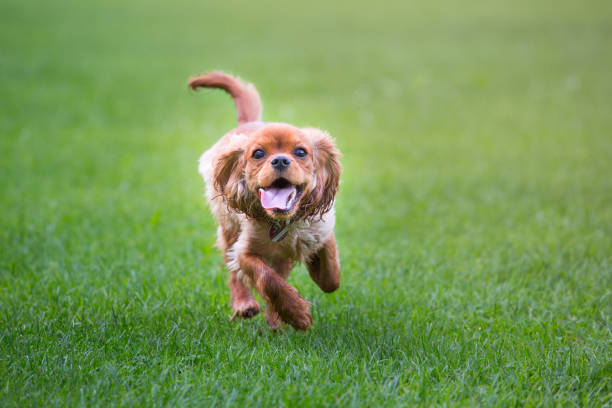
A wagging tail is arguably the most recognized symbol of canine joy and friendship. For centuries, this rhythmic motion, often accompanied by enthusiastic greetings and playful bows, has served as a universal, reassuring sign that all is well in the dog world. However, to reduce the complexity of tail movement to a simple expression of “happiness” is a profound underestimation of the dog’s sophisticated communication system. In the field of ethology (the study of animal behavior), the tail is recognized not merely as an appendage, but as a fine-tuned, multi-dimensional signal flag—a crucial component of canine social intelligence.
A truly comprehensive understanding of the canine tail requires moving beyond the pervasive “happy wag” stereotype. It necessitates analyzing five crucial parameters simultaneously: speed (tempo), amplitude (range), position (height), direction (left/right bias), and stiffness. By decoding these variables, we unlock a richer, more nuanced insight into a dog’s emotional landscape, revealing signals of anxiety, conflict, arousal, dominance, and even impending aggression.
I. The Anatomy and Evolutionary Function of the Tail
Before delving into behavior, one must understand the physical mechanisms behind the wag. The dog’s tail, or caudal appendage, is an extension of the spine, composed of numerous vertebrae (between 6 and 23, depending on the breed), surrounded by complex musculature, tendons, and nerves.
The Role of the Tail in Canine Life
The tail serves three primary non-communicative functions:
- Balance and Counterbalance: During rapid directional changes (running, sharp turns, jumping), the tail acts as a crucial counterweight, helping the dog maintain equilibrium and execute high-speed maneuvers. This is particularly noticeable in sight hounds and athletic breeds.
- Proprioception: The tail provides sensory feedback about the dog’s position in space.
- Scent Dispersion: The base of the tail houses the supracaudal gland (or violet gland) and is near the anal glands. Wagging facilitates the movement of air, broadcasting the dog’s unique chemical signature (pheromones) to other canines, a vital function in social identification and determining reproductive status.
The Tail as an Acoustic and Visual Signal
Ethologists categorize the tail primarily as a visual signal. Its movements are easily detected over distance, especially when backlit or against a contrasting background. Furthermore, a vigorous wag, particularly one that brushes against objects or itself, can create a subtle acoustic signal, drawing attention to the dog’s presence.
II. Decoding the Five Crucial Dimensions of the Wag
To accurately interpret a dog’s emotional state, an observer must train their eye to evaluate five independent, yet simultaneous, variables of tail movement. A change in any one of these elements drastically alters the message being sent.
A. Speed (Tempo)
The speed of the wag is the most immediate indicator of the dog’s level of arousal—how excited or emotionally charged the dog is, regardless of whether that emotion is positive or negative.
| Speed | Interpretation of Arousal | Associated States (Requires Context) |
|---|---|---|
| Slow, deliberate wag | Low arousal; hesitancy or concern. | An uncertain greeting, processing a new situation, or mild fear/compliance. |
| Medium, relaxed wag | Moderate arousal; comfort and interest. | General contentment, friendly focus on an owner or familiar object. |
| Fast, broad wag | High arousal; intense emotional state. | Extreme joy, intense focus (positive or negative expectation), or high levels of conflict. |
| The “Wagging Blur” (Vibrating) | Maxed-out arousal; hyper-excitement. | Over-the-top greeting (often accompanied by whole-body movement), or extreme stress/impatience. |
A fast wag merely means the dog is highly motivated or highly stimulated. It does not automatically signify happiness; a dog preparing to fight or flee can also exhibit a high-speed, tense wag.
B. Amplitude (Range or Arc)
Amplitude refers to the width of the wag. It measures how much the tail sweeps from side to side. Amplitude is generally the best indicator of friendliness and lack of threat.
- Wide, sweeping arcs (The “Propeller Wag”): This is the closest indicator of genuine positive intent and relaxed, low-aggression friendliness. The tail often hits the dog’s flanks. It signals, “I am friendly, I am no threat, and I am happy to see you.”
- Narrow, stiff arcs (The “Vibrating Wag”): A narrow range accompanying a high speed indicates high arousal but low relaxation. This is often seen in dogs maintaining a high level of alertness or focusing intently. This is common in a pre-confrontational or highly guarded state. The dog is signaling, “I am focused and ready, but I am not inviting close social contact.”
C. Position (Height or Set)
The height at which the tail is carried is a direct visualization of the dog’s confidence and internal emotional assessment of the situation. This position is relative to the dog’s natural resting position (the neutral set).
1. Neutral (Mid-Level) Position
The tail is carried loosely, following the natural curve of the dog’s spine, often exhibiting a moderate, relaxed wag.
- Meaning: The dog is comfortable, relaxed, and secure in its environment. It is the baseline for contentment.
2. High Position (Above the Backline)
The tail is held stiffly upright, sometimes curved over the back (especially in breeds like the Akita or Shiba Inu).
- Meaning: High arousal, confidence, dominance, and territorial assertion. A high, stiff tail communicates, “I am in charge, I am confident, and I am highly alert to the situation.” If a high tail wags quickly and narrowly, it is often a sign of impending action or threat display.
3. Low Position (Tucked or Dropped)
The tail is held below the hocks, sometimes clamped tightly between the legs.
- Meaning: Anxiety, fear, submission, or pain. The dog is attempting to minimize its profile and protect its scent glands, signaling, “I am subordinate, I feel threatened, and I do not want conflict.” A low, rapid wag is often a sign of active appeasement—the dog is scared but attempting to communicate peaceful intentions to ward off conflict.
D. Stiffness and Flexibility
This dimension describes the muscle tension in the tail itself.
- Loose and Flexible: The tail moves freely, almost rubbery, reflecting a relaxed, non-threatening emotional state. This is the hallmark of a genuine, happy wag.
- Stiff and Rigid: The tail is locked, moving as a unit with the lower back. This signifies immense tension, focus, and a state of emotional preparation—whether for play, aggression, or a formal challenge.
E. Directional Bias: The Neuroscience of the Wag
Perhaps the most fascinating and scientifically validated aspect of tail communication—and the dimension that most decisively moves beyond the “happy stereotype”—is the lateral bias of the wag. Research, spearheaded by Giorgio Quaranta and other Italian ethologists, has demonstrated that the direction of the wag reflects the dominance of the dog’s left or right brain hemisphere.
In dogs, like in humans, the left hemisphere of the brain controls movements on the right side of the body and is generally associated with approach behaviors, positive feelings, and processing familiar stimuli (like seeing the owner). The right hemisphere controls the left side and is linked to withdrawal, negative emotional states, and processing unfamiliar or potentially dangerours stimuli (like seeing an unknown, dominant dog).
| Directional Bias | Hemispheric Activity | Emotional State & Behavior |
|---|---|---|
| Right-biased Wag | Increased Left Brain Activity | Positive, relaxed, approach-oriented emotion. Seeing the owner, a trusted friend, or receiving a favorite treat. This is the true “happy wag.” |
| Left-biased Wag | Increased Right Brain Activity | Negative, withdrawal-oriented emotion. Seeing an unfamiliar (and potentially challenging) dog, encountering a stressful object, or mild anxiety. |
| Ambidextrous/Central Wag | Balanced Activity | Neutral, focused, or highly aroused state requiring immediate decision-making (e.g., predatory focus). |
Implication for Observation: When a dog’s tail wags distinctly more to the right, it is genuinely happy and welcoming. When it wags more to the left, it is experiencing stress, nervousness, or negative anticipation. This distinction is often subtle but provides critical insight into the dog’s internal state.
III. The Behavioral Matrix: Complex Wags in Context
By combining the five dimensions, we can derive interpretations far more nuanced than “happy” or “sad.” Observability requires reading the tail in relation to the rest of the body signals (muzzle, ears, posture, piloerection).
1. The True, Relaxed “Happy Wag” (The Propeller)
- Speed: Medium to Fast.
- Amplitude: Very Wide, sweeping the flanks and entire body might wiggle.
- Position: Mid-level to neutral set.
- Stiffness: Very Loose, fluid motion.
- Bias: Right-biased.
- Context: Meeting a favorite person, returning home, playing. Body posture is soft, ears are relaxed, eyes are soft.
2. The Dominance/Arousal Wag
This wag is a communication of high confidence and often challenge, frequently seen when two intact adult dogs meet, or when a dog is guarding resources.
- Speed: Medium to Fast.
- Amplitude: Narrow, tight vibration.
- Position: Very High, rigid flagpole position.
- Stiffness: Extremely Stiff, often moving only the tip.
- Bias: Often balanced or slightly left-biased (if the encounter is challenging).
- Context: Posture is tall, weight is forward, ears are pricked, slight piloerection (hackles) might be visible. This is a communicative display: “I am confident, alert, and potentially aggressive.”
3. The Appeasement/Fear Wag
This wag is a deliberate attempt to diffuse tension and communicate submission, often utilized when the dog is fearful but does not want to flee.
- Speed: Medium to High (due to high emotional state/stress).
- Amplitude: Medium to Wide (attempting to appear friendly).
- Position: Low to Tucked (clamped against the belly).
- Stiffness: Loose (but restricted by the tucked posture).
- Bias: Often left-biased (reflecting the fear/stress).
- Context: Eyes squinted, ears back, body low, perhaps lip licking or yawning (displacement behaviors). This dog is saying, “I am stressed, I am subordinate, please do not hurt me.”
4. The Conflict/Ambivalence Wag
This is one of the most difficult to read, signifying the dog is torn between two opposing drives (e.g., the drive to approach a new person vs. the fear of the unknown).
- Movement: Often characterized by a rapid switch between high and low positions, or a wag that is fast but restricted and hesitant.
- Overall Impression: The tail seems jerky or unnatural.
- Context: The dog may exhibit conflicting body language: low body posture (fear) but high, focused ears (curiosity/dominance), or a slight growl combined with a low, nervous wag. This state is highly unstable and requires careful handling.
IV. When the Wag Signals Danger: Arousal and Aggression
One of the most dangerous misconceptions is assuming a wagging tail equals a friendly dog. In the moments leading up to an aggressive display, the tail is often highly active, signaling intense arousal and focused intent.
A wagging tail can be an integral part of a threat display or a pre-attack ritual.
- The Intent-to-Act Wag: This is usually a high-set, narrow, fast, stiff wag. The movement is not fluid; it is tense. This type of wag often accompanies a hard stare, tense facial muscles, and minimal displacement behaviors. The dog is signaling that its attention is locked, and an action—whether a defense or an offense—is imminent.
- The Agitated Wag: Sometimes, a dog that is over-threshold (too stressed, too fearful, or too excited to cope) will wag furiously, but the rest of the body language is rigid and confrontational. This is not a greeting; it is a sign that the dog is struggling internally and may react explosively if pressure is applied.
It is crucial to remember that fear and aggression are closely linked. A dog that is extremely fearful may wag quickly out of panic (appeasement) but will bite if approached because the appeasement fails and its personal boundaries are violated.
V. Context is King: External Factors Influencing Tail Talk
Interpreting the wag in isolation is insufficient. The message must be filtered through three essential contextual lenses: breed, environment, and accompanying body language.
A. Breed Influence and Natural Tail Set
A dog’s breed genetics dictate its natural tail set—the height and shape of the tail at rest. Reading a wag requires knowing the baseline for that specific dog.
- High-Set Tails (e.g., Siberian Husky, Spitz breeds): A high, curled tail is their neutral state. To signify confidence or dominance, the tail may simply become stiffer or move with a narrower arc. A truly relaxed or fearful dog in these breeds may only drop the tail to the level of the back, which would be considered high in a breed like a Labrador.
- Low-Set Tails (e.g., Whippets, Greyhounds): These breeds often naturally carry their tails low. A true sign of happiness in these breeds is a lift to the mid-line and a wide wag. A neutral, relaxed tail might still appear tucked to an unfamiliar observer.
B. The Crucial Role of Docking
A significant issue in canine communication is the practice of tail docking (removing part or all of the tail), still common in many countries for cosmetic or historical working reasons (though increasingly banned).
Docked dogs, particularly those with very short tails, are at a severe communicative disadvantage. They are unable to effectively use the tail’s amplitude, height, and directional bias to signal their emotional state to other dogs. Studies suggest that dogs with docked tails are often misinterpreted by other canines as being emotionally neutral or overly confident, potentially leading to increased conflicts because their appeasement or fear signals are muted or invisible. Furthermore, owners of docked dogs are often less accurate in interpreting their own dog’s emotional state, relying heavily on vocalizations and facial expressions instead.
C. Integrating the Total Body Picture
The tail must always be read in conjunction with the following:
- Ears and Eyes: Are the ears pinned back (fear/submission) or pricked forward (alert/focus)? Are the eyes soft and blinking (relaxed) or hard and staring (challenge/focus)?
- Mouth and Muzzle: Is the mouth open and loose (play/panting) or tightly closed with the corners pulled back (stress, fear), or wrinkled with visible teeth (threat)?
- Posture and Weight Distribution: Is the weight centered and relaxed, shifted back (fear/retreat), or shifted forward (challenge/intent)?
A dog with a high, fast-wagging tail but soft ears, a relaxed posture, and a playful open mouth is enthusiastic. A dog with an identical high, fast-wagging tail but pinned ears, rigid posture, and a closed, tense mouth is signaling high arousal and potential conflict.
VI. Advanced Ethology: The Mechanics of Social Distance
The tail’s primary function in the social environment is managing social distance—determining whether a dog wants to invite approach, maintain distance, or initiate withdrawal.
Signaling Approach vs. Withdrawal
- Approach Invitation (Wide, Mid-Level Wag): This sends a clear signal that the dog is comfortable with proximity. The low-to-mid height reduces the perceived threat, and the wide amplitude maximizes visibility, reinforcing the friendly intent.
- Distance Maintenance (High, Narrow Wag): This signal maximizes the dog’s size and visibility while minimizing friendly invitation. It tells the approaching dog, “I am dominant, stay back, and acknowledge my status.”
- Withdrawal Signal (Tucked Tail): This is a submission signal designed to disengage conflict. By clamping the tail, the dog effectively shuts off the broadcast of its scent signals, minimizing its presence and hoping the perceived threat will withdraw.
The Power of Scent Communication
The intensity of a wag is directly related to the dog’s desire to broadcast its individual scent cocktail.
- A happy, wide, medium-height wag efficiently pumps air over the anal and supracaudal glands, openly sharing identity.
- A fully tucked tail physically blocks the scent glands, acting as a behavioral mechanism to avoid identification and attention when fearful or subordinant. This is crucial in understanding the “fear wag”—the dog is communicating fear not just visually, but chemically, by actively preventing its scent from being dispersed to a potential threat while simultaneously attempting an appeasement wag.
VII. Clinical and Welfare Implications
Understanding the complexity of tail communication has significant consequences for dog welfare, training, and the prevention of conflict.
Misinterpretation by Humans
A major source of conflict between dogs and humans (especially children) stems from the misinterpretation of high-arousal wags as unconditional invitations to pet or interact. When a dog is highly aroused (fast, stiff wag) but feels cornered, the human’s failure to recognize the underlying tension can lead to a defensive bite. Education on the “directional bias” and the difference between a loose and a stiff wag is essential for bite prevention.
Stress and Welfare Indicators
A dog that consistently carries its tail lower than its natural set, or exhibits a perpetual left-biased wag, is likely experiencing chronic stress or anxiety in its usual environment. Conversely, a dog that always carries its tail high and stiff in neutral situations might be hyper-vigilant or resource-guarding, suggesting a need for behavioral intervention. The tail, therefore, serves as a vital diagnostic tool for assessing a dog’s overall welfare and emotional health.
The Ethical Consideration of Tail Docking
As established, docking severely compromises a dog’s primary tool for long-distance signalling. Ethical veterinary medicine and modern behavioral science overwhelmingly oppose the practice, recognizing its detriment to the dog’s ability to navigate its social world, increasing the potential for miscommunication and resultant aggression.
VIII. Conclusion: The Art of Observation
The wagging tail is a sophisticated, multi-layered communication system, serving as a dynamic barometer of a dog’s internal state. Moving beyond the simplistic “happy stereotype” requires rigorous attention to the five key parameters: speed, amplitude, position, stiffness, and directional bias.
A truly masterful dog observer understands that the tail is never giving a solitary message. It is part of a holistic, fast-moving conversation that involves the whole body, the environmental context, and the social dynamics present. By developing this comprehensive eye, we honor the dog’s complex emotional life and foster safer, more respectful, and more communicative relationships with our canine companions. We move from merely seeing the wag to accurately reading the language of the tail.
#DogBehavior #CanineCommunication #WaggingTailMeaning #DogBodyLanguage #Ethology #DecodingTheDog #DogWelfare #TailWaggingScience #DogTrainingTips #UnderstandingDogs #CanineScience #DogSignals #BeyondTheHappyWag #FearInDogs #AnimalBehavior #DogLovers #PetEducation #DogHealth #CanineResearch #RightVsLeftWag #DogEthology







Add comment