
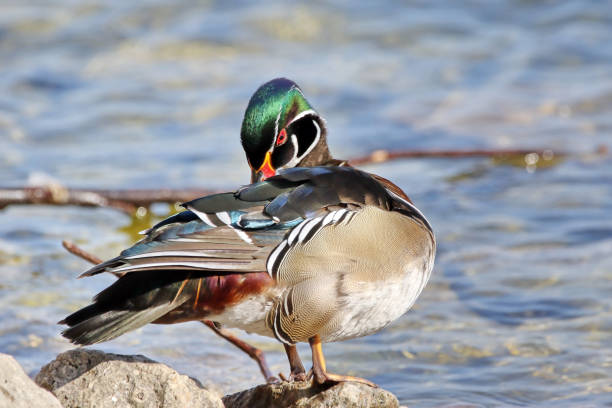
Ducks are one of the most common and beloved waterfowl found across the globe, adorning backyard ponds, commercial farms, and natural wetlands alike. While they may all seem like simple, quacking birds waddling near the water’s edge, not all ducks are created equal. A closer examination reveals two distinct evolutionary lines of domestic ducks that dominate human interaction with this species: mallard-derived ducks and Muscovy ducks. Understanding the differences between these two types goes far beyond superficial recognition—it shapes everything from breeding habits and physical characteristics to culinary use, temperament, and environmental needs.
This comprehensive guide dives deeply into the distinctions between mallard-derived ducks and Muscovy ducks, covering biological taxonomy, physical traits, behavior, husbandry requirements, reproductive biology, and culinary applications. Whether you’re a backyard homesteader, a poultry farmer, a wildlife enthusiast, or simply curious about avian biology, this article will provide a 3,500-word exploration to help you distinguish, appreciate, and make informed decisions about these two remarkable duck lineages.
1. Taxonomic Classification: The Foundation of Difference
The most fundamental distinction between mallard-derived ducks and Muscovy ducks lies in their biological classification—a divergence that traces back millions of years in avian evolution.
- Mallard-Derived Ducks: These ducks all originate from the wild mallard (Anas platyrhynchos), a member of the family Anatidae and genus Anas, commonly known as “dabbling ducks.” Despite the vast variety in domesticated breeds—ranging from Pekins to Rouens, Khaki Campbells, and Call ducks—they are all genetically capable of interbreeding with wild mallards. This shared ancestry means that mallard-derived ducks share consistent biological traits, including vocalizations, breeding behaviors, and physiology.
- Muscovy Ducks (Cairina moschata): In stark contrast, Muscovy ducks belong to a completely different genus—Cairina—and are native to the tropical regions of Mexico, Central, and South America. They are not “true ducks” in the same sense as mallards and are more distantly related. Muscovies are often referred to as “perching ducks” due to their ability to roost in trees, and they exhibit unique physical and behavioral traits that set them apart from their Anas cousins.
This taxonomic divide explains why mallard-derived ducks and Muscovies cannot successfully interbreed in most natural conditions—a critical point for farmers and breeders.
2. Physical Characteristics: Appearance Matters
Examining the physical features of these two duck types reveals immediate and striking differences.
Mallard-Derived Ducks: Features and Variations
While breeds vary in color and size, mallard-derived ducks share a set of common traits:
- Body Shape: Streamlined, elongated bodies built for swimming and dabbling in shallow water.
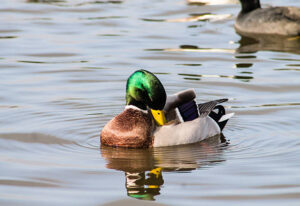
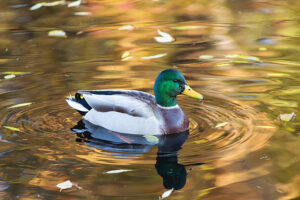
- Feathers: Dense waterproof plumage; wild-type mallards display iridescent green heads, yellow bills, and white neck rings, while domestic breeds come in white, brown, black, buff, and multicolored patterns.
- Bill Structure: Broad, flat bills with lamellae (comb-like structures) along the edges used for filtering food from water.
- Leg Position: Legs are located toward the rear of the body, making walking somewhat awkward but excellent for swimming.
- Tail Feathers: Many males (drakes) develop curled “drake feathers” at the tail during maturity.
Domestic breeds like the Pekin are larger and bred for meat, while Khaki Campbells are leaner and prized for egg production. However, all retain the core anatomy and appearance of their wild ancestor.
Muscovy Ducks: A Unique Profile
Muscovies look dramatically different:
- Body Shape: Longer, leaner, and more upright when standing, with a broader chest.
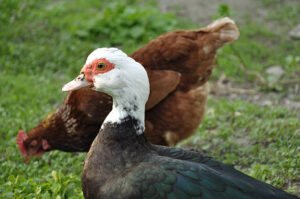
- Facial Features: Most striking are the fleshy, red caruncles (warty growths) around the face and bill, especially prominent in males. These are absent in mallard types.
- Feathers: Often black with white wing patches, but domestic varieties come in white, chocolate, blue, and multicolored patterns. Their feathers lack the oily sheen of mallards and are less waterproof.
- Bill Structure: Narrower and less flat than mallard bills, with fewer lamellae—reflecting their less aquatic feeding habits.
- Legs and Feet: Legs are positioned more centrally, allowing for agile walking and even perching in low trees.
- Tail Posture: Tend to carry their tails lower than mallard-derived ducks.
Interestingly, Muscovy drakes are nearly silent, producing only low hisses or puffs, whereas mallard drakes are famously loud with their “quacks.”
3. Vocalizations: The Sound of Ducks
Listen closely, and you’ll quickly notice how vocalizations differ.
- Mallard-Derived Ducks: The iconic “quack” is usually made by females (ducks), not males. Drake vocalizations are softer, raspier, and sometimes described as whisper-quacks. Khaki Campbells, in particular, are famously vocal and persistent in their quacking.
- Muscovy Ducks: Notably quiet. Females may make a soft hiss, a low coo, or a high-pitched squeak, but they lack the loud quack. Males are even quieter. This trait makes Muscovies ideal for urban or suburban backyards where noise is a concern.
This vocal difference arises from anatomical variation in the syrinx (the avian voice box) and is another reflection of their distinct evolutionary paths.
4. Habitat and Behavior: Nature vs. Nurture
Behavioral traits are influenced by both genetics and environment.
Mallard-Derived Ducks: Water Lovers
- Aquatic Dependence: These ducks thrive near water and require access to ponds or pools for cleaning their eyes, nostrils, and feathers. They are strong swimmers and enjoy dabbling—tip-feeding in shallow water to root for plants, insects, and small crustaceans.
- Social Nature: Highly social, forming flocks in the wild and domestic settings. They may become stressed or lonely if isolated.
- Nesting Habits: Prefer ground nests hidden in tall grass or brush, often returning to the same location annually. Domestic hens may lay in nesting boxes but still appreciate privacy.
Muscovy Ducks: Terrestrial Tendencies
- Less Water-Dependent: While they enjoy water, Muscovies do not require large ponds. They bathe adequately in shallow trays and are less enthusiastic swimmers. Their feathers are not as waterproof, so prolonged submersion can be problematic.
- Solitary and Territorial: Muscovy drakes, especially, can be territorial and aggressive during breeding season. They may fight with other drakes and do not integrate easily into mixed flocks.
- Nesting Behavior: Often nest in tree cavities or high platforms, reflecting their wild origins. Domestic Muscovies will readily use nesting boxes placed off the ground.
- Perching Ability: Thanks to strong claws and central leg positioning, Muscovies frequently roost on fences, sheds, or in trees—a behavior rarely seen in mallard-derived ducks.
5. Reproductive Biology: A Key Divergence
Perhaps the most scientifically significant difference lies in reproductive compatibility.
- Mallard-Derived Ducks: All breeds can interbreed freely due to their shared genome. Hybridization with wild mallards is common and sometimes a concern for conservationists trying to preserve pure wild populations.
- Muscovy Ducks: Genetically incompatible with mallard-derived ducks. While Muscovy drakes and mallard-derived ducks (or vice versa) can mate physically, the resulting offspring—known as “mule ducks” or “hinnies”—are almost always sterile due to chromosomal mismatch.
- Male mule ducks are sterile; female mule ducks are rarely fertile.
- Mule ducks are sometimes bred intentionally in the foie gras industry because they grow large, are docile, and don’t fly.
This sterility underscores the fact that Muscovies are not just a breed of duck but a separate biological species.
Additionally:
- Incubation Period:
- Mallard-derived ducks: 28 days
- Muscovy ducks: 35 days (one of the longest among domestic waterfowl)
- Clutch Size:
- Mallard types: 8–15 eggs per clutch
- Muscovies: 8–15, but they are exceptional broody hens—often sitting on eggs for extended periods and raising ducklings with strong maternal instincts.
- Broodiness: Muscovy ducks are renowned for their willingness to go broody, making them excellent natural incubators for their own eggs or even those of chickens or other ducks.
6. Temperament and Handling
Temperament is crucial for backyard keepers and farmers alike.
Mallard-Derived Ducks
- Generally docile, especially when raised by humans from hatchlings.
- Breeds like Pekins are friendly and gregarious, making them ideal for families.
- Can be noisy, especially females during egg-laying or when disturbed.
- Tend to follow humans and can be trained to respond to calls.
- Less likely to fly (especially heavier breeds), though some lighter breeds like Calls can achieve short flights.
Muscovy Ducks
- Calmer and quieter, which makes them preferable in noise-sensitive areas.
- Males can be aggressive, particularly toward other males or perceived threats. Castration (called “caponizing”) is sometimes performed to reduce aggression.
- More independent and less flock-dependent.
- Often described as “cat-like” in their demeanor—curious, alert, and capable of forming strong bonds with humans.
- Excellent foragers; they patrol yards for insects, slugs, and even small snakes.
- Strong fliers when young; domestic wing clipping is often required to prevent escape.
7. Health and Husbandry Requirements
Caring for these ducks requires tailored approaches.
General Needs (Shared)
- Clean water for drinking and some form of bathing
- Balanced diet (commercial feed, greens, grit)
- Shelter from predators and extreme weather
- Space to move and forage
Mallard-Derived Ducks: Specific Needs
- Water Access: Essential. They need enough water depth to submerge their heads to clean their nostrils and eyes. Lack of water leads to eye infections and respiratory issues.
- Diet: High-protein feed during growth; reduced protein for maintenance. Layers need calcium supplementation.
- Predator Protection: Ground-nesting habits make eggs and ducklings vulnerable.
- Mobility: Poor walkers on slippery surfaces; avoid steep ramps.
Muscovy Ducks: Specific Needs
- Less Water: Shallow dishes for drinking and splashing are sufficient. Avoid deep ponds unless supervised.
- Perching Space: Provide elevated roosts or platforms to satisfy natural instincts.
- Cooling: Due to their tropical origins, Muscovies handle heat better than cold. In colder climates, supplemental heat may be needed in winter.
- Parasites: More prone to external parasites like mites due to facial caruncles.
- Space Requirements: Need slightly more space than mallards due to territorial behavior, especially among males.
Vaccinations and Health Monitoring:
- Both types benefit from biosecurity, but Muscovies are less susceptible to certain avian diseases (e.g., duck plague), while mallards may be more resilient in temperate climates.
8. Egg Production and Culinary Uses
How these ducks contribute to the kitchen varies widely.
Egg Laying
- Mallard-Derived Ducks:
- High-producing layers: Khaki Campbells lay 250–300 eggs per year.
- Egg size: Large to jumbo, creamy white to tinted.
- Eggs are richer than chicken eggs, with higher fat and protein content—ideal for baking.
- Muscovy Ducks:
- Produce fewer eggs: 60–120 per year.
- Longer laying cycle but strong broodiness interrupts production.
- Eggs are slightly larger than mallard eggs, with a thicker shell, making them excellent for hatching or hard-boiling.
Meat Quality
- Mallard-Derived (e.g., Pekin):
- The standard commercial duck meat.
- Tender, rich, and fatty—classic “duck” flavor.
- Fast-growing: ready for harvest in 6–8 weeks.
- Higher fat content, which some cooks render out.
- Muscovy Ducks:
- Leaner meat, often compared to turkey or veal.
- Less gamey, lower fat—appealing to health-conscious consumers.
- Takes longer to mature: 12–20 weeks for full size.
- Preferred in Latin American and French cuisines for dishes like magret de canard.
Muscovy meat is often marketed as “white duck meat,” distinguishing it from the darker, oilier meat of mallard types.
9. Hybridization: The Mule Duck Phenomenon
Though natural breeding is rare, farmers sometimes intentionally cross Muscovy drakes with female mallard-derived ducks to produce mule ducks.
- Advantages of Mule Ducks:
- Rapid growth and large size.
- Docile temperament.
- Inability to fly (due to sterility and heavier build).
- Preferred in foie gras production because their livers enlarge well without the ethical concerns of breeding fertile birds.
- Drawbacks:
- Cannot reproduce—must be bred anew each time.
- Require careful management due to mixed care needs.
- Not recognized as a breed by poultry associations.
This hybridization is a testament to human ingenuity but also highlights the biological gap between the two lineages.
10. Role in Ecosystems and Conservation
Wild populations of both lineages interact with ecosystems differently.
- Mallard-Derived Ducks:
- Domestic mallards often interbreed with wild populations, diluting genetic purity.
- Considered invasive in some regions (e.g., New Zealand), where they outcompete native waterfowl.
- Important in wetland ecosystems as seed dispersers and prey species.
- Muscovy Ducks:
- In non-native areas (like Florida), feral Muscovies are sometimes viewed as pests due to noise (minimal) and droppings.
- However, they are excellent natural pest controllers—eating mosquitoes, flies, slugs, and ticks.
- Not known to interbreed with native waterfowl, so they pose less genetic threat.
Conservationists urge against releasing domestic ducks into the wild, as they can disrupt local ecosystems and introduce disease.
11. Raising Ducks: A Practical Guide for Farmers and Homesteaders
Choosing between mallard-derived and Muscovy ducks depends on your goals.
For Egg Production: Choose Mallard-Derived
- Best Breeds: Khaki Campbell, Indian Runner
- Require consistent access to water and high-calcium feed.
- Less broody, so eggs can be collected regularly.
For Meat Production: Both Have Merits
- Pekin (Mallard): Faster, higher fat, traditional flavor.
- Muscovy: Leaner, higher cost, gourmet appeal.
- Consider market demand and processing capability.
For Pets or Pest Control: Muscovy Excels
- Quiet, intelligent, and effective foragers.
- Excellent for organic gardens.
- Form strong bonds with caretakers.
For Mixed Flocks: Caution Advised
- Mallard-derived ducks and Muscovies can coexist, but:
- Monitor for aggression from Muscovy drakes.
- Provide separate nesting areas.
- Ensure water needs are met for mallards without swamping Muscovy preferences.
12. Cultural and Historical Significance
- Mallard-Derived Ducks: Domesticated over 2,000 years ago in China. Pekin ducks, developed in Beijing, became globally popular in the 19th century. Mallards feature prominently in art, literature, and symbolism (e.g., the “Donald Duck” archetype).
- Muscovy Ducks: Known to Indigenous peoples of the Americas before European contact. Brought to Europe in the 16th century, where they were initially mistaken for ducks from Moscow (hence “Muscovy”). Valued for their meat and quiet nature.
Both ducks have shaped human agriculture, cuisine, and aesthetics in unique ways.
13. Sustainability and Ethical Considerations
In modern farming, ethical treatment and sustainability are paramount.
- Free-Range and Foraging: Muscovies excel in pasture-based systems due to their foraging ability.
- Water Conservation: Muscovies require less water, making them ideal for drought-prone areas.
- Waste Management: Both produce significant manure, useful as compost but requiring proper handling.
- Humane Harvesting: Slower growth of Muscovies may align better with animal welfare standards compared to fast-growing Pekins.
Choosing the right duck type can support regenerative agriculture and reduce environmental impact.
14. Conclusion: Celebrating Diversity in Waterfowl
Mallard-derived ducks and Muscovy ducks represent two fascinating evolutionary paths within the broader duck family. One, a cosmopolitan, water-adapted species refined by centuries of global domestication; the other, a quiet, tree-perching survivor from the tropics with a unique physiology and temperament.
The differences—genetic, physical, behavioral, and culinary—are not merely academic. They guide practical decisions for farmers, backyard keepers, chefs, and conservationists. Understanding these distinctions allows us to appreciate the complexity of avian diversity and to raise, use, and respect these animals more responsibly.
Whether you’re charmed by the cheerful quack of a Pekin hen or the dignified silence of a perched Muscovy drake, one thing is certain: ducks, in all their forms, enrich our lives and landscapes in profound ways.
From the farm to the table, from the wild wetland to the suburban yard, understanding the difference between mallard-derived and Muscovy ducks empowers us to coexist with these remarkable birds more wisely and compassionately.
#MallardDucks, #MuscovyDucks, #DuckFarming, #BackyardDucks, #DuckCare, #RaisingDucks, #DuckBreeds, #MuleDucks, #DuckHusbandry, #Homesteading, #UrbanFarming, #DuckEggs, #DuckMeat, #DuckBehavior, #PoultryTips, #SustainableFarming, #DuckHealth, #Waterfowl, #DuckLovers, #BackyardChickensAndDucks, #DuckKeeping, #DuckQuiz, #FarmLife, #DuckVsDuck, #QuackVsHiss, #DuckConservation, #DuckHybrid, #DomesticDucks, #DuckFacts, #DuckLife, #MuscovyVsMallard
Add comment