
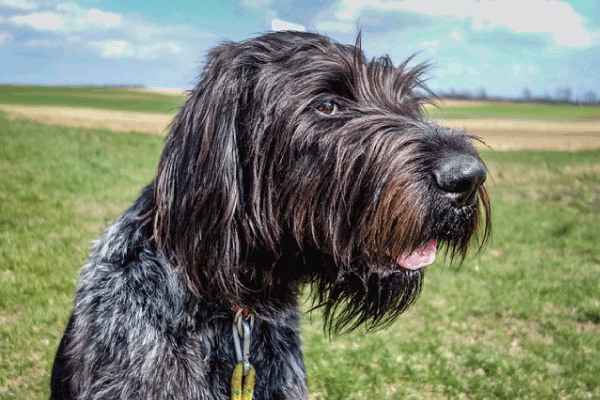
Dog whiskers, scientifically known as vibrissae (derived from the Latin word vibrio, meaning “to vibrate”), are perhaps the most misunderstood and crucial elements of a dog’s sensory apparatus. They are far more than just thick hairs; they serve as sophisticated topographical tools, providing the dog with a detailed sense of its immediate physical environment. For a dog, vibrissae represent a critical component of its “sixth sense.”
PART I: ANATOMICAL STRUCTURE OF VIBRISSAE
Vibrissae are highly specialized tactile hairs that differ significantly from the dog’s standard coat hair (pelage) in both structure and neurological connection.
1. Location and Classification
Vibrissae are generally thicker, longer, and stiffer than regular fur. They are strategically placed in areas where detailed spatial information is essential:
| Vibrissae Type | Location | Function |
|---|---|---|
| Mystacial | On the upper lip and muzzle (the largest and most numerous). | Primary sensory input, air current detection. |
| Superciliary | Above the eyes (eyebrows). | Protection and blink reflex initiation. |
| Genal | On the cheeks. | Lateral spatial awareness. |
| Mandibular | On the chin and lower jaw. | Sensing objects directly beneath the jaw (e.g., prey or food bowl). |
2. The Specialized Follicle
The fundamental difference between a regular hair and a whisker lies in its root structure, known as the Sinus Hair Follicle (or Tactile Follicle).
- Depth: The vibrissa follicle is rooted three times deeper into the skin (dermis and hypodermis) than a normal hair follicle. This deep rooting anchors the hair securely and positions it near a dense network of nerves and blood vessels.
- The Blood Sinus: The follicle is surrounded by a capsule of connective tissue and a ring-like blood-filled space called the annular sinus. This sinus acts as an internal hydraulic cushion. When the whisker shaft moves even slightly, the pressure within this blood sinus changes, amplifying the movement.
- The Innervation (Nerve Density): The most critical feature is the massive concentration of sensory nerve endings clustered around the base of the follicle. These nerve endings are known as Mechanoreceptors (specifically, tactile corpuscles and free nerve endings).
3. The Mechanics of Sensation
When the tip of a vibrissa touches an object or detects a change in air pressure:
- The shaft transmits the vibration down to the base.
- The movement displaces the wall of the annular sinus.
- The pressure change triggers the adjacent mechanoreceptors.
- These receptors send rapid signals directly to the somatosensory cortex—the area of the brain responsible for processing touch and spatial awareness.
Because of this complex structure, vibrissae can detect vibrations at the micrometer level (less than the width of a human hair).
PART II: FUNCTIONS OF VIBRISSAE
Vibrissae function primarily as highly sophisticated tactile sonar, compensating for deficiencies in certain aspects of canine vision, especially in low light or proximity.
1. Spatial Awareness and Navigation
Dogs do not have an innate depth perception advantage close up. Vibrissae solve this problem by mapping the immediate surroundings.
- Proximity Detection: Whiskers can determine the exact location, size, and texture of objects without the dog needing to make visual contact. This is crucial for navigating narrow passages or dark spaces. If a dog’s whiskers brush the sides of a doorway, the dog knows exactly how much space it has to maneuver.
- Blind Spot Compensation: A dog’s binocular field of vision (where both eyes overlap) is relatively narrow. The vibrissae cover the blind spots immediately in front of the muzzle and beneath the chin, ensuring the dog never loses awareness of its immediate surroundings during tasks like picking up food or interacting with a threat.
2. Air Current and Movement Detection
Perhaps the most astonishing function of vibrissae is their ability to detect subtle movements in the air, allowing the dog to “feel” nearby objects that aren’t physically touched.
- Hydraulic Echo-Location: Just as a dolphin uses sound waves, a dog uses air perturbations. A moving object creates a draft or changes the air current; the mystacial whiskers quickly register this change. This allows a dog to detect the direction and speed of movement, which is vital for hunting or avoiding confrontation in low visibility.
- Wake Detection: They can detect the wake created by a small rodent moving through grass or the subtle shift in air pressure caused by a nearby person breathing.
3. Protection and Reflex
The superciliary (eyebrow) whiskers play a direct protective role.
- Blink Reflex: If an object or debris touches the superciliary whiskers, the mechanoreceptors instantly trigger a rapid protective blink and a head turn. This reflex is significantly faster than the visual protective reflex alone, safeguarding the eyes from injury.
4. Behavioral and Emotional Communication
The position of the vibrissae often reflects a dog’s emotional state, acting as a subtle, non-verbal communication tool:
- Engaged/Alert: When a dog is focused, hunting, or curious, the vibrissae flare out and move forward, creating a wider sensory field to gather maximum information.
- Fear/Submission: When stressed or fearful, the whiskers may be flattened and pulled back tightly against the cheeks and muzzle.
5. Hunting and Retrieval (The Tactile Grasp)
For dogs that hunt or retrieve, mandibular vibrissae are critical. When a dog grabs prey or picks up an object, visual input is momentarily lost. The mandibular (chin) whiskers provide immediate feedback on the object’s position, ensuring a proper, secure grasp.
PART III: CLINICAL AND CARE CONSIDERATIONS
Due to their vital sensory function, the manipulation or removal of vibrissae should be avoided.
1. The Impact of Cutting or Trimming
Trimming whiskers (often done for cosmetic reasons in show dogs) does not cause physical pain in the way a cut to the skin would, as the whisker shaft itself is dead keratin. However, trimming causes significant sensory deprivation and confusion.
- Disorientation: A dog whose whiskers have been removed temporarily loses its ability to judge distances accurately, especially in the dark. It may bump into walls, struggle to locate objects on the ground, and appear generally clumsy.
- Stress and Anxiety: The sudden loss of this critical sensory data often leads to heightened anxiety or stress while navigating the environment until the whiskers fully regrow (which can take weeks or months).
2. Whisker Fatigue
In rare instances, excessive stimulation or repetitive rubbing against hard surfaces can temporarily dull the sensitivity of the vibrissae, a condition known as whisker fatigue. Owners should ensure food and water bowls are wide enough that the vibrissae do not constantly rub against the sides while the dog eats or drinks.
#DogAnatomy, #WhiskersInDogs, #DogWhiskers, #Vibrissae, #CanineAnatomy, #DogSenses, #SensoryOrgans, #CanineBiology, #DogFacts, #LearnAboutDogs, #PetEducation, #DogCommunication, #TactileSenses, #Navigation, #EnvironmentalAwareness, #WhiskerPower, #WhiskerLove, #DogsOfInstagram, #DogLife, #DogLover, #InstaDog, #PetCare, #AnimalScience, #DidYouKnow, #AnatomyOfDogs, #CanineHealth, #DogAnatomy, #CanineScience, #DogWhiskers, #Vibrissae, #DogFacts, #PetHealth, #ScienceOfDogs, #DogBehavior, #DogSenses, #AnatomyGuide, #PetCareTips, #LearnAboutDogs






Add comment