
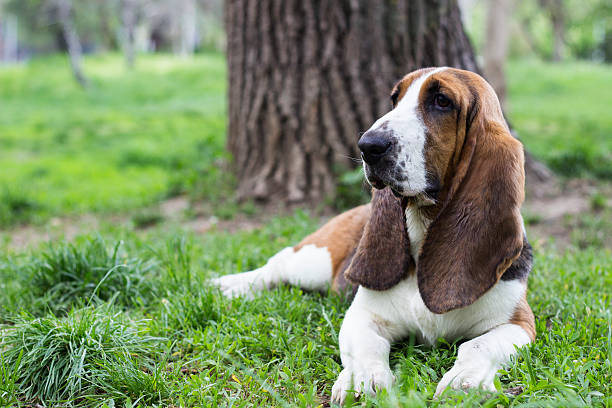
The joyous wag of a tail, the eager tilt of a head, the satisfied sigh after a well-executed “sit” – these are the hallmarks of successful dog training. But for many owners, the reality is a frustrating cycle of repeated commands, confused expressions, and a distinct lack of responsiveness from their canine companions. You’ve invested time, energy, and often considerable financial resources into training classes, only to find that your dog seems to have selective hearing when it matters most.
This comprehensive guide delves into the common roadblocks that prevent dogs from responding to obedience cues and provides practical, actionable fixes. We’ll explore the underlying reasons behind this lack of responsiveness, from environmental distractions and communication breakdowns to underlying health issues and the dog’s emotional state. By understanding these challenges, you can transform your training journey from one of frustration to one of mutual understanding and rewarding progress.
Chapter 1: The Foundation of Understanding – Why Dogs Learn (and Don’t Learn)
Before we dive into specific roadblocks, it’s crucial to grasp the fundamental principles of how dogs learn. Understanding these principles will empower you to identify where things might be going wrong and how to course-correct.
1.1 The Power of Association: Classical and Operant Conditioning
Dogs learn primarily through association.
- Classical Conditioning: This is about creating an involuntary association. Think of Pavlov’s dogs salivating at the sound of a bell. In dog training, this often applies to making a neutral stimulus (like a clicker sound or a specific word) predict something positive (a treat, praise).
- Operant Conditioning: This is about learning through consequences.
- Positive Reinforcement: Adding something desirable (treats, praise, a favorite toy) to increase the likelihood of a behavior happening again. This is the cornerstone of modern, ethical dog training.
- Negative Reinforcement: Removing something undesirable to increase the likelihood of a behavior. For example, if your dog pulls on the leash, you might release tension on the leash when they stop pulling. (Note: This is different from punishment.)
- Positive Punishment: Adding something undesirable (a leash jerk, a stern verbal correction) to decrease the likelihood of a behavior. This can be counterproductive and damage the dog-owner bond if not used with extreme care and understanding.
- Negative Punishment: Removing something desirable (play, attention) to decrease the likelihood of a behavior. For instance, if your dog jumps on you, you might turn away or leave the room.
Why it matters for responsiveness: If your dog doesn’t associate your command with a positive outcome (reinforcement), they have no motivation to offer the behavior. If they associate your command with something unpleasant (punishment), they might become fearful or avoidant.
1.2 Motivation is Key: What Makes Your Dog Tick?
Every dog has unique motivators. For some, it’s high-value food treats (chicken, cheese, hot dogs). For others, it’s a favorite toy, enthusiastic praise, or even the opportunity to engage in a preferred activity (like chasing a ball or sniffing a specific spot).
Why it matters for responsiveness: If you’re using a motivator that your dog doesn’t find rewarding, they simply won’t see the point of responding. A dry biscuit might be ineffective for a food-motivated dog who’s just spotted a squirrel, just as a generic “good boy” might fall flat for a dog who craves physical affection.
1.3 Consistency is King (and Queen): The Language of Repetition
Dogs thrive on predictability. When commands, cues, and rewards are consistent, dogs can learn to understand what you want. Inconsistent use of cues, rewards, or expectations can lead to confusion.
Why it matters for responsiveness: If you sometimes ask for “down” and sometimes “lie down,” or if you reward a “sit” sometimes but not others, your dog will struggle to understand the specific behavior you’re requesting. Inconsistency teaches dogs to “wait and see” if they’ll get rewarded, which looks like disobedience.
1.4 The Learning Curve: Patience and Gradual Progression
Learning takes time. Dogs don’t instantly master complex behaviors. They learn in small steps, and each step needs to be practiced until it’s solid before moving on to the next.
Why it matters for responsiveness: Expecting too much too soon is a common training pitfall. If you’re asking for a perfect, distraction-proof “stay” after only a few short sessions, your dog will likely fail, leading to frustration for both of you.
Chapter 2: The Big Distractions – When the World Gets Too Loud
Often, the biggest reason a dog isn’t responding is simply that they’re too distracted to hear you, let alone process your request. The world is a symphony of scents, sights, and sounds for a dog, and sometimes, those stimuli are far more compelling than your command.
2.1 Environmental Distractions: The Siren Song of the Outside World
- The Problem: Other dogs, people, squirrels, birds, interesting smells, moving vehicles, loud noises – the list is endless. The more exciting or arousing the distraction, the less attention your dog will pay to you. This is particularly true for the “recall” command (“come”).
- The Fixes:
- Start Indoors, Low Distraction: Begin teaching all new cues in a quiet, familiar environment (your living room, a quiet bedroom) with minimal distractions. Master behaviors here before venturing outside.
- Gradual Exposure to Distractions: Once a behavior is reliable indoors, slowly introduce distractions. Start with very low-level distractions (someone walking by outside your window) and gradually increase the intensity.
- “Proofing” the Behavior: This involves practicing known behaviors in a variety of environments with increasing levels of distraction. Think of it as “making it unbreakable.”
- High-Value Rewards: When working with distractions, you need to use extremely high-value rewards that are more enticing than the distraction itself. This might be small pieces of cooked chicken, cheese, or a favorite squeaky toy reserved only for these challenging situations.
- Management: Sometimes, the best solution initially is to manage the environment. Use a long line in the park so your dog can have some freedom but you can gently ensure they don’t get into trouble if distracted.
2.2 Internal Distractions: When Their Brain is Elsewhere
- The Problem: Arousal (excitement, frustration), fatigue, hunger, thirst, or even a medical issue can impact a dog’s ability to focus and respond. An overly excited dog is often unable to process commands, while a tired dog is simply not engaged.
- The Fixes:
- Timing is Everything: Don’t try to train a dog who is overly aroused or exhausted. Wait for a calm moment.
- Meet Basic Needs: Ensure your dog has had plenty of exercise (but not to the point of exhaustion), is not hungry or thirsty, and has had opportunities to potty before training sessions.
- Identify Triggers: If your dog consistently gets over-aroused by specific things (e.g., seeing other dogs), work on desensitization and counter-conditioning to those triggers in a controlled manner.
- Observe Body Language: Learn to read your dog’s subtle cues for stress, fatigue, or over-arousal. If you see yawning, lip licking, or stiffening, it’s time to take a break.
2.3 Sensory Overload: Too Much of a Good Thing
- The Problem: Some dogs are more sensitive to noise, strong smells, or visual stimuli than others. A busy dog park might be overwhelming for one dog but exhilarating for another.
- The Fixes:
- Respect Your Dog’s Limits: If your dog is clearly uncomfortable or overwhelmed by a particular environment, don’t force them to endure it.
- Create a Safe Space: If you’re in a busy environment, find a quieter corner or a designated “safe zone” where your dog can retreat and feel more secure.
- Gradual Desensitization: For specific sensory triggers (like loud noises), work on desensitizing your dog with slow, controlled exposure and positive reinforcement.
Chapter 3: Communication Breakdown – Are You Speaking the Same Language?
Even with the best intentions, owners can inadvertently send mixed signals or fail to communicate clearly with their dogs.
3.1 Unclear or Inconsistent Cues: The “What Did You Say?” Moment
- The Problem: Using different words for the same command (e.g., “sit,” “down,” “sit down”), using overly long or complicated phrases instead of single cues, or using the cue too many times without rewarding the behavior.
- The Fixes:
- Choose One Word: Decide on a single, consistent word for each behavior you want your dog to learn.
- Keep it Short and Sweet: Use short, distinct verbal cues (e.g., “Sit,” “Stay,” “Come,” “Down,” “Heel”).
- The “One-and-Done” Rule: Aim to say the cue once. If your dog doesn’t respond, it’s usually a sign they don’t understand, are distracted, or aren’t motivated. Repeating the cue over and over without success can teach the dog to ignore it. Instead, help them succeed (e.g., lure them into the position) and then reward.
- Pair Verbal Cues with Hand Signals: Many dogs respond well to visual cues. Consistent hand signals can be incredibly effective, especially in noisy environments or at a distance.
3.2 Body Language Misinterpretations: The Unspoken Language
- The Problem: Your body language can either reinforce your verbal cue or contradict it. Leaning over a dog, staring them down, or having tense posture can be perceived as intimidating or threatening, making them less likely to comply. Conversely, a dog’s subtle cues of confusion or discomfort might be missed.
- The Fixes:
- Open and Relaxed Posture: When asking for a behavior, try to have relaxed, open body language. Avoid looming or being overly rigid.
- Encouraging Movement: For cues like “come,” use an encouraging posture – bending slightly, smiling, patting your leg. Avoid standing tall and stern.
- Observe Your Dog’s Body Language: Pay attention to your dog’s tail wags (are they relaxed or stiff?), ear position, eye contact, and overall body tension. These are clear indicators of how they are feeling and processing your requests.
3.3 The “Jack-in-the-Box” Effect: Cueing Before They’re Ready
- The Problem: Asking your dog to perform a behavior before they’ve had a chance to understand the cue or when they are simply not in the right mindset. For example, demanding a “stay” from a dog who is already halfway out the door to greet a visitor.
- The Fixes:
- Build a Solid Foundation: Ensure the cue is well-established in low-distraction environments before expecting it in more challenging situations.
- Set Them Up for Success: Ask for behaviors when you know your dog is likely to succeed. This might mean asking for a “sit” before opening the door, rather than when they’re already pulling to get out.
Chapter 4: Motivation Matters Most – The Pursuit of the Prize
A dog won’t perform a behavior if they don’t see what’s in it for them.
4.1 Using Low-Value Rewards: The “Meh” Treat
- The Problem: Relying on the same dry, flavorless kibble for every training session, regardless of the difficulty or distraction level. This kibble might be fine for a basic “sit” in your living room, but it’s unlikely to compete with the allure of a passing jogger.
- The Fixes:
- High-Value Reinforcement: Invest in a variety of high-value treats that your dog absolutely loves. Small pieces of boiled chicken, cheese, hot dogs, commercial training treats with strong scents, or bits of dried liver are excellent options.
- Reward Variety: Rotate between different types of high-value treats to keep things interesting.
- The “Jackpot”: For particularly difficult tasks or a perfect response in a highly distracting environment, a “jackpot” of several high-value treats can be incredibly motivating.
4.2 Lack of Engagement from the Owner: The Bored Trainer
- The Problem: If you’re not enthusiastic and engaged during training, your dog won’t be either. A monotonous tone, lack of praise, and a general lack of excitement on your part can make training feel like a chore for your dog.
- The Fixes:
- Be Enthusiastic! Use an upbeat, happy tone of voice. Praise your dog generously and genuinely.
- Make it a Game: Training should be fun for both of you. Incorporate toys, praise, and play into your sessions.
- Keep Sessions Short and Sweet: Aim for 5-10 minute training sessions multiple times a day, rather than one long, tedious session. This keeps your dog engaged and prevents burnout.
4.3 Insufficient Reinforcement Schedule: The Guessing Game
- The Problem: Moving too quickly from rewarding every correct response to only occasionally rewarding. This can lead to the dog thinking, “Why bother? I might not get anything anyway.”
- The Fixes:
- Start with Continuous Reinforcement: Initially, heavily reward every correct response. This helps the dog solidify the behavior.
- Transition to Intermittent Reinforcement: Once the behavior is reliable, gradually transition to rewarding intermittently. This means you don’t reward every single time, but frequently enough that the dog remains motivated. This is what makes behaviors very resistant to extinction.
- Vary the Reinforcement: Mix up what you reward and when. Sometimes a great reward, sometimes just praise. This keeps the dog guessing and engaged.
Chapter 5: Underlying Issues – When the Problem Runs Deeper
Sometimes, a dog’s lack of responsiveness isn’t just about training techniques; it can stem from deeper issues.
5.1 Health Problems: The Unseen Obstacle
- The Problem: Pain, illness, sensory deficits (hearing/vision loss), or neurological issues can all impact a dog’s ability to learn, respond, and engage. A dog in pain might be reluctant to move or perform certain actions. A dog with hearing loss may genuinely not hear your cues.
- The Fixes:
- Veterinary Check-up: If your dog’s responsiveness suddenly changes, or if they are consistently struggling with obedience, rule out any underlying medical conditions with a thorough veterinary examination.
- Discuss Behavior Changes with Your Vet: Be sure to mention any training difficulties or behavioral changes to your veterinarian. They can help identify potential causes and recommend treatment or management strategies.
5.2 Fear and Anxiety: The Emotional Barrier
- The Problem: A dog who is fearful or anxious is often too preoccupied with feeling unsafe to focus on your commands. They may shut down, freeze, or even become reactive.
- The Fixes:
- Identify the Source of Fear/Anxiety: Is it related to a specific person, object, environment, or situation?
- Build Trust and Security: Focus on building a strong, positive bond with your dog. Ensure they feel safe and secure in their environment.
- Desensitization and Counter-Conditioning: This is the gold standard for treating fear and anxiety. It involves gradually exposing the dog to their fear trigger at a very low intensity while pairing it with positive experiences (like high-value treats).
- Consult a Professional: For significant fear or anxiety, working with a certified professional dog trainer (CPDT-KA, KSA) or a veterinary behaviorist is highly recommended.
5.3 Frustration and Boredom: The “Understimulated” Canine
- The Problem: A dog that isn’t getting enough physical and mental stimulation may become frustrated or bored, leading to disengagement or acting out. They might be seeking attention in less desirable ways.
- The Fixes:
- Increase Exercise: Ensure your dog is getting enough appropriate physical activity for their breed, age, and energy level.
- Provide Mental Stimulation: Puzzle toys, scent games, training sessions, and interactive play can all provide much-needed mental enrichment.
- Vary Training Routines: Keep training sessions interesting and challenging, but not overwhelming.
5.4 Age-Related Changes:
- The Problem: Puppies have short attention spans and are easily distracted. Senior dogs may develop cognitive decline or physical limitations that affect their responsiveness.
- The Fixes:
- Puppies: Keep training sessions short, fun, and frequent. Focus on building a strong foundation and positive associations.
- Senior Dogs: Adapt training to your senior dog’s capabilities. Use motivational techniques and be patient. Consult your vet about potential age-related health issues.
Chapter 6: The Owner’s Role – Reflecting on Your Own Training Journey
Often, the solution to a dog’s lack of responsiveness lies in the owner’s approach and understanding.
6.1 Realistic Expectations: Understanding the Dog’s Perspective
- The Problem: Expecting a dog to perform perfectly in every situation after minimal training, or assuming they understand human concepts like “you should come when called because I need to go to the vet.”
- The Fixes:
- Break Down Behaviors: Understand that complex obedience skills are built from many small steps.
- Empathy: Try to see the situation from your dog’s point of view. What are they experiencing? What are their priorities?
- Celebrate Small Wins: Acknowledge and reward progress, no matter how small.
6.2 The Power of Positive Reinforcement (Revisited): The Ethical and Effective Approach
- The Problem: Relying on harsh corrections, punishment-based methods, or intimidation to try and force compliance. This can lead to fear, anxiety, aggression, and a damaged relationship.
- The Fixes:
- Focus on Rewarding Desired Behaviors: Make it more rewarding for your dog to do what you ask than to do anything else.
- Understand the “Why” Behind the Behavior: Instead of punishing unwanted behavior, try to understand why it’s happening and address the root cause.
- Seek Out Positive Trainers: If you’re struggling, find a qualified trainer who uses force-free, positive reinforcement methods.
6.3 Patience and Persistence: The Marathon, Not a Sprint
- The Problem: Giving up too easily, becoming frustrated, and expecting overnight results.
- The Fixes:
- Commit to the Process: Dog training is a continuous journey. There will be good days and bad days.
- Stay Calm and Positive: Your emotions directly impact your dog. If you’re frustrated, your dog will likely feel it and become more hesitant.
- Don’t Be Afraid to Seek Help: If you’re stuck, consult a professional trainer. They can offer tailored advice and guidance.
Conclusion: Building a Stronger Bond Through Understanding
A dog that isn’t responding to commands can be a source of immense frustration. However, by approaching training with a mindset of understanding, patience, and positive reinforcement, you can overcome these common roadblocks. Remember that your dog is not being deliberately disobedient; they are responding to their environment, their needs, and the way they are being communicated with.
By consistently employing clear communication, high-value motivation, and a deep understanding of your dog’s individual needs and emotional state, you can transform your training experience. The ultimate goal of dog training isn’t just a well-behaved dog; it’s a stronger, more trusting, and more profound bond between you and your canine companion. When your dog truly understands what you’re asking and trusts that good things will happen when they comply, training becomes a joyful, collaborative effort, leading to a lifetime of happy companionship.
#dogtraining #obedience #dogbehavior #caninetraining #dogobedience #trainingproblems #dognottolistening #dogresponsiveness #trainingroadblocks #dogtrainingtips #positivereinforcement #rewardbasedtraining #dogcommunication #doghandler #dogowner #puppylove #adultdogtraining #behavioralmodification #trainingchallenges #fixingdogbehavior #dogtrainingadvice #obediencecues #dogcommands #dogpsychology #leashtraining #recalltraining #looseleashwalking #dogsoftiktok #dogsofinstagram #doglovers #happydog #smartdog #dogtrainingjourney #understandingyourdog







Add comment